Hemp and the Founding of America: The Real History Behind the 4th

Jamie
Head Cultivator
Every Fourth of July, Americans gather to celebrate freedom, independence, and our nation's roots. But among the stories of colonial history, there is one humble plant that keeps cropping up in barbecues and blogs alike: hemp. To separate the history from the hype, we are digging into the real story of hemp in early America.
Did the Founding Fathers Grow Hemp? #
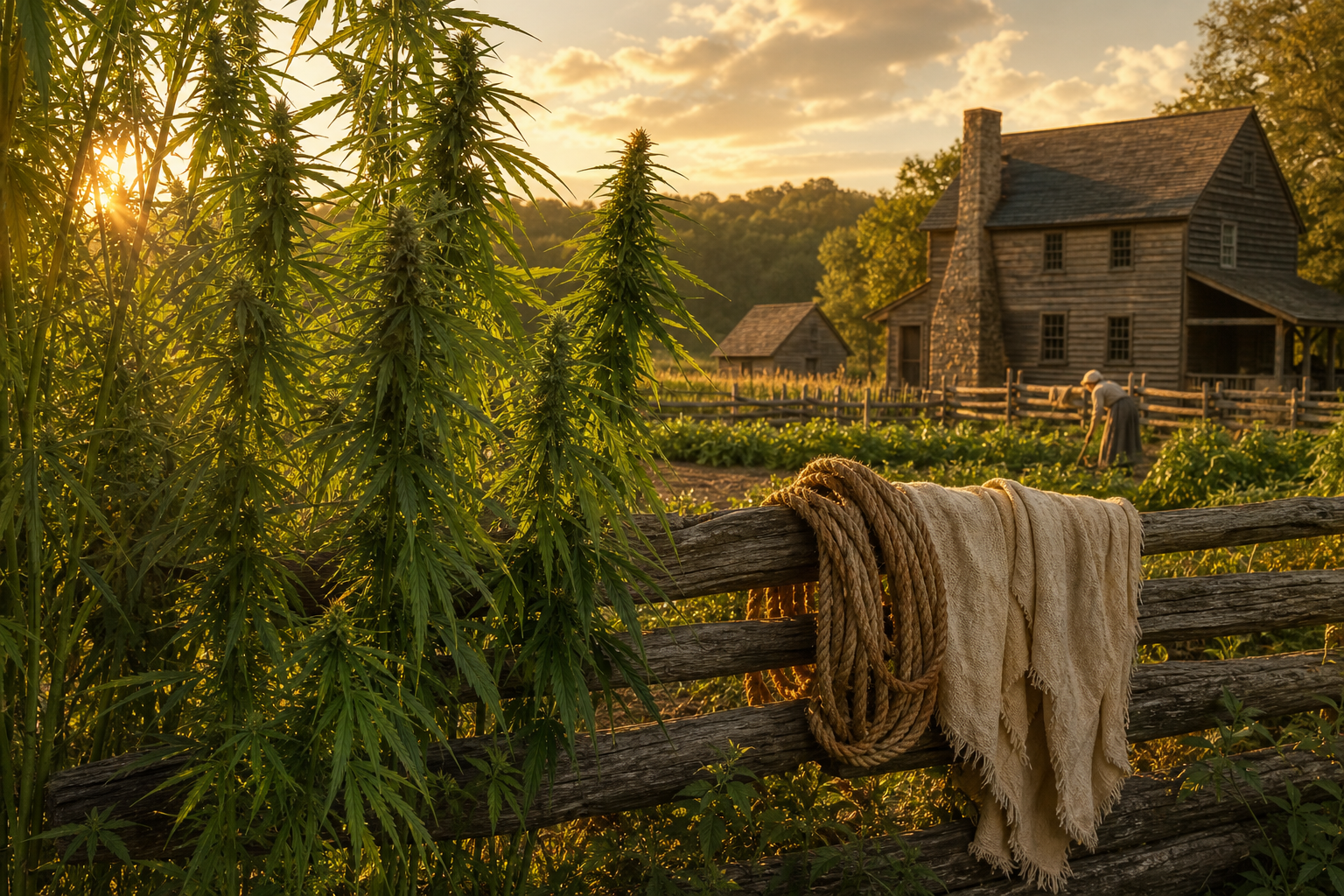
George Washington and Thomas Jefferson actively grew industrial hemp at Mount Vernon and Monticello, but they cultivated it strictly as a fiber crop, not for smoking. Historical diaries show that these early presidents relied on hemp's strong fibers to produce rope, sail canvas, clothing, and fishing nets. There is absolutely no historical evidence that they grew or consumed psychoactive cannabis.
George Washington grew hemp on all five of his farms, including Muddy Hole Farm. According to the Mount Vernon official archives, Washington mentioned hemp in his letters and diaries at least 90 times. He used the tough stalks to make strong seine nets for his Potomac River fishing operations. These giant fishing nets were often over 700 feet long and required hundreds of pounds of durable rope to haul in thousands of shad and herring. While he hoped hemp would become a profitable cash crop to replace tobacco, it primarily served to keep his estate self-sufficient. As reported by NPR, Washington even received financial rewards from the colonial government for his crops.
Thomas Jefferson also grew hemp at his Monticello estate. The Monticello study collections confirm he cultivated hemp for ropes, sails, and clothing. Jefferson was so dedicated to the crop that he invented an improved machine for crushing hemp stalks, though he refused to patent it so other American farmers could use it freely. He understood that the labor of processing hemp was its biggest bottleneck, and he wanted to make the work easier for everyone.
To understand why they grew it, we have to look at how hemp fibers are harvested. Farmers used a process called retting—which means soaking the stalks in water to rot away the outer bark—and decortication—which is breaking the stalks to separate the long outer fibers from the woody inner core.
To keep things clear, colonial hemp was very different from modern marijuana. It was bred for strong stalks, not sticky buds. Here is how they compare:
| Feature | Colonial Industrial Hemp | Psychoactive Cannabis (Marijuana) |
|---|---|---|
| THC Content | Less than 0.3% (no high) | 6% to 20%+ (intoxicating) |
| Primary Use | Ropes, sails, clothing, paper, nets | Recreational use, medical extraction |
| Growth Habit | Tall, thin stalks, grown close together | Bushy plants, grown with wide spacing |
| Physical Stature | Can grow up to 15 feet tall with very few branches | Shorter, bushy, with dense flower clusters |
| Harvest Part | The tough outer stalk fibers | The sticky, resin-rich female flowers |
| Historical Role | Essential agricultural commodity | Strictly outlawed in the 20th century |
Washington and Jefferson were practical farmers. They needed materials to build a self-reliant nation, and hemp was the ultimate tool for that job.
Was the Declaration of Independence Written on Hemp Paper? #
The Declaration of Independence was not written on hemp paper; the famous story that it was is a myth. The official signed document we see in museums is written on animal-skin parchment, while the early working drafts were penned on high-quality paper made from flax and linen rags. While hemp was an important crop, it was not used for the final document or its drafts.
Where did this popular myth come from? During the cannabis legalization movement of the 1960s and 1970s, activists wanted to prove the plant was patriotic. They began sharing the story that the Declaration was written on hemp to show its American roots. While they were right about the plant’s historical value, they got the physical materials wrong.
Let's look at the facts of how these documents were created:
- The Signed Copy: On July 19, 1776, the Continental Congress ordered the Declaration to be formally copied on parchment. As explained by the National Park Service, Timothy Matlack wrote this copy by hand. Parchment is made from specially prepared animal skin, usually calf, sheep, or goat. This engrossed copy, signed on August 2, 1776, is currently displayed at the National Archives. Because animal skin is highly sensitive to light and moisture, it is now kept in a sealed, argon-filled glass case to protect it from rotting.
- The Working Drafts: Thomas Jefferson drafted several versions of the text, including his famous "Original Rough Draught." The Library of Congress holds this four-page draft. It is written on Dutch-made paper. In the 18th century, European paper mills recycled old flax and linen rags to make their paper. These plants are flax (from which linen is made), not cannabis. Ragmen would collect old shirts and bedsheets, boil them down, and press them into sheets. While some of these rags might have had trace amounts of hemp fiber from old clothing, historians classify it as flax-rag paper.
| Document Version | Material | Sourced From | Primary Source Link | Preservation Location |
|---|---|---|---|---|
| Official Signed Copy (1776) | Parchment | Animal Skin (Calf/Sheep) | National Archives | National Archives Rotunda (D.C.) |
| Working Drafts (e.g., Jefferson's) | Dutch Paper | Flax & Linen Rags | Library of Congress | Library of Congress (D.C.) |
| Common Rumor | Hemp Paper | ❌ False Myth | None | Outdated textbooks and blogs |
Understanding this difference is a great piece of historical trivia for July 4th. While the rumor is popular, the true materials are parchment and flax-rag paper.
The Truth About Colonial Hemp Mandates #
The famous 1619 Virginia assembly law did not actually force every colonist to grow hemp; instead, it asked householders who already had seeds to experiment with them. While popular history claims that refusing to grow hemp in Jamestown was immediately a crime, the actual law was far more conditional.
The original text of the First General Assembly of Virginia (1619) states:
"For hemp also, both English and Indian, and for English flax and aniseeds, we do require and enjoin all householders of this colony, that have any of those seeds, to make trial thereof the next season."
This law had three specific traits:
- Conditional: It only applied to householders who already owned the seeds.
- Experimental: It ordered them to "make trial," meaning to test or experiment with the crop.
- No Penalties: Unlike other colonial laws (like planting mulberry trees), there was no immediate fine or jail time listed for failing this trial.
As colonial communities grew and needed ship supplies, laws became much stricter. Here is how colonial hemp mandates changed over time:
- 1619 (Jamestown, VA): An experimental trial required only for those with seeds.
- 1631 (Massachusetts): Encouragement and land grants provided for hemp cordage.
- 1632 (Connecticut): Enacted a direct order requiring farmers to grow hemp to secure cordage for ships.
- 1763–1769 (Virginia): Stricter laws passed where refusing to grow hemp could result in heavy fines or even jail time.
While the 1619 Jamestown law was a trial, hemp became so vital that governments eventually used strong mandates to force its production.
Hemp as Currency: Paying Taxes with Plants #
In several early American colonies, hemp was accepted as legal tender to pay taxes and buy goods. Because the British Crown restricted the flow of gold and silver coins to the colonies, settlers faced a severe shortage of cash and turned to valuable crops like hemp to trade.
The Kansas Legislature's historical report details how vital crops became standard forms of payment. If you were a farmer in colonial Virginia or Massachusetts starting around 1631, you did not need gold to pay your taxes. You could simply deliver a bundle of high-quality hemp to the local tax collector.
This commodity money system had three big benefits for early Americans:
- Solving Cash Shortages: It allowed local economies to function without depending on rare English coins. Since paper money was not yet trusted and coin was hoarded, physical commodities filled the gap.
- Standard Value: Since rope and sail-making was constantly in demand, everyone knew exactly what hemp was worth. A pound of hemp fiber had a stable, predictable exchange rate.
- Encouraging Growth: Accepting hemp for taxes pushed more farmers to grow it, which helped the colony build sails and ropes for trade. It functioned as a government-backed subsidy program.
Using crops as money was a common practice in early America. In the southern colonies, tobacco was often used, while northern colonies relied on wheat, timber, and hemp. This system allowed colonial farmers to build businesses, trade with neighbors, and pay their government dues using the fruits of their daily labor. It shows just how valuable this crop was to the daily survival of the colonies.
The Great Conflation: How America Outlawed Hemp #
Hemp’s downfall in America began in the late 19th century due to competition from cotton, and it was completely outlawed in 1970 when federal laws failed to distinguish it from marijuana. While early America relied on hemp, new technologies and strict drug laws eventually erased the crop from American fields.
The decline happened in two major waves:
1. The Economic Decline (Late 1800s) #
First, hemp became harder to harvest than other crops. While the cotton gin made cotton incredibly cheap and easy to process, hemp still had to be harvested, retted, and decorticated by hand. The labor was backbreaking and expensive. At the same time, cheap tropical fibers like jute and abaca (Manila hemp) were imported from Asia, making American hemp less competitive. By the turn of the century, hemp farming was confined to just a few states like Kentucky.
2. The Legal Ban (1937 and 1970) #
The final blow came from federal laws that confused industrial hemp with high-THC marijuana. According to the University of Missouri Extension, Congress passed the Marihuana Tax Act of 1937. This law did not outlaw hemp outright, but it imposed a massive $100 tax on all transfers—which was an enormous sum at the time—and required strict, expensive federal licenses. This made growing hemp economically impossible for most farmers.
Behind this law was a mix of corporate interests and public fear. Figures like Harry Anslinger, the first commissioner of the Federal Bureau of Narcotics, ran a fierce media campaign to demonize the cannabis plant. He used sensationalized newspaper headlines to create public panic. At the same time, synthetic fiber companies like DuPont and timber-paper magnates like William Randolph Hearst viewed hemp as a major threat to their new nylon and wood-pulp paper businesses. By grouping all cannabis together under one tax, they effectively wiped out the industrial hemp industry.
Later, the Controlled Substances Act of 1970 grouped all forms of the Cannabis plant together. As documented by KyFoodandFarm.info, this law classified hemp as a Schedule I drug, the same category as heroin and LSD. This law ignored the fact that industrial hemp has no psychotropic properties and cannot get anyone high. For nearly fifty years, it was illegal for American farmers to grow the very crop that once built our nation's sails.
| Era | Primary Driver of Decline | Impact on Hemp Farmers | Key Historical Figure / Corp |
|---|---|---|---|
| Late 1800s | Competition from cotton and cheap imported tropical fibers | Hemp became less profitable; farming shrank to a few states. | Eli Whitney (Cotton Gin inventor) |
| 1937 | Marihuana Tax Act ($100 transfer tax and federal license fees) | Made hemp farming economically unfeasible due to high costs. | Harry Anslinger (FBN Commissioner) |
| 1970 | Controlled Substances Act (Schedule I drug classification) | Complete federal ban; growing hemp became a serious crime. | Federal Government (Nixon Administration) |
By outlawing hemp, the federal government cut off American agriculture from a highly useful and sustainable crop.
"Hemp for Victory": The World War II Resurgence #
In 1942, the federal government temporarily lifted its ban on cannabis for the "Hemp for Victory" campaign, proving how vital the crop was for national security. After the Japanese military blockaded East Asian ports during World War II, the United States was cut off from imports of essential marine fibers like Manila hemp (abaca) and jute.
Without these imported fibers, the U.S. Army and Navy faced a major shortage of ropes, shoelaces, thread, and webbing for ships and parachutes. A single Navy battleship like the USS North Carolina required over 34,000 feet of heavy rope, and rope was also needed for towing, anchoring, and hoisting. The United States Department of Agriculture (USDA) quickly stepped in and launched an emergency campaign to get American farmers growing hemp again.
The USDA supported farmers in several ways:
- Free Seeds: The government distributed over 400,000 pounds of free hemp seed, primarily sourced from Kentucky's historic seed reserves, to farmers across the country.
- Patriotic Propaganda: The USDA produced a famous 14-minute educational and propaganda film titled Hemp for Victory (1942) that explained hemp's long history and taught farmers exactly how to plant, tend, and harvest the crop.
- Processing Mills: The War Plants Corporation built 42 processing mills throughout the Midwest, primarily in Iowa, Illinois, Minnesota, and Wisconsin, to quickly process the raw stalks.
- Draft Deferments: In many cases, farmers and their sons who agreed to grow hemp were exempted from military service so they could remain on their land and help supply the war machine.
American farmers responded to the call as a patriotic duty. Cultivation skyrocketed from almost nothing to over 36,000 acres of seed hemp in 1942. By 1943, production peaked with farmers growing over 146,000 acres of hemp, yielding over 60 million pounds of processed fiber. You can watch the actual historical film on the Nuclear Vault YouTube channel or read the historical transcript courtesy of the Hash Marihuana & Hemp Museum.
Once the war ended in 1945, the emergency program was quickly shut down. The government closed the processing mills and quietly reinstated the strict tax laws, forcing hemp back into the shadows for another seventy years.
The Return to Our Roots: The 2018 Farm Bill #
The return of legal hemp began with pilot programs in 2014 and became official with the 2018 Farm Bill, which legalized hemp as a standard farm crop. This landmark law finally defined industrial hemp by its low THC content, separating it from recreational marijuana and removing it from the Drug Enforcement Administration's (DEA) control.
As detailed by the PBS NewsHour, this change opened the floodgates for a massive agricultural comeback. For the first time in nearly fifty years, American farmers could legally grow, transport, and sell hemp across state lines.
Under the 2018 Farm Bill, the legal difference between hemp and marijuana is strictly defined:
- Industrial Hemp: Any Cannabis sativa plant, or part of the plant, containing 0.3% or less Delta-9 THC on a dry weight basis. This is regulated as an agricultural commodity under the USDA.
- Marijuana: Any Cannabis sativa plant containing more than 0.3% Delta-9 THC. This remains a Schedule I controlled substance under federal law.
With this legal definition, the hemp market expanded rapidly, creating thousands of rural jobs and launching a new era of plant-based wellness products like CBD and CBN. By separating industrial hemp from the drug list, American farmers regained the freedom to cultivate a crop that has been part of our heritage since the founding of the nation.
Q: Did George Washington smoke weed? #
No, George Washington did not smoke weed; he grew industrial hemp for fiber. Historical records from the Mount Vernon official archives show he grew hemp on his five farms from the 1760s to 1790s to make rope and Potomac fishing nets. His crops had negligible THC (under 0.3%) and had no psychoactive effects. There are no credible letters or diary entries showing he ever smoked cannabis.
Q: Was the Declaration of Independence written on hemp paper? #
No, the Declaration of Independence was not written on hemp paper. The official final signed copy from August 1776 was written on animal-skin parchment, which is now preserved at the National Archives. Thomas Jefferson's early four-page working drafts were written on Dutch-made paper composed of flax and recycled linen rags, not hemp.
Q: Why did the Founding Fathers grow hemp? #
The Founding Fathers grew hemp because it was an essential industrial crop for colonial survival, shipping, and trade. Hemp fibers were used to make highly durable ropes, sail canvas, clothing, and nets. According to the Library of Congress, early America was heavily reliant on shipping, and a single naval ship in the 1700s required several tons of hemp rope and sails to navigate.
Q: Was it illegal to not grow hemp in colonial America? #
Yes, in certain colonies, early laws did penalize farmers who failed to grow hemp. While the famous 1619 Jamestown act was an experimental trial with no listed penalties, later statutes became much more severe. In Virginia, colonial laws passed between 1763 and 1769 imposed strict cultivation quotas, and farmers who refused to plant hemp could face heavy fines or even jail time.
Q: Could you pay your taxes with hemp in early America? #
Yes, farmers in several colonies could legally pay their taxes using hemp. This practice began in Virginia and Massachusetts as early as 1631 and lasted well into the 18th century. Because the British Crown restricted the shipment of silver and gold coins to the colonies, commodity currencies like hemp and tobacco functioned as official legal tender.
Q: What is the difference between colonial hemp and modern marijuana? #
Colonial hemp was an industrial fiber crop with negligible THC, whereas modern marijuana is a cannabis cultivar bred for high THC and psychoactive effects. They are the same species (Cannabis sativa) but have been bred for completely different purposes. Under modern federal regulations, industrial hemp must contain 0.3% or less Delta-9 THC on a dry weight basis, whereas marijuana typically contains 6% to 20% or more THC.
Q: When did growing hemp become illegal in the United States? #
Hemp was first heavily restricted by the Marihuana Tax Act of 1937 and officially outlawed under the Controlled Substances Act of 1970. The 1937 act placed a massive $100 tax on transactions, making it economically unfeasible. According to the University of Missouri Extension, the 1970 law classified all cannabis varieties as Schedule I drugs, banning hemp cultivation for nearly fifty years.
Q: What was the "Hemp for Victory" program? #
"Hemp for Victory" was a 1942 USDA emergency campaign that temporarily legalized hemp farming to supply the military during World War II. After the Japanese blockade of Asian ports cut off the U.S. from traditional naval fibers like Manila hemp, the government distributed over 400,000 pounds of seed to patriotic farmers. The program successfully produced over 60 million pounds of fiber before being shut down in 1945.
Q: Is growing industrial hemp legal in America today? #
Yes, industrial hemp is fully legal to grow, process, and sell under the 2018 Farm Bill. The landmark agricultural bill removed hemp from the Controlled Substances Act definition of marijuana and transferred regulatory authority to the USDA. Today, farmers across the nation cultivate hemp as a regulated agricultural crop, provided it remains under the federal limit of 0.3% Delta-9 THC.
Q: Did Thomas Jefferson invent a hemp processing machine? #
Yes, Thomas Jefferson invented an improved mechanical break to crush and process hemp stalks more efficiently. According to historical archives, Jefferson designed this machine in the early 1800s to help automate the laborious process of separating hemp fiber from the woody core. He chose not to patent his invention so that other American farmers could use it freely to build their agricultural businesses.
Reclaiming Our Roots: Hemp and American Freedom Today #
Today, the spirit of agricultural freedom is making a major comeback as American farmers return to growing sun-grown organic cannabis in living soil. After decades of federal prohibition, we are reclaiming our roots, reconnecting with the earth, and embracing the freedom to choose plant-based wellness.
In many ways, the modern cannabis movement is a continuation of the self-reliant farming practices that George Washington and Thomas Jefferson championed. Rather than hiding plants under artificial indoor lights, sustainable farms are once again cultivating cannabis under the open Michigan sky, utilizing the natural power of the sun. You can learn more about how sunlight and seasons impact our crops in our guide to summer solstice sun-grown cannabis.
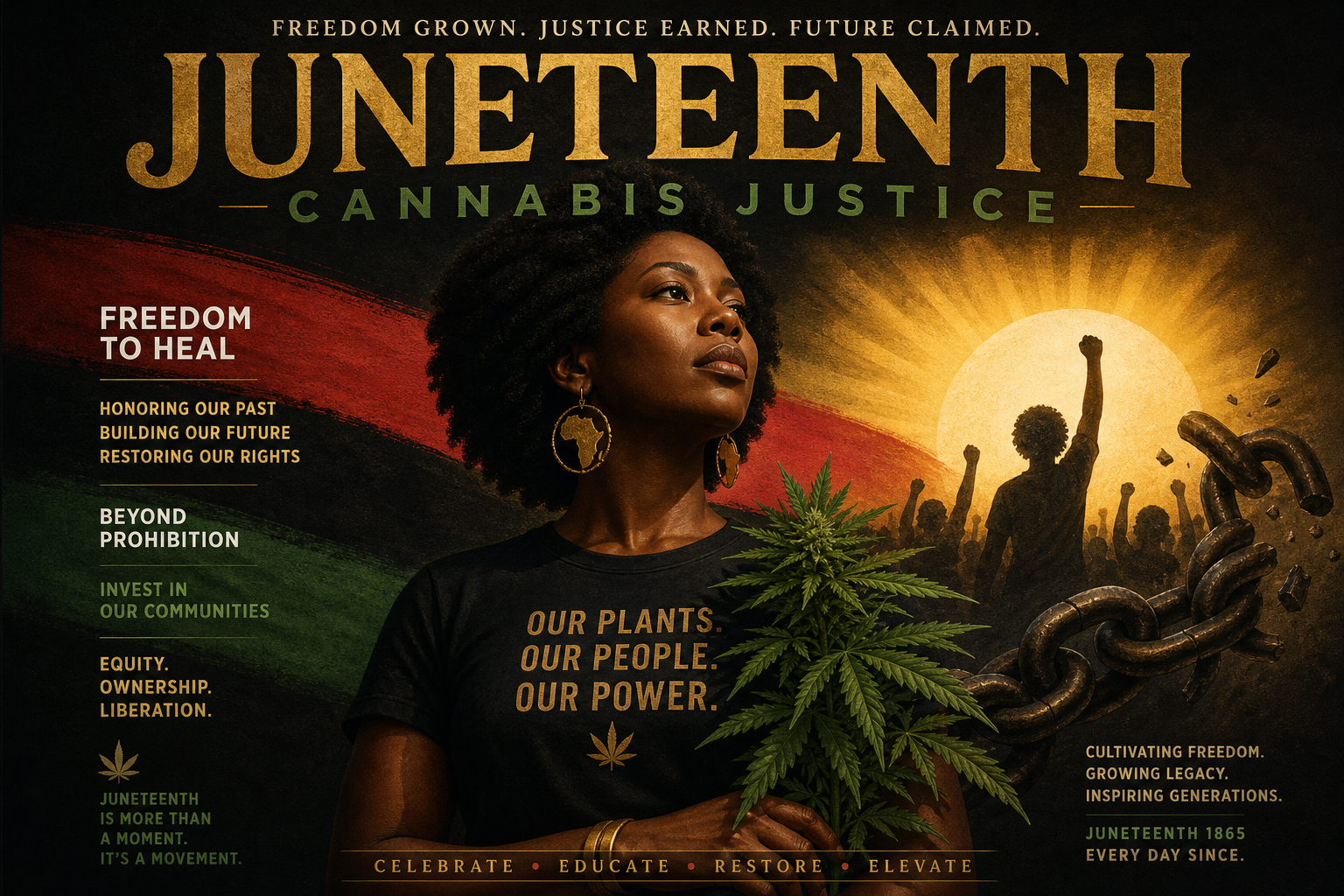
As we celebrate our country’s independence, it is also a time to reflect on the historical path of cannabis regulation. While the 1937 and 1970 bans criminalized this essential plant, we have taken massive strides forward. If you are curious about the differences between early federal laws and modern legislation, read our comparison of the 2018 Hemp Farm Bill vs 2026 Farm Bill. To learn more about how cannabis laws have impacted our communities and the ongoing fight for social equity, explore our history of Juneteenth cannabis justice and the war on drugs.
At Divine Toke, we are proud to continue this rich American tradition of clean, sun-grown agriculture. We believe that everyone deserves access to pure, pesticide-free flower grown directly in living soil, just as the founders intended. This July 4th, we invite you to celebrate agricultural freedom and explore the natural power of our pure, sun-grown organic products.
This article is for educational purposes only and is not medical advice. Always consult your healthcare provider before starting any new wellness routine.