Cannabis and ADHD: What the Studies Say About Focus
The bracket is still open. One adult ADHD trial missed its main attention test. Surveys feel calmer. Lab scores often do not. Not a reason to quit your meds.
Questions this article answers
- does cannabis help ADHD focus or make attention worse
- what do studies say about cannabis and ADHD
- did the Sativex ADHD trial work
- is ADHD a Michigan medical marijuana condition
- should I stop Adderall and use cannabis

Head Cultivator
On this page
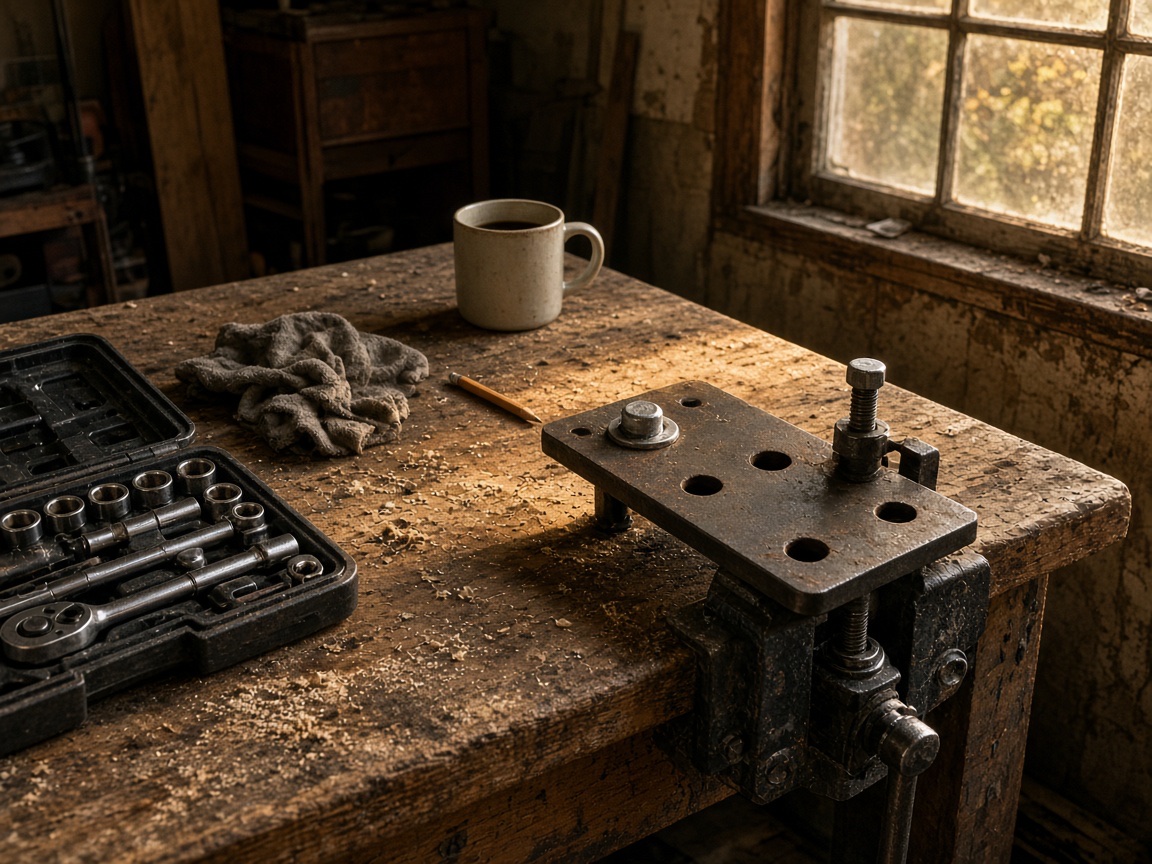
The bracket is still on the bench. One bolt in. The socket set is open, and you have been calling the rest of the job twenty minutes for two hours.
That is a Saturday in a Detroit garage in early October. The light is already leaning toward the window. The list from the week is still open. Cannabis gets sold for this exact stuck point, especially if you live with ADHD or you are pretty sure you do. Focus is the word on the menu. The studies are colder than the pitch.
The one placebo trial in adults with ADHD missed its main attention test. A review of 39 studies said cannabis is not recommended. People in surveys still say they feel less restless. A later lab-style session found a narrow drop in impulsive clicking and a drop in several other thinking scores at the same time. Feeling quieter and finishing the bracket are different jobs.
Stay on Adderall, Ritalin, or whatever else your prescriber wrote. This page will not swap a plant in for that prescription. If the medicine is a problem, that conversation belongs with the person who prescribed it.
Divine Toke is a Detroit-area Michigan farm. We grow sun-grown flower in living soil. We are not a clinic. We do not sell a strain for focus.
A pine smell on a jar is a shopping note in a different post. A fast pulse after THC is a heart post. A gray October mood is a daylight post. Stay here for attention, stimulants, and what the papers measured.
Does Cannabis Help ADHD Focus, or Does It Make Attention Worse? #
The honest read is both, and neither is a prescription. Cannabis has not been shown to reliably improve ADHD focus. It can make attention and memory worse while you are high. Some adults say they feel less restless anyway.
ADHD, in plain shop-floor language, means attention trouble that sticks. Starting is hard. Staying is hard. A side quest eats the afternoon. Restlessness and snap decisions come with it for a lot of people. A blog cannot diagnose you. A jar cannot either.
Three different claims get mashed into one sentence at the counter.
- Feeling less restless. Surveys pick this up. People say the noise in their head drops, or they feel less snappy.
- Doing the next step of a task. Computer tests of attention, memory, and follow-through do not show a clean win. Several show a loss.
- Replacing a prescribed stimulant. No paper here earns that swap. Do not stop a medicine because a budtender, a forum, or this page sounded sure.
THC, the compound that makes you high, is the part most of these stories are actually about. CBD, a cannabis compound that does not get you high the way THC does, does not have a finished ADHD focus win in the reviews below. A cannabinoid is just the family name for those compounds, plus others that show up in smaller amounts.
On a loud shop floor, attention is already spent before you clock out. Presses, radios, and somebody yelling a part number. A hit on the way to the car does not refill that tank for the next shift. It can make the drive home the dangerous part. Michigan law does not treat "I needed to focus" as a reason to drive after cannabis. More on that below.
If your head is fuzzy because October pollen stuffed it up, that is a nose problem with its own write-up. Do not blame every unfinished bracket on ADHD, and do not blame every ADHD day on weed.
What Did the Only Adult ADHD Cannabinoid Trial Measure? #
It measured a mouth spray called Sativex against a fake spray in 30 adults. The main attention-and-activity test did not show a real difference. A few side scores looked better until the researchers corrected for running lots of tests. After that correction, they did not hold.
This is the study people wave around when they want weed to sound like ADHD medicine. Read the row before you let the wave land.
| Who | How many | What they measured | What they found |
|---|---|---|---|
| Cooper and colleagues, 2017, a pilot placebo trial of Sativex mouth spray (PMID 28576350) | 30 adults with ADHD. 15 got the spray and 15 got a fake spray. The main-test math they printed used 15 on the spray and 11 on the fake spray. | A computer test of attention and activity called the QbTest. Also symptom scores for hyperactivity, inattention, and emotional ups and downs. | No significant difference on the main test. Estimate -0.17, span -0.40 to 0.07, p=0.16. Hyperactivity looked better at p=0.03 and a "hold your click" test at p=0.05 before a multiple-test correction. Those did not stay significant after the correction. |
| Francisco and colleagues, 2023, a scoping review (PMID 36508935) | 39 studies, searched through June 27, 2022 | Whether cannabis changed ADHD symptoms or thinking tests | Only one study was a real placebo trial, and its main test missed. Most studies showed worse symptoms or no change. Some people reported improvement. The authors said cannabis is not recommended for people with ADHD. |
| Black and colleagues, 2019, Lancet Psychiatry (PMID 31672337) | 3 ADHD studies inside a bigger mental-health review, including 1 randomized trial of 30 people | Symptom change for ADHD and several other conditions | Scarce evidence that cannabinoids help ADHD. Across the mental-health trials as a group, cannabinoids raised the odds of side effects and of people quitting because of side effects. |
| Stueber and Cuttler, 2022, online survey (PMID 34632827) | 1,738 students | What people said cannabis did to ADHD symptoms, medicine side effects, and executive trouble | Students with ADHD who had used cannabis said it helped hyperactivity, impulsivity, and a lot of medicine side effects. That is belief, not a stopwatch. |
| Stueber and colleagues, 2025, observed use, journal 2026 (PMID 41062851) | 104 adults, four groups of 26 | Symptom ratings plus thinking tests, sober and after users used their own cannabis | Regular users with ADHD felt less foggy-slow. They still scored worse on two thinking tests. Right after use, impulsive clicking dropped on two tests and five other thinking scores got worse. |
| Saunders and colleagues, 2025, pain-clinic year (PMID 40380798) | 223 adults with chronic pain, followed 12 months | ADHD symptom scores versus medical cannabis use | No tie between cannabis use and ADHD symptom change in the whole group, or in people who started with moderate or severe symptoms. A small high-THC signal showed up only in people who barely had ADHD symptoms to begin with. Everyone also had chronic pain. |
| Dellazizzo and colleagues, 2022, a review of reviews (PMID 35048456) | 10 meta-analyses and 43,761 people in general cognition papers. Not an ADHD treatment trial. | Attention, memory, speed, and executive skills during and after cannabis | A high lined up with small to moderate drops in several thinking skills. Word learning and memory were the clearest, and some of that hung on after the high faded. |
Placebo means a fake version, here a spray with no cannabis medicine in it, so the team can see what hope alone does. Randomized means a coin flip, not "people who already like weed." Pilot means small on purpose. It is a first look, not a final answer.
The trial's name is EMA-C. Ruth Cooper and colleagues at King's College London ran it. The paper is in European Neuropsychopharmacology, 2017. Adults were assigned from July 17, 2014, through June 18, 2015. That span is when people entered the study. The public summary does not state a week count for how long each person stayed on the spray, so this page will not invent one.
Sativex is a mouth spray. The summary calls it a cannabinoid medication. It is not the flower in a Michigan jar. It is not a pre-roll. It is not whatever is in a vape from a friend. You cannot walk the numbers from that spray over to a Saturday sesh and pretend they still apply.
The main test was the QbTest. Think of it as a computer task that watches attention, fidgeting, and impulsive clicks, then rolls them into one score. The spray group leaned a little better. The estimate was -0.17. The honest wiggle room ran from -0.40 to 0.07. That span crosses zero, which means "no difference" is still a fair reading. The p value was 0.16.
A p value is a "was this probably luck?" number. Researchers usually want it under 0.05 before they talk like the result is real. 0.16 is not under 0.05. The main test missed.
If you hate math, use the bracket. The spray group was a hair closer to "better" on paper. The hair was small. The range of plausible results included "no difference." That is a miss. A miss with a hopeful lean is still a miss. Shops sell the lean. The paper's own primary outcome is the miss.
Side scores, before any correction:
- Hyperactivity and impulsivity: p=0.03
- A thinking test of holding a click back: p=0.05
- Inattention: p=0.10, which they called a trend, not a hit
- Emotional lability, meaning mood that swings hard: p=0.11, also a trend
Then they adjusted for multiple testing. If you run enough tests, one of them can look lucky. After that adjustment, the paper says the results did not meet significance. The lucky-looking scores did not hold. When they looked only at people who stuck with the plan, the effects were higher. The summary does not print those extra numbers, and the multiple-test problem still sits on top of them.
Harms in a 30-person pilot cannot draw a safety map. They still belong in the story. One person on the real spray had a serious event the paper calls muscular seizures or spasms. Three mild events happened in that group too. One person on the fake spray had a serious heart-and-circulation event. Do not turn the seizure line into "weed causes seizures" from this alone. Do not turn the placebo heart event into "the spray is the safe one" either. Both groups were small.
The authors' own close is careful and still easy to misuse. They wrote that the study is not definitive. They said it offers preliminary evidence for the self-medication theory, meaning the idea that some adults with ADHD use cannabis to treat themselves, and that more studies of the body's own cannabis-like system are needed. They also wrote that adults with ADHD may be a subgroup who get fewer symptoms and no thinking impairment from cannabinoids. That is their hope for a follow-up. It is not a pass on the test they set as the main one.
Francisco's 2023 review is the clean second opinion on this same trial. They reprint the same QbTest numbers. They do not upgrade a miss into a win.
What Do the Bigger Cannabis-and-ADHD Reviews Conclude? #
They conclude that the evidence is too thin, and the ADHD-focused review tells people not to use cannabis as an ADHD treatment. A 2019 mental-health review had already called the ADHD evidence scarce. The 2023 review, with a wider net, did not flip that call.
Francisco and colleagues pulled 39 studies. Experimental ones and observational ones. English papers through June 27, 2022. Only one of them was a randomized placebo trial that directly measured cannabis against ADHD, and you already met it. The rest are mostly snapshots. People who use cannabis and people who do not, compared once, with a lot of other life mixed in.
Their plain result line is the one to keep:
- Some studies said cannabis improved ADHD symptoms.
- Most studies said it worsened symptoms or did nothing.
- The amount of THC and CBD was not measured well in most of the studies.
- Definitions of ADHD and of cannabis use were all over the place.
- Samples were often small.
The conclusion sentence is not coy. Given the evidence they had, cannabis is not recommended for people with ADHD.
Black and colleagues did a different job in 2019, with a public copy on PMC6949116. They looked at cannabinoids for several mental-health problems, not ADHD alone. Depression, anxiety, Tourette's, PTSD, psychosis, and ADHD. They found 83 eligible studies. Forty of those were randomized trials, with 3,067 people across those trials. ADHD was a small slice: three studies, one randomized trial, 30 people. That one trial is Cooper's.
Black's team said there is scarce evidence that cannabinoids improve ADHD. They also said there is not enough evidence to write dosing rules for mental disorders inside a regulatory system. Few of their randomized trials even tested pharmaceutical CBD, or cannabis as people buy it, rather than a made medicine.
One safety number from Black is easy to steal and paste onto ADHD alone. Do not. Across all the mental disorders in that review, cannabinoids raised the odds of side effects to about 1.99 (span 1.20 to 3.29, ten studies, 1,495 people) and the odds of quitting because of side effects to about 2.78 (span 1.59 to 4.86, eleven studies, 1,621 people), compared with placebo. That is the whole mental-health pile, not a Detroit ADHD clinic. It still matters. The "it's just a plant, so the trial was gentle" story does not match the quit-because-of-side-effects number.
What these reviews cannot do:
- They cannot name a milligram that fixes focus.
- They cannot bless a cultivar, a pine nose, or a COA line.
- They cannot tell you your Adderall is optional.
- They cannot see the weed you bought last month. Most of the ADHD papers did not even record THC and CBD well, per Francisco.
Most of those 39 papers are also snapshots, not assignments. A snapshot asks, on one day, who uses cannabis and whose ADHD symptoms look worse. It cannot tell you which thing came first.
Two stories fit the same chart.
- Cannabis made the symptoms worse.
- People who were already having a harder time were more likely to use cannabis.
Francisco's group still said most studies pointed to worse symptoms or no change, and some pointed to improvement. They also listed the mess under the numbers. Small samples. ADHD defined in different ways. Cannabis defined in different ways. THC and CBD often unmeasured. That is why a single scary headline and a single glowing testimonial can both be "in the literature" without either one being a treatment.
The spray trial is the design that tries to cut the knot. People were assigned to the medicine or the fake spray. They did not get to pick the group that matched the story they already believed. Even with that cleaner setup, the main attention test missed. You do not get "weed causes worse ADHD" from a forum poll. You do not get "weed treats ADHD" from Cooper's p=0.16. You get a failed main test, a pile of messy snapshots, and a 2023 recommendation not to use cannabis as the treatment (PMID 36508935).
Age sits inside that mess too. Some papers are teens. Some are college students. Some are adults in a pain clinic. A 19-year-old on a campus survey and a 42-year-old on second shift at a Michigan plant are not the same nervous system, the same sleep, or the same legal risk. The adult trial is the one that matches this page. Do not hand a campus survey to a teenager as permission, and do not hand it to yourself as a protocol.
Black's review is older on purpose in this telling. Their search closed in 2018. Francisco's search ran through June 2022 and still did not find a second placebo trial that saved the idea. Saunders, in 2025, watched 223 adults with pain for a year and still did not see medical cannabis move moderate or severe ADHD scores (PMID 40380798). Newer is not the same thing as positive.
A newer check, not a spray trial, points the same direction for people who already have real ADHD symptoms. Saunders and colleagues followed 223 adults with chronic pain for 12 months. They asked about medical cannabis and scored ADHD symptoms along the way. Cannabis use was not tied to a change in ADHD symptoms in the full group. It was not tied to a change in the people who started with moderate or severe ADHD symptoms. The authors said that null result suggests cannabis is unlikely to be a good ADHD treatment.
They did see one softer signal. Among people who started with minor ADHD symptoms, or none, high-THC medical cannabis lined up with a drop in those scores compared with low-THC. Read the fences. Everyone in the study had chronic pain. The mild group was not a clean ADHD sample. The authors called it preliminary and said the modest result needs caution. It is not a reason to shop high-THC flower "for focus."
Why Do Surveys Say Cannabis Helps ADHD When the Tests Do Not? #
Because a lot of people feel a change in restlessness, irritability, or mental static, and they remember that night. A feeling is real. It is not the same measurement as a thinking test, and the tests do not hand cannabis a focus trophy.
Stueber and Cuttler, 2022, asked 1,738 students about ADHD symptoms, cannabis use, medicine side effects, and executive dysfunction. Executive dysfunction means the practical mess: planning the next step, starting it, holding the steps in your head, and not walking off to something louder. The students with ADHD who had used cannabis said cannabis had a short-term helpful effect on many ADHD symptoms. Hyperactivity and impulsivity are the examples in the summary. They also said it improved most of their medication side effects. Irritability and anxiety are the examples.
The authors went further. How often someone used cannabis changed the statistical link between bad symptoms and executive trouble. Their closing suggestion was that more frequent use may soften that trouble. Hold that sentence with two hands. It came from an online survey. There was no fake spray. There was no computer test in that paper. People who already use weed and feel it helps are the people most likely to fill out a survey like that. Memory favors the night your head got quiet. It edits the night you stared at the same bolt.
The abstract does not say how many of the 1,738 students had ADHD and used cannabis. This page will not invent that subgroup.
The same lab came back with stopwatches. Stueber, LaFrance, Herbert, and Cuttler published a 2025 study in a 2026 journal volume. One hundred four adults. Four groups of 26.
- Cannabis users with ADHD
- Non-users with ADHD
- Cannabis users without ADHD
- Non-users without ADHD
Session one, everybody did thinking tests and rated impulsivity, hyperactivity, inattention, irritability, anxiety, and mood. Session two, the cannabis users were watched using their own product. The non-users stayed sober. Then everybody repeated the tests.
What regular use looked like before that session:
- Users with ADHD said their sluggish cognitive tempo was less severe. That phrase means a dragged, foggy kind of slow, not the hyperactive kind of ADHD.
- Users with ADHD and users without ADHD both did worse on two objective thinking tests.
- The paper's close says regular use did not produce any objective thinking benefit.
What the high itself looked like, in the ADHD users:
- They reported less impulsivity, less irritability, less anxiety, and a better mood.
- Impulsive responding dropped on two thinking tests. Impulsive responding means clicking when you were supposed to wait.
- Performance dropped on five of the other thinking scores. The summary does not name those five tests. Do not let a shop fill the blanks in with "memory is fine."
Their conclusion is the sentence the counter usually skips. Limited evidence that a cannabis high may selectively reduce impulsivity, both the feeling and two test scores, in people with ADHD, while impairing several other parts of thinking. Regular use lowered the feeling of foggy-slow and did not improve the tests.
That split explains the porch argument. Your friend is not lying about feeling less snappy. The unfinished bracket is also not lying. A quieter impulse and a worse score on five other tasks can sit in the same hour.
Put the survey and the session next to each other.
| What you hear | Where it comes from | What it cannot prove |
|---|---|---|
| Weed calms my ADHD | 2022 student survey, self-report (PMID 34632827) | That attention, memory, or follow-through improved |
| I need it or I cannot function | Same survey's suggestion about frequent use and executive trouble | A timed test. The 2025 session did not find an objective thinking benefit from regular use |
| I click less wildly when I am high | 2025 session, two impulse tests in ADHD users (PMID 41062851) | That the rest of the thinking battery improved. Five other scores went down |
| High THC treats mild attention trouble | 2025 pain cohort, only in people with little or no ADHD at the start (PMID 40380798) | Help for moderate or severe ADHD. That group showed no symptom change |
If you use cannabis and you have ADHD, tell your prescriber the truth about how often and what form. The survey people were also talking about medicine side effects. Irritability on a stimulant is a real complaint. The fix for a side effect is a dose change, a different hour, a different medicine, or a different plan. It is not a silent swap to flower that your prescriber never hears about.
What Does THC Do to Attention, Memory, and Follow-Through? #
In adults generally, a cannabis high lines up with small to moderate trouble in attention, memory, and the skills that keep a job moving. That research is not an ADHD treatment trial. It is the reason a shop jar is a bad tool when the bracket is still open.
Dellazizzo and colleagues did not recruit an ADHD clinic. In 2022 they reviewed other reviews. Ten meta-analyses. Seventy-one effect sizes. The pooled cognition papers covered 43,761 people. Evidence quality ran from low to moderate. The question was what a cannabis high, and the leftover after the high, does to thinking in adolescents and adults in the general research.
Their map, in shop language:
| Skill | What the pooled research showed | Is this an ADHD cure study? |
|---|---|---|
| Word learning and memory | The clearest hit. A high makes it worse, and some of the loss can stick after you no longer feel high. | No |
| Executive skills | Small to moderate worse, both during the high and after, in the pooled data. Executive skills mean planning, holding steps, and not bailing. | No |
| Working memory and decisions | Small to moderate worse. Working memory is the scratch pad that holds a measurement while you reach for the next socket. | No |
| Attention | Cannabis dosing produced small to moderate worse scores. Heavy use in young people also showed leftover attention trouble. | No |
| Simple motor skills | Small to moderate effects. Your hands are not fully excused. | No |
| Language | No significant difference between users and non-users in that pooled look. | No |
Crean, Crane, and Mason wrote a narrative review in 2011, not a single trial, so there is no one headcount. Their point still matches the later math. Cannabis can impair the skills you need to plan, organize, solve a problem, decide, remember, and keep a lid on behavior. How bad it is depends on the amount, how recent the use was, the age you started, and how long you have been using.
That is the opposite of a focus tool. The QbTest in the ADHD spray trial did not show a significant thinking win. The general adult literature shows a thinking cost. You can hold both facts. One small medicated-spray study failed to prove a benefit. A large pile of cognition papers shows a cost while people are high.
Route and habit change the size of that cost. Smoked or vaped THC shows up faster than a low oral dose. People who use often can feel less "stoned" and still miss a step. Dellazizzo's team said the acute impairments line up with leftover effects, meaning the dent does not always end when the high feels over. Do not treat "I feel normal" as a passed test.
None of this is a milligram chart for your body. The papers did not test Divine Toke flower, and we are not going to invent a house dose for attention. If you already used cannabis today and the job is safety-sensitive, the conservative move is to stop the job. A press, a lift, a hospital floor, a highway lane. Feeling a little clear is not a clearance.
Kids are outside this page on purpose. The trial that anchors the ADHD claim was in adults. College-student surveys are not a pediatric plan. If a child or a teen is the one who cannot finish homework, that is a pediatric visit. It is not a jar in a garage.
Is a Piney Jar, CBD Oil, or a Michigan Medical Card an ADHD Treatment? #
No. A pine smell, a CBD bottle, and a Michigan medical card are three different objects. None of them is an ADHD prescription. A prescribed stimulant is still in a different category from all three.
| Thing in your hand | What it actually is | What the ADHD papers allow you to say |
|---|---|---|
| Pine-smelling flower | A terpene preference. A terpene is an oil that makes a jar smell like pine, pepper, or citrus. | Not an ADHD trial. Shopping notes live on their own page. |
| A CBD oil or gummy | One compound, often with a dose on the label and no ADHD trial behind it. | The reviews here did not establish a finished CBD-only focus benefit. |
| A Michigan medical card | A registry for conditions the state lists. | ADHD is not on that list. |
| Adderall, Ritalin, or another prescribed ADHD medicine | A drug your prescriber chose, with a monitoring plan. | Do not stop it because of a blog, a budtender, or a jar. |
Pinene, the terpene that smells like pine needles, gets marketed as the "clear head" oil. That shopping conversation is real, and it is not this article. The pinene page is about nose and couch, not about replacing a diagnosis. A pine jar can still carry enough THC to worsen the scratch-pad memory Dellazizzo's review describes. The smell does not cancel the THC.
CBC is another easy mix-up. CBC, short for cannabichromene, is a minor cannabinoid that can show up as a small line on a Michigan lab sheet. The CBC page is about reading that line. It is not a focus drug, and Francisco's review already said THC and CBD amounts were poorly measured in most ADHD studies. A third line on the sheet does not repair that gap.
CBD-only deserves a clean no. Cooper tested a cannabinoid mouth spray, not CBD by itself. Black's team said few randomized trials in their mental-health pile even looked at pharmaceutical CBD. This page will not treat a registry listing or a half-finished protocol as a result. If a bottle says CBD and the counter says ADHD, ask for the trial, the headcount, and the main test. If they cannot name one, you are hearing a sale.
Michigan's medical list is a state document, not a vibe. The Cannabis Regulatory Agency qualifying-conditions FAQ names cancer, glaucoma, HIV, AIDS, hepatitis C, ALS, Crohn's disease, agitation of Alzheimer's disease, nail patella, PTSD, obsessive-compulsive disorder, arthritis, rheumatoid arthritis, spinal cord injury, colitis, inflammatory bowel disease, ulcerative colitis, Parkinson's disease, Tourette's, autism, chronic pain, and cerebral palsy. It also covers a chronic condition whose treatment causes wasting, severe and chronic pain, severe nausea, seizures, or severe and persistent muscle spasms.
ADHD is not on that list. A physician can certify a listed condition if you actually have one. They cannot honestly recode ordinary ADHD as "severe nausea" so a card appears. Adult-use cannabis is a separate door. Under MCL 333.27954, you have to be 21 to possess, buy, or use it. Being 21 does not turn the flower into medicine. A card does not either.
Shops are not supposed to dress the jar up as treatment. Michigan rule R 420.507 bars advertising that is deceptive, false, or misleading, and it bars health or health-benefit claims unless the claim has been through an FDA path almost no cannabis flower has. "This eighth is for ADHD focus" is a health claim. If a Detroit menu reads like a clinic, treat it as an ad and ask for the lab sheet instead.
When the sheet hits the counter, read it like a receipt.
- Total THC. That is the number tied to the high, and the high is what the cognition reviews link to a worse scratch pad (PMID 35048456).
- CBD, if the panel even lists it. A small percent is not a finished ADHD trial. Black's review already said pharmaceutical CBD was barely tested for these mental-health questions (PMID 31672337).
- The loud terpene. Pine, citrus, pepper, gas. That is smell. It tells you what your nose will notice. It does not tell you the QbTest would have passed.
- Lab name and date. A pretty panel from a different harvest is not the jar in your hand.
- Any word like focus, energy, productivity, or ADHD. That is the health claim the rule is about. Licensed marketing should not be doing that job.
Divine Toke will not print a strain for this. Blueberry Mojito, Honey Bananas, and L.A. Sunshine are names we actually use. None of them is an attention protocol. If a batch smells like pine, that is a nose. Take it to the pinene page. Do not take it to your prescriber as a substitute.
What Should You Know About Stimulants, Your Heart, and a Michigan Drive? #
Do not stop a prescribed stimulant because of cannabis. Tell the prescriber what you use. THC can speed your heart, the combination is poorly studied, and driving after cannabis is illegal in Michigan even when the weed itself was bought legally.
Adderall and Ritalin are brand names people use for prescribed stimulants. Other ADHD medicines are not stimulants at all. This page is not a medication guide and it will not rank them. The only instruction that belongs here is the boring one. Stay on the plan unless the prescriber changes the plan. Do not skip a dose so you can "see what the weed does." Do not double a dose to push through a high. Do not quit on a Saturday because a forum said weed is the real treatment.
Side effects are still allowed to be real. The 2022 student survey is full of people who said cannabis softened irritability and anxiety they tied to their medicine (PMID 34632827). Bring that sentence to the prescriber as a symptom report. Appetite, sleep, a racing mood, a flat mood, a jaw you cannot unclench. Those are reasons for a medical visit. They are not reasons for a secret second prescription from a dispensary.
Heart rate is the overlap people notice in the body before they notice it on a paper. THC can make the pulse climb. A stimulant can do that too. Stacking them is two pushes on the same system. There is not a clean human trial of every ADHD medicine plus every cannabis product, so this page will not invent a safe gap in hours or milligrams. The heart-rate post walks through the THC side with its own sources. Read it before you treat a pounding chest as "just the focus kicking in."
Chest pain, fainting, a pulse that will not come down, or a panic that feels like a heart attack is an urgent care problem, not a blog problem. The Cooper trial recorded one serious heart-and-circulation event in the placebo group and a serious muscle-spasm event in the spray group (PMID 28576350). Those lines are too small to blame or acquit the spray. They are big enough to remind you that a 30-person study is not a safety certificate.
Work is the Michigan-specific part. MCL 333.27954 says the adult-use law does not make an employer allow cannabis at work or on company property. A boss can discipline you for breaking a workplace drug policy. A boss can discipline you for working under the influence. A legal purchase on your day off does not erase a plant's test, a hospital's test, or a DOT-style test if your job uses one. Second shift at a Detroit-area plant does not get a special clause. If the policy says no THC, the policy is the policy.
Driving is plainer. The same statute does not authorize operating a motor vehicle under the influence of cannabis. The Michigan State Police cannabis-and-driving page says drivers may not operate, navigate, or be in physical control of a vehicle while under the influence, and may not consume cannabis while operating. Passengers may not smoke in the passenger area on a public road. Officers look at driving, at you, and at field tests. There is no "I have ADHD" exception and no "it helps me focus on the Lodge" exception.
A second-shift commute is the trap. You leave a loud floor, you are already behind on sleep, and the jar sounds like the off switch. The off switch and a freeway do not belong in the same hour. If you used cannabis, you are not the driver. That includes the short hop to a party store. Physical control counts.
Home has rules too. If the garage is cold in early October and you move the sesh into a Detroit rental, the neighbor's air is not your focus hack. Smoke that travels is its own problem, covered in the rental and neighbor rules post. A hallway, a shared porch, and a vent are not private just because your task list is private.
What Can You Change on a Saturday Besides Another Hit? #
One visible next step, then stop. Water, food, light, and the medicine plan you already have will move more brackets than a jar sold as focus. If you still use cannabis, use it after the job, at home, and not before a drive.
The garage does not need a new identity. It needs the second bolt. ADHD makes "the whole project" feel like the unit of work. The unit that fits in a restless hour is smaller than that.
- Write the next step on scrap cardboard. Not a 40-line life plan. "Bolt two, then stop." Put the cardboard where the socket set is.
- Eat and drink water before you negotiate with your brain. A skipped lunch on a Saturday looks like a focus disorder and is sometimes just a body running on coffee.
- Cut the extra noise on purpose. Ear protection on a loud bench, the way you would on a shop floor. One podcast is a side quest. Silence is a tool.
- Use the October light while you have it. By early afternoon the Detroit garage is already warmer in the window than in the corner. When the room goes dim, that slump is partly the season. The shorter-days post is about mood and daylight, which is not the same problem as attention, and it is easy to mix them up in the first week of October.
- Check the boring body stuff. Fall pollen and a stuffed head make every task harder. That fog has a different article. Sleep debt from a rotating shift will mimic ADHD on a Saturday even if Monday at the plant felt fine.
- Leave the stimulant plan alone unless the prescriber changes it. Set a reminder for the dose you were given. Do not add a hit as the reminder.
Second shift makes Saturday weird in a way a daytime office does not. You may have been on a floor until 11 p.m. or later, then you are in the garage while the block is still quiet, and the plot falls apart after lunch. That pattern is sleep and schedule. It can look like "I need a focus strain" when what you need is a nap before you pick up a tool that can take a finger. Cannabis research does not measure your overtime. Your body does.
Mistakes that show up on this kind of Saturday:
- Opening the jar to start the job. The cognition reviews say a high makes the scratch pad and the follow-through worse, not better (PMID 35048456). Start sober.
- Treating a quiet head as a finished task. The 2025 session found less impulsive clicking and five other scores going the wrong way (PMID 41062851). Check the bracket, not the mood.
- Skipping the prescribed dose because you "felt fine." Fine on a Saturday is not a taper plan. Tell the prescriber before you change anything.
- Driving to the hardware store mid-sesh because you are one bolt short. Physical control of a car is still driving under Michigan State Police rules. Count the bolts before you start, or wait until you are sober.
- Hotboxing a rental because the garage is cold. Early October in Detroit will do that. The neighbor still did not consent. The rental post is the rule, not a vibe.
- Reading a pine nose, or a CBC line on the lab sheet, as a prescription. Those are shopping details. The pinene post and the CBC post stay in their lanes.
- Calling a stuffed-up October head an attention disorder. Pollen is allowed to ruin a workbench day. Deal with the nose in the allergies post before you rewrite your whole diagnosis.
- Calling a dark afternoon a focus failure. The first week of October, the garage dies early. Mood and daylight have their own page. Do not make THC do a light's job.
One sober Saturday, if you want the hours written out:
- Morning, while the block is quiet. Coffee, cardboard, bolt two. Tools out. Jar closed.
- Late morning. If bolt two is in, either stop or do the one next step you already wrote. Do not "quickly" rebuild the whole bracket.
- Middle of the day. Eat. If you came off a night shift, a nap can be the task. A nap is not laziness when you left a plant at midnight.
- Afternoon, when the Detroit garage dims. Decide if you are still working or if you are done. October light will not wait for your motivation.
- Evening. Flower only if the tools are put away, the keys are in the house, and nobody is about to ask you to drive.
That schedule is not a study. It is a way to stop using the studies as an excuse to stay stuck. The studies already said the plant is not the focus tool. The bench is still the bench.
If the evening sesh makes Monday's first bolt harder, believe Monday. Leftover fog after a high shows up in the cognition reviews (PMID 35048456). That fog is not proof you need a stronger jar before work. It is a reason to keep flower away from the hours you have to think.
If the task is done and you still want flower, that is a different hour. Home. Not the car. Not a shared hallway. Not a safety-sensitive job you might get called back to. A 1 gram pre-roll is easier to put down than a mystery edible you cannot untake. Divine Toke sells sun-grown flower and those 1 gram joints. We do not sell them as ADHD medicine, and R 420.507 would not let us if we wanted to.
If you cannot start even the one bolt, and this has been months, not one Saturday, ask for an actual evaluation. Primary care, psychiatry, a neuropsych test if someone orders it. Cannabis research does not get to stand in for that appointment. Francisco's line still applies on the way there. Cannabis is not recommended for ADHD on the evidence they reviewed (PMID 36508935).
FAQ: Cannabis and ADHD Focus #
Short answers. Each one stays tied to a paper or a Michigan rule.
Does cannabis help ADHD focus? #
It has not been shown to. The only placebo trial in adults missed its main attention test, with p=0.16 on the QbTest (Cooper and colleagues, PMID 28576350). A review of 39 studies said cannabis is not recommended for people with ADHD (Francisco and colleagues, PMID 36508935). Feeling less restless in a survey is a different result from finishing the task.
Can cannabis make attention worse? #
Yes. That is the usual direction in general adult cognition research, and it showed up inside an ADHD sample too. A review of reviews tied a cannabis high to small to moderate drops in attention, memory, and executive skills (Dellazizzo and colleagues, PMID 35048456). In 104 adults, five thinking scores got worse during the high, including in the ADHD group (PMID 41062851).
Why do so many people with ADHD say weed helps? #
They are often reporting restlessness, irritability, and mental static, not a passed attention test. In a survey of 1,738 students, those with ADHD who had used cannabis said it helped hyperactivity, impulsivity, and several medicine side effects (PMID 34632827). The later session from the same lab found a narrower impulse change and no objective thinking benefit from regular use (PMID 41062851).
Did the Sativex trial prove a benefit? #
No. The authors called it preliminary and not definitive, and the main test missed. Side scores for hyperactivity (p=0.03) and holding a click back (p=0.05) looked better before a multiple-test correction and did not hold after it (PMID 28576350). The spray was also not shop flower.
Is CBD better than THC for ADHD focus? #
These reviews do not show that. Cooper's trial was a cannabinoid mouth spray, not CBD alone (PMID 28576350). Black's mental-health review found few randomized trials of pharmaceutical CBD at all (PMID 31672337). A CBD gummy is not the missing proof.
Should I stop Adderall or Ritalin and switch to cannabis? #
No. Do not stop a prescribed medicine because of this page or a jar. The 2023 review's recommendation is that cannabis is not an ADHD treatment (PMID 36508935). If the stimulant's side effects are miserable, tell the prescriber. The student survey shows people try to self-treat those side effects (PMID 34632827). That is a reason to report them, not a reason to disappear from care.
Is ADHD on the Michigan medical marijuana list? #
No. The CRA qualifying-conditions FAQ lists PTSD, chronic pain, autism, Tourette's, and a set of other diseases. It does not list ADHD. Adults 21 and older can buy adult-use cannabis under MCL 333.27954. Legal access is not a diagnosis and not a dosing plan.
Can I drive to a shift after using cannabis if it helps me focus? #
No. Michigan bars driving under the influence, and it bars consuming cannabis while you are driving. The State Police page says officers judge driving, observation, and field tests. A second-shift commute does not get an exception. If you have used cannabis, you are not the driver.
Does a pine smell mean the flower is for focus? #
No. Pine is a smell. THC can still worsen memory and follow-through. The shopping version of that nose is the pinene post. Dellazizzo's review is the cognition warning (PMID 35048456). R 420.507 also bars selling the jar as a health benefit.
Can a Michigan job still test me if weed is legal? #
Yes. The adult-use law does not make your employer allow cannabis. MCL 333.27954 lets an employer discipline you for a workplace drug policy or for working under the influence. A Detroit plant, a hospital, or a driving job can keep its rule. Ask what the policy is before you guess.
Did a year of medical cannabis change ADHD symptoms in a pain clinic? #
Not in the people who actually had moderate or severe symptoms. Saunders and colleagues followed 223 adults with chronic pain for 12 months. Cannabis use was not tied to ADHD symptom change in that moderate-to-severe group. A high-THC dip showed up only among people who started with little or no ADHD, and the authors said not to treat that as a treatment win.
What should I tell a doctor? #
How often you use cannabis, flower or edible or vape, and what you hope it does for attention. Also list every stimulant and non-stimulant on your chart. The papers cannot see your dose, and Francisco's review said most ADHD studies did not measure THC and CBD well (PMID 36508935). This article is education. Their visit is the medical decision. Do not stop a medicine in the parking lot before you go in.
If the Bracket Is Still Open #
Finish the one step you wrote down, or leave the tools where they are and deal with it later. A jar is not the second bolt.
Curiosity about cannabis is allowed. A focus protocol is not. Divine Toke is a Detroit-area Michigan farm. Sun-grown flower, living soil, lab-tested lots, and 1 gram pre-rolls are what we sell. None of those is Adderall. None of those passed the QbTest, because we did not run a clinic in the garage.
If you use the plant, keep the job and the sesh in separate hours. Stay home. Skip the drive. Skip the shared hallway if the smoke is going to bother the next unit. Keep the prescriber in the loop. If the good "quiet head" night does not turn into a finished task, believe the bracket.
This article is for educational purposes only and is not medical advice. Always consult your healthcare provider before starting any new wellness routine. Do not stop Adderall, Ritalin, or any other prescribed medicine based on this page.
Try Blueberry Mojito — sun-grown in Detroit
Small-batch, living-soil flower cultivated in our Detroit sun-houses. Ships to all 50 states.