Do Cold Michigan Nights Make Cannabis Stronger, or Just Change the Color?
Some menus charge extra for purple flower and credit cold nights. Detroit's October low is 44°F, and cool air only colors plants with the genes. Read the label.
Questions this article answers
- Do cold fall nights make outdoor cannabis stronger, and why does some late-season flower turn purple?
- does purple weed mean stronger weed
- do cold nights increase THC
- why does cannabis turn purple in the fall
- should I pay more for purple buds

Head Cultivator
On this page
Some menus charge extra for purple flower and say the cold nights made it stronger.
Detroit's normal October low is 44°F. That cool can bring out purple in a plant that already makes the pigment. Nothing I found shows it raising THC.
I'm Jamie. I grow sun-grown flower for Divine Toke, a Detroit-rooted living-soil brand that sells online. No storefront. No local delivery.
My tolerance isn't a typical tolerance, and I have smoked a lot of late outdoor flower. Dusky leaves never told me a jar would hit harder. The label and the smell did.
Frost on the bud is a different problem. The frost post from October 7 covers that check.
Do Cold Nights Make Cannabis Stronger? #
No. A cold night can change color. Strength follows the variety, how ripe the resin glands got, and the light.
The cleanest temperature trial I can cite held cannabis plants at set temperatures. It measured purple pigment, flower weight, and CBD. It is a 2025 paper (PMC12309197).
The plants were a day-neutral line, which means they flower on their own clock. Outdoor plants in Michigan wait on short fall days. These plants already showed purple on the leaves and flowers before anyone touched the thermostat.
Researchers held each group at one temperature, from about 33°F up to about 72°F (0.5°C to 22°C). Here is what moved:
| Hold | About | Purple pigment | CBD percent and flower weight |
|---|---|---|---|
| 0.5°C | 33°F | Lower than the cool holds | Cool end of the range |
| 8°C | 46°F | Peak, tied with 15°C | Rose as the hold got warmer across the whole test |
| 15°C | 59°F | Peak, tied with 8°C | Same upward trend with warmth |
| 22°C | 72°F | Lower again | Higher end of that warmth trend |
The authors read their data this way. Anthocyanin, the purple pigment, answered the temperature. Total CBD percent and dry flower weight rose as it warmed, and they tied that rise to the plants being further along.
Peak purple sat at about 46°F and about 59°F. The near-freeze hold and the warm 72°F hold both made less pigment than those two cool holds.
Four limits sit on this trial:
- The plants were already purple. The test measured how much pigment that family stored.
- Each group sat at one temperature the whole time. A typical October day runs from the low 60s into the mid-40s, and the lab plants never got that swing.
- They measured CBD. They did not measure THC.
- Day-neutral plants flower without a short-day signal. Outdoor plants here wait on that signal.
I don't have a color log for this October. Our jars get the same read I give any other jar.
Why Does Late-Season Flower Turn Purple? #
Some plants make anthocyanins, the red and purple pigments, and cool air can turn that machinery up.
A green variety stays green unless it can already run the color steps. The night only works on a plant that has them.
Anthocyanins sit in a different bucket from THC and from the sticky resin on the bud. A 2023 cannabis paper (PMC10376404) measured them in leaves, stems, and flowers. It named cyanidin-3-rutinoside, also called keracyanin, as the major one. That is a form of cyanidin, the pigment family behind a lot of purple fruit and purple leaves.
The paper built a first map of how cannabis turns that color on. It did not test potency.
A 2024 paper on cannabis leaves (PMC11588432) looked at four varieties that already ranged from green to red and purple. The genes that lined up most strongly with the pigment were the ones that build anthocyanins. Their names read like license plates (4CL, CHS, F3H, and a few more). They are steps in the pigment recipe, and THC has a different recipe.
Cool air, in crops where someone measured it, turns those color genes up in the lines that have them. A 2020 cabbage study (PMC7017278) is the clean example from outside cannabis. Seedlings from a purple-headed line and from a white-headed parent sat at 77°F (25°C) or at about 54°F (12°C). The purple line piled on anthocyanin in the cool. The white-headed parent stayed white in the same cool room. Genetics decided whether there was any color to bring out.
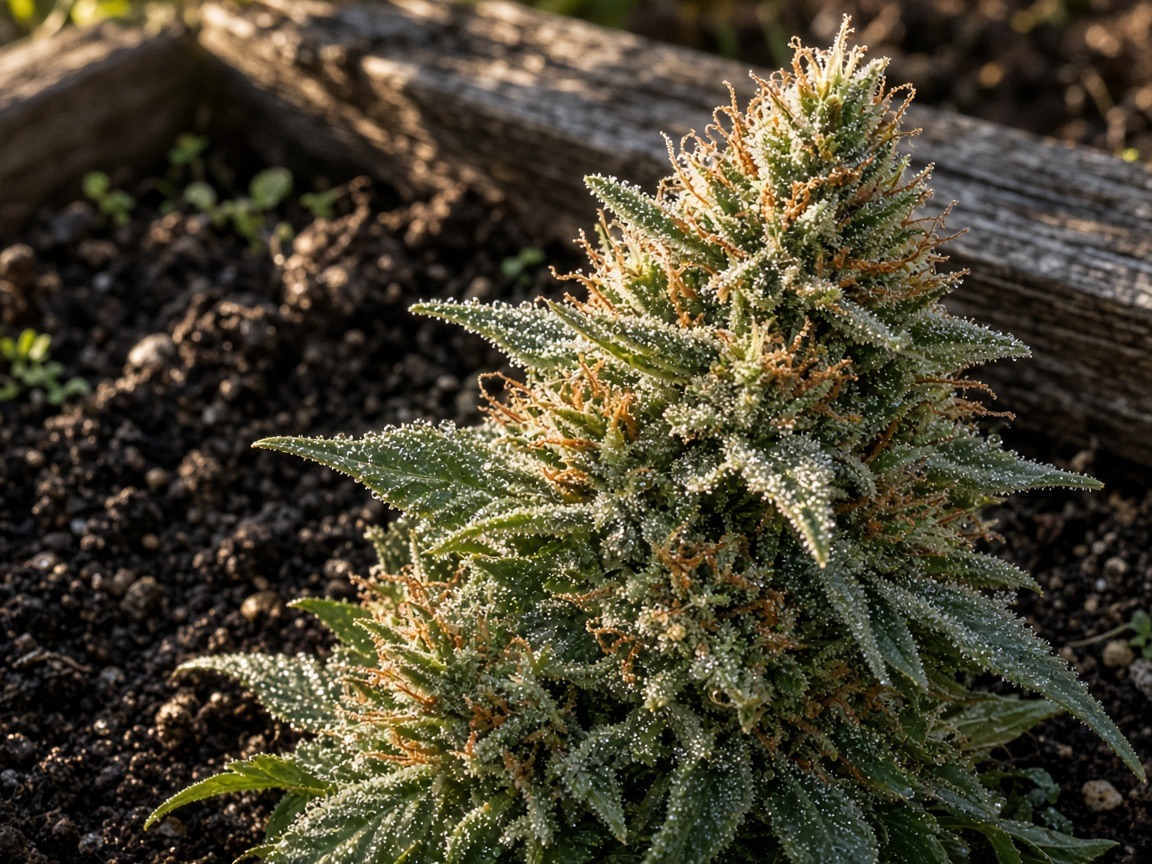
Late-season outdoor flower can show that dusky look on the sugar leaves, the calyx, or both. Sugar leaves are the small leaves in the bud. The calyx is the little pod each hair grows from. Neither one is a lab result.
Does the Plant Need the Right Genes? #
Yes. The variety has to already carry the color steps. Cool air turns those steps up.
A month of 40s at night leaves a green variety green. The cabbage trial is the picture I trust for that. The purple line colored up at about 54°F, and the white line stayed white (PMC7017278).
The cannabis trial only tested how much pigment a purple population made (PMC12309197). It never put a green variety next to a purple one in the same cold. The 2024 leaf paper compared varieties that already differed in color, and the difference sat on pigment genes.
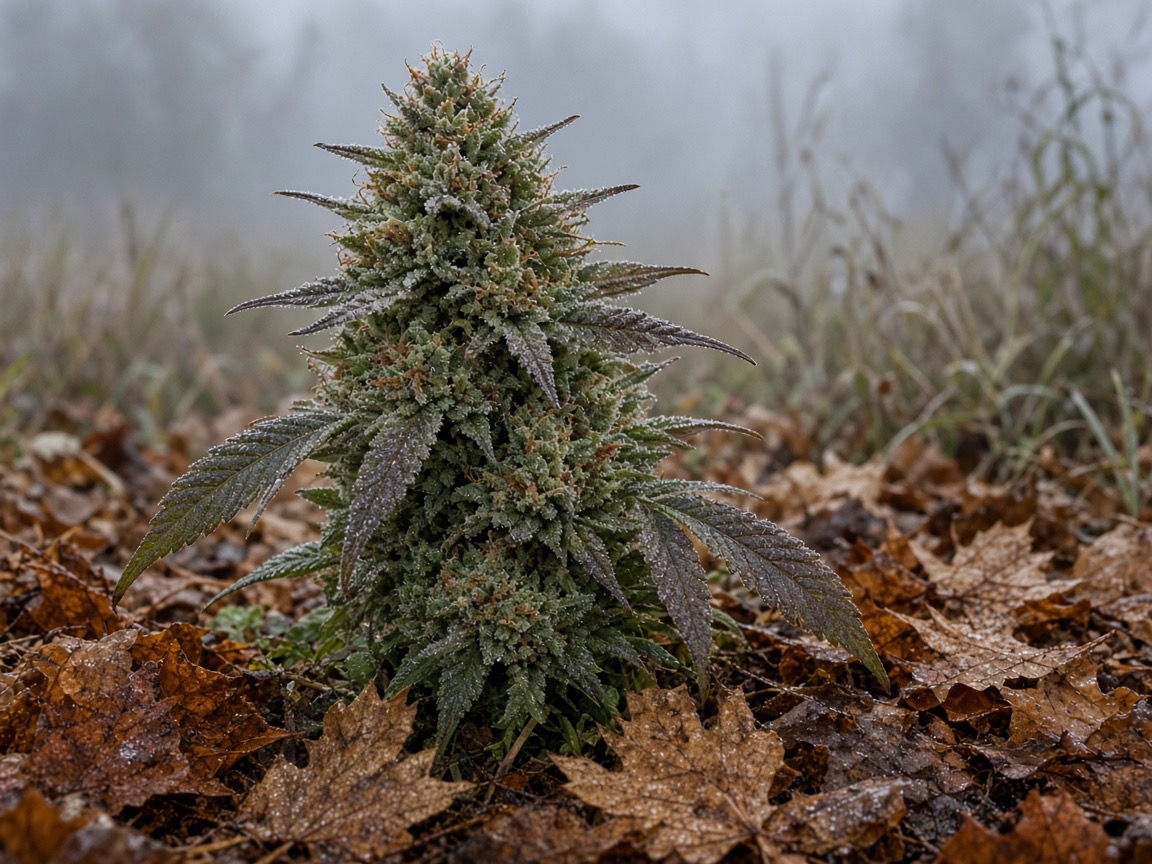
Two plants in the same Michigan field can finish different colors after the same week. One has the genes, and the cool nights nudge them. The other stays forest green with orange hairs.
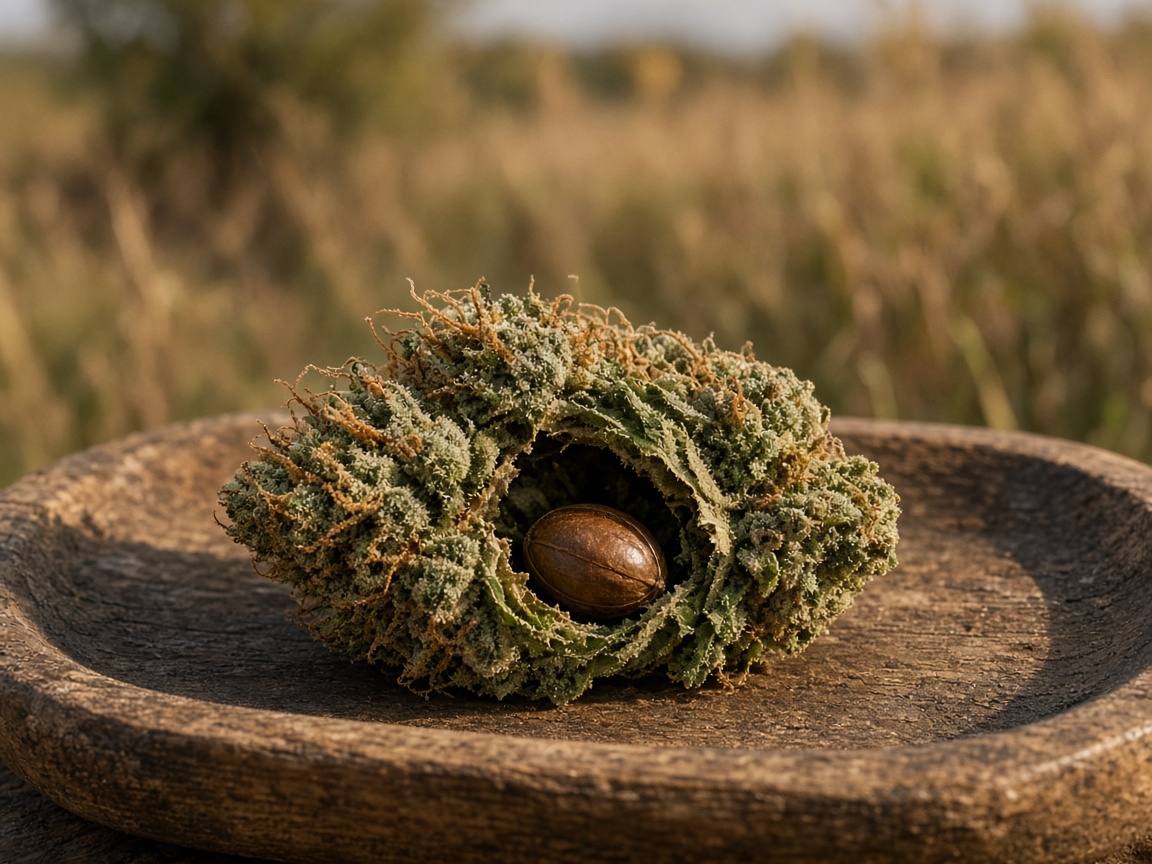
Found a seed in your purple bud? Pollen put it there, and the pollen drift post covers how.
Breeders can stack a purple look with a high-THC chemical type in one variety. Chemical type means the mix of cannabinoids the plant tends to make. A purple bag that also tests high inherited two traits, or the grower picked a parent that had both. The papers here never showed the purple pigment raising THC.
Indoor purple is the same lesson with the weather taken away. A lamp room can grow purple leaves with no cold October night outside. If the variety makes anthocyanins, the color can show up under lights.
Where Does the Green Go in the Fall? #
The green fades because the leaf is breaking chlorophyll down. Purple is a different pigment the plant builds.
Chlorophyll is the green pigment that runs photosynthesis, the sugar-making that keeps the plant going. When a leaf ages out in the fall, that green comes apart. The purple is its own build, in plants that can run it.
The paper I use for the breakdown is an aspen study. Andersson and colleagues (2004, PMC395783) followed one free-growing aspen in northern Sweden across autumn. They saw a major shift in which genes were on. That shift lined up with massive chlorophyll breakdown. The leaf was leaving full photosynthesis and pulling useful material back out of the blade before the blade dropped. That is the green half of fall color.
Cannabis purple is the other half, and it has its own measurements. PMC10376404 identified an anthocyanin in the purple tissues. PMC11588432 tied leaf color to anthocyanin genes. Chlorophyll can come down in October in the same week anthocyanin goes up.
Those are two jobs. One is the leaf aging. The other is the color pathway, when the genes are there and the temperature cooperates.
A yellowing fan leaf (one of the big leaves) and a purple cola are two different pictures. Yellow is what a lot of fall leaves show once the green is gone. The aspen paper did not test cannabinoids, and cannabis strength still has to come from the glands.
One bud can show the whole mix: olive and forest green, rusty orange pistils, a dusk tint in the sugar leaf. That is a normal late outdoor look in a cool fall.
What should you look at on the bud itself? #
Look at the sugar leaf, the calyx, and the hairs. Grade none of them as strength.
Each one tells you something different, and none of them is a THC test.
- Sugar leaf. These are the small leaves woven through the bud. They purple first on a lot of outdoor plants, because the leaf is where fall color shows up. A purple leaf on a green calyx is a leaf story.
- Calyx. This is the little pod each hair grows from. Purple here means the flower tissue itself made anthocyanin. PMC10376404 found the pigment in floral tissue, and it did not measure THC.
- Pistils. These are the hairs. Rusty orange is a common mature color, and orange hairs on a purple leaf are a normal late look. White hairs sticking straight out usually mean the flower is younger. Hair color is a rough ripeness clue. The loupe work lives in the harvest timing guide.
A dusk tint on the tips, with a green springy core, is a surface tint. A purple calyx with the plant's own smell is a pigment-rich flower. In both cases, check the label next.
Does Purple Mean the THC Is Higher? #
No. Purple is anthocyanin. The THC percent is a lab number for that batch.
The papers that measured the pigment stopped at the pigment. The one that measured a cannabinoid next to the pigment found the color and the cannabinoid peaking at different temperatures. Here is each claim from the counter next to what got measured:
| Claim at the counter | What got measured | What it showed |
|---|---|---|
| Purple means more THC | 2023 pigment paper | Named the main anthocyanin. THC was not tested |
| Cold makes it stronger | 2025 temperature trial | Pigment peaked near 46°F and 59°F. CBD percent rose as it got warmer. THC was not tested |
| The color genes are the potency genes | 2024 leaf paper | Color tracked anthocyanin genes in four varieties |
| Any green plant will purple if nights drop | 2020 cabbage trial | Cool air induced color in the purple line. The white parent stayed white |
A variety can be purple and strong. It can be purple and mild. It can be green and strong. Color is a bad stand-in for the percent, and a menu that wants extra for the tint is selling a look.
The THC potency myth post takes the percent itself apart. Even a real lab number is one piece of the night. This page stays on the purple.
Smell still matters, for a different reason. A musty jar is a mold question. Purple tissue and gray fuzz look nothing alike. Break a bud before the color talks you into the bag.
What Actually Changes Potency? #
Genetics, how ripe the flower got, and the light and season it finished in.
In the evidence above, temperature acted like a pigment dial. Potency lives in the glands. Cannabinoids and terpenes collect in glandular trichomes, the little stalks with a round head. They look like sugar when they are dense.
A 2023 microscopy paper (PMC10071647) followed two high-THC varieties from week 3 to week 8 of flower. The glands changed with the variety and with the week. Cold nights and purple were not part of that test.
That is why harvest week beats a color story. Outdoor plants here are on a short clock once the days drop. Cloudy heads, amber heads, and pistils are one read. A rain week that forces a cut is another. Both live in the harvest timing guide.
Cutting because the leaves went dusky is a guess. So is waiting through a wet week so the cold can "finish the resin." The temperature trial's authors tied higher CBD and heavier flowers to maturity, and that came with warmer holds (PMC12309197).
What did the trichome study actually see? #
The glands changed with the variety and with the week of flower. Cold was outside the test.
The study looked at bracts, the small leaves that wrap the flower, from week 3 through week 8 on the two varieties:
| When they looked | What showed up |
|---|---|
| Week 3 | More sessile heads. Sessile means sitting on the surface, with no stalk |
| Week 6 | More stalked heads, and more of them on the underside of the bract than on top |
| Stalk length | About 20 to about 1,100 micrometers. A micrometer is a thousandth of a millimeter, so the long stalks were about a millimeter |
| Head size | About 40 to about 110 micrometers across. The big heads were about a tenth of a millimeter |
| Variety versus variety | One variety had more capitate heads, and longer stalks, than the other at weeks 3 and 6 |
Capitate means the head is round, like a tiny globe of resin. That globe is where the cannabinoids and terpenes pile up. A longer stalk means the gland was built differently. The percent still comes from a test.
The paper also watched the heads age. Stalked heads took on a brown color as they matured, and some of them split or wore out. That brown sits on the gland. Purple anthocyanin sits in the leaf and flower tissue under the gland.
Drying changed how the glands looked too. The team checked five more varieties after harvest and drying. Resin on the outside of the heads can glue heads together, and some heads collapse. A roughly handled jar can look less sugary even when the chemistry at the cut was fine.
Use a loupe if you have one. Clear heads, cloudy heads, and amber heads are the ripeness language growers use. The loupe looks at the glands, and the purple is in the cells under them.
Light and place change the jar too, even when the genes match. A 2023 comparison (PMC9861703) used genetically identical plants. One set grew indoors under lamps and artificial media. One set grew outdoors in living soil and sun.
Outdoor samples carried more of certain sesquiterpenes, the heavier smell compounds. Two of them were beta-caryophyllene (the peppery one) and alpha-humulene (the hoppy one). Indoor samples carried more oxidized and degraded cannabinoids. The paper never scored purple, and it left "stronger" as a separate question.
The terroir post is the longer version of how this state's light, soil, and season show up in the smell. Stay here if the question is the purple premium.
What Can a Cold Night Hurt? #
A freeze can rupture cells. A stall in the cold can slow the finish. Dew and October rain can feed mold.
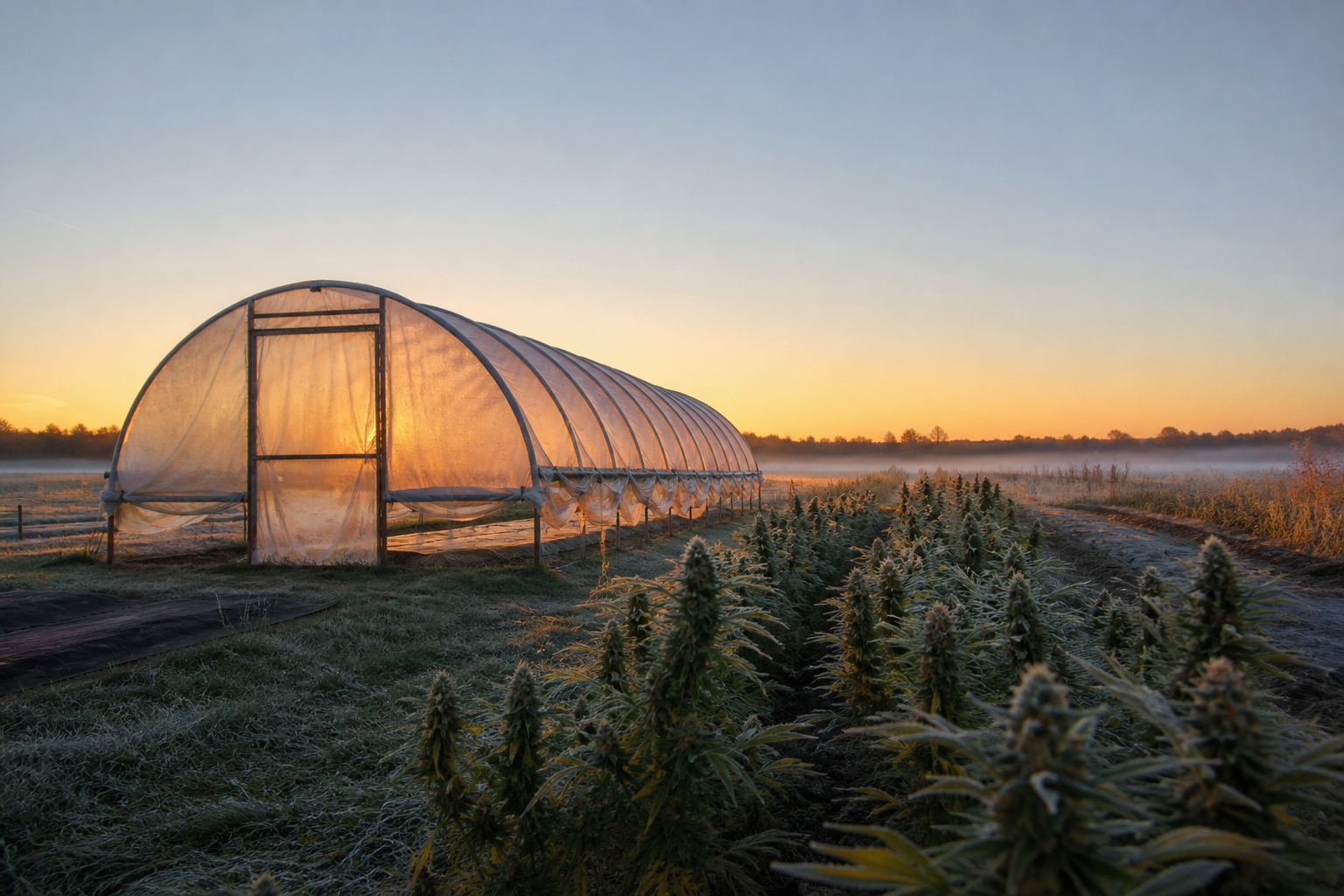
Those are the risks worth your time. A normal October night in southeast Michigan is cool. A freeze is a different event.
The shopper version of the freeze is already written. Clemson Extension describes what ice does to tender growth. Crystals form and cells rupture. The tissue looks water-soaked, then often turns black. That is injury. The October 7 frost post shows how to tell that burn from mold, and when the thaw is the real problem.
The near-freeze hold in the cannabis trial sits between color and damage. At about 33°F, anthocyanin was lower than at 46°F and 59°F (PMC12309197). Flower weight and CBD percent sat higher in the warmer holds. A plant stalled in the cold may just be a plant that is still unfinished.
Mold is the wet half. October is a rainy month on the NWS Detroit/Pontiac 1991–2020 normals. Detroit averages 2.53 inches, and Flint and Saginaw run wetter. Cool nights plus that rain mean flowers stay wet longer.
On hemp, the PNW Plant Disease Handbook says Botrytis, the gray mold behind a lot of bud rot, infects easily through wounds. It tells growers to avoid keeping plants wet for 12 hours or longer. A cold night that leaves dew on a dense cola belongs in that conversation. So does a cola already nicked by a light freeze.
Break the bud. A brown core or a basement smell ends the purchase. The color can wait.
How do you tell purple from frost sugar and mold? #
Purple is color in the plant tissue. Frost is injury or a white coat. Mold is a growth with a bad smell.
October bags around here get those three mixed up. Each one has its own next move.
| What you see | What it usually is | Next move |
|---|---|---|
| Dusk or purple in the leaf or calyx | Anthocyanin, if the variety can make it | Read the label. Leave the tint out of the price |
| Clear sparkly bumps that wipe like sugar | Trichome heads, the resin glands | A loupe for ripeness. The harvest guide |
| Water-soaked tissue that later goes black | Freeze injury. Clemson Extension describes the ruptured cells | The frost post |
| Gray fuzz, a brown core, a basement smell | Botrytis risk. The PNW handbook flags long wetness and wounds | Refuse the jar |
| Brown on the resin head itself | Aging of the gland, in the trichome study | A ripeness clue. Still a lab number for THC |
A purple sugar leaf can wear real trichomes on top of the pigment. The sparkle is resin and the dusk is color. Smell the break before you decide anything.
I'm not giving a harvest order for a backyard in Detroit, in Flint, or farther north. Whether to cut, cover, or ride out a light night is a forecast decision. The short-season post has the season frame for that choice.
What Does a Detroit October Night Actually Run? #
At Detroit Metro, the 1991–2020 October normal is a high of 62.0°F and a low of 44.0°F.
That night low sits near the 46°F hold where the cannabis trial saw peak purple pigment. A freeze is 32°F. The numbers are the NWS Detroit/Pontiac monthly normals, last updated May 2021 from the 1991–2020 U.S. climate normals. The same page covers two other stations in the state:
| Station | October average high | October average low | October average precipitation |
|---|---|---|---|
| Detroit Metro (DTW) | 62.0°F | 44.0°F | 2.53 inches |
| Flint (FNT) | 60.1°F | 40.3°F | 2.77 inches |
| Saginaw | 60.2°F | 41.4°F | 2.91 inches |
Flint runs cooler, about 40°F at night, and Saginaw's October rain averages 2.91 inches, the wettest of these three. The Metro low is the airport low, so a porch in Flint or Saginaw runs cooler and sits nearer a freeze.
NWS Detroit/Pontiac says October is the month the growing season ends across Southeast Michigan. The page maps an average first 32°F freeze and an average first 28°F hard freeze. It prints no single date for every town. For a station number, MSU Extension's 1981–2018 table puts Detroit's median first 32°F at October 18.
Most October nights are cool, and some later in the month freeze. The cool ones are this page. The freezing ones are the frost post.
Peak pigment in PMC12309197 was at a constant 46°F and a constant 59°F. The normal low is 44°F and the normal high is 62°F, so a typical day passes through the same neighborhood. But the trial plants got no day-night swing, and one porch night is a smaller event than a weeks-long constant hold.
A 44°F night also doesn't back up a sales claim. In that lab, the CBD percent climbed as the room warmed, and the authors called it maturity. If a menu around Detroit calls a purple eighth "cold-cured" or "frost-boosted," ask for the lab sheet.
How Should You Shop a Purple Bag? #
Skip the purple premium. Read the label. Smell the jar.
The tint tells you the plant made anthocyanin, or that a breeder wanted that look. The THC, the terpene mix, and a clean core come from the label and from breaking a bud.
Use three checks, in this order:
- Color is the look. Dusky leaf, purple calyx, forest green with a dusk edge. Note it and leave it out of the price.
- The label is the lab. Total THC is a measured number. A purple bud labeled 18% is an 18% bud. The potency myth post shows how to read that number with the rest of the night still in play.
- The smell is the plant, or the smell is a problem. Fresh flower smells like the plant. Musty, sweet-rotten, or like a wet basement means refuse it. Break one bud if you can.
| What you are holding | Pay a purple premium? | Why |
|---|---|---|
| Purple leaf, clean plant smell, label in hand | No | Pigment is one fact. The cannabinoid is another |
| Green bud, strong nose, label you trust | No need | Green can be a finished plant |
| Purple indoor flower | No | The variety can color under lamps |
| Pretty outside, brown core or musty smell | No. Walk away | Color cannot clear mold |
| "Cold nights raised the THC" on a sign | No | The temperature trial measured a different pattern |
Here are lines I ignore when they treat the color as a lab result:
| Line on the sign or the bag | What to do with it |
|---|---|
| "Purple means it's stronger" | Ask for the cannabinoid number. The 2023 pigment paper named the pigment and stopped there |
| "The cold brought the THC up" | The 2025 trial measured CBD rising as the hold got warmer |
| "Frost locked the resin in" | Ice injures cells. Clemson Extension is the injury description. The shopper version is the frost post |
| "You can see the potency" | You can see pigment and you can see trichome heads. A percent needs a lab. The trichome study used a microscope and a calendar |
| "This one purpled, so it's outdoor and better" | Outdoor and indoor can both purple if the genes are there. A 2023 indoor-versus-outdoor comparison found a different smell mix and more degraded cannabinoids indoors. That paper never scored color |
When I hear one of those lines, I ask for the total THC. Then I smell the jar before I buy the story. A dusk-colored leaf is a free detail, so I pay for the flower I want to smoke.
Divine Toke is mail order, so there is no counter to lean on. If the jar is ours, use the same three checks. This article names no purple-only strain. The color of any bag is whatever that plant did.
If you want sun-grown living-soil flower in the mail, it is at divinetoke.org.
What Mistakes Cost You on a Purple Eighth? #
The mistakes that cost money are paying for the tint, trusting a cold week to finish the bud, and skipping the smell.
- Paying extra because the leaf went dusk. Anthocyanin is a pigment, and PMC10376404 measured it in cannabis leaves, stems, and flowers. If two bags cost the same except for color, buy the one that smells right.
- Reading a green bag as weaker. A variety without the color genes stays green in the same cold that purples its neighbor. In the cabbage trial, about 54°F colored the purple line and left the white parent white (PMC7017278). Green can be finished flower.
- Waiting on a colder night to raise the jar. In the cannabis trial, the near-freeze hold made less pigment than the cool holds. CBD percent rose as the plants got warmer (PMC12309197). A plant stalled in the cold is just unfinished.
- Cutting only because the sugar leaves purpled. Leaf color can move before the glands are where you want them. Week of flower changed trichome shape in PMC10071647. Read the glands with the harvest timing guide.
- Calling yellow fan leaves a potency sign. Yellow often means chlorophyll is breaking down as the leaf ages. That is the aspen autumn pattern in PMC395783, a tree study. Pull dead fan leaves if they bother you, and leave them out of the price.
- Bagging a wet cola because the night was cold. Wet plus a wound is how Botrytis gets in. The PNW handbook says to avoid keeping plants wet for 12 hours or longer. Dry the flower, then smell it.
- Reading indoor purple as outdoor character. Lamps and a variety with the pigment genes can make a dusk bud in a room that never saw weather. Sun versus lamps did change the chemical mix in genetically identical plants (PMC9861703), but that paper never scored color.
Frequently Asked Questions #
Do cold nights make weed stronger? #
No. Cold can change the color in plants that already make purple pigment.
In the 2025 temperature trial (PMC12309197), anthocyanin peaked near 46°F and 59°F. CBD percent and flower weight rose as the temperature rose, and the authors tied that rise to maturity. THC was not measured.
Does purple weed mean higher THC? #
No. Purple is anthocyanin, a pigment.
The 2023 cannabis study (PMC10376404) named cyanidin-3-rutinoside as the major purple pigment in leaves, stems, and flowers. A bag can be purple and test high because the variety inherited both traits. The color and the THC number come from separate traits.
Why does cannabis turn purple in the fall? #
A plant with the color genes builds anthocyanins, and cool temperatures can increase how much pigment it stores.
A 2024 leaf study (PMC11588432) found the purple and red tracking the genes that make that pigment. Fall also breaks down chlorophyll, the green, and PMC395783 documents that step in aspen. The green leaving and the purple arriving are two jobs.
Can any strain turn purple if the nights get cold enough? #
No. The plant needs the genes.
In cabbage, about 54°F induced a lot of anthocyanin in a purple line, and the white parent stayed white (PMC7017278). The cannabis cold trial used a population that was already purple (PMC12309197). A green variety can stay green all October, and that is a normal finish.
Is purple on a bud mold? #
No. Purple pigment and gray mold are different things.
Anthocyanin is the plant's own color, measured in cannabis tissue by PMC10376404. Mold is a growth that is often musty and often hides as a brown core. The PNW handbook describes that Botrytis pattern on hemp. If you are unsure, break the bud and use the frost post.
Do cold nights grow more trichomes? #
I don't have a study that shows a cold night adding trichomes.
The 2023 trichome paper (PMC10071647) found gland number and stalk length changing with variety and with the week of flower. The temperature trial watched pigment, CBD, and flower weight (PMC12309197). Sugar on the bud is the glands, and the harvest timing guide covers ripeness.
Is a 44°F Detroit night a frost? #
No. Forty-four degrees is the October normal low at Detroit Metro.
That 44.0°F figure, with a 62.0°F normal high, is the 1991–2020 NWS normal. A freeze is 32°F, and MSU Extension puts Detroit's median first 32°F at October 18. The National Weather Service calls October the month Southeast Michigan's growing season ends.
Should I pay more for purple buds? #
No. Pay for a clean smell and a label you can read.
In the temperature trial, peak color and the higher CBD percent landed at different settings. A menu that prices purple as stronger is selling a look. The potency myth post covers why the percent on a label is still one piece of the night.
If indoor flower is purple, was the grow room cold? #
The color alone cannot prove a cold room.
The 2024 leaf paper worked with colorful varieties and pigment genes, and it did not test weather. A lamp room can still be cool. Judge that jar on the label and the nose, same as outdoor flower from a fall harvest.
Does the green fading mean the flower got stronger? #
No. Chlorophyll breakdown means the leaf is aging.
PMC395783 tracked that green breakdown in aspen during autumn senescence, the organized shutdown of the leaf. Cannabis strength tracks variety, flower age, and the glands, which is what PMC10071647 measured across weeks of flower.
Closing #
A cold Michigan night can turn on purple in a plant that already knows how to make it. The THC still comes from the variety, the harvest week, and the light.
Detroit's October normal low is 44.0°F at Metro, from the NWS 1991–2020 normals. That is close to a temperature where a 2025 cannabis trial saw peak pigment. In that same trial, CBD percent climbed as the room warmed. Read the label. Smell the jar. Leave the purple premium on the counter.
I'm Jamie. Divine Toke is sun-grown, living-soil flower, sold online at divinetoke.org. Pre-rolls are 1 gram. The 20-pack is 20 of those joints for $120. No storefront. No local delivery.
If you want to try it, shop the menu, then use the same nose you would use on any other jar.
This article is for educational purposes only and is not medical advice. Always consult your healthcare provider before starting any new wellness routine.
Related reading:
Grown in Detroit. Shipped to your door.
Small-batch, sun-grown cannabis cultivated in living soil. Mail-order shipping to all 50 states.