Fall Soil Rest After Cut Week: Cover Crops and No-Till Winter
Cut week leaves the beds looking empty. In Michigan, that bare look is the expensive one. Here's how living soil rests through winter.
Questions this article answers
- What should a Michigan cannabis farm do with living soil after September harvest?
- best cover crop after September harvest Michigan
- should you till cannabis soil after harvest
- leave cannabis roots in soil over winter
- cereal rye after outdoor cannabis harvest

Head Cultivator
On this page
The last stalk comes down and the bed looks like a vacant lot. That's the week people want to rake it clean, flip the dirt, and call the season done.
At Divine Toke, a Detroit-area Michigan sun-grown farm, that empty look is a trap. Cut week is not the week the soil clocks out. The plant left. The freeze did not. MSU Extension frost climatology still puts Detroit's median first 32°F night around October 18. Winter rain, freeze-thaw, and Great Lakes wind will work that bare ground whether you watch it or not.
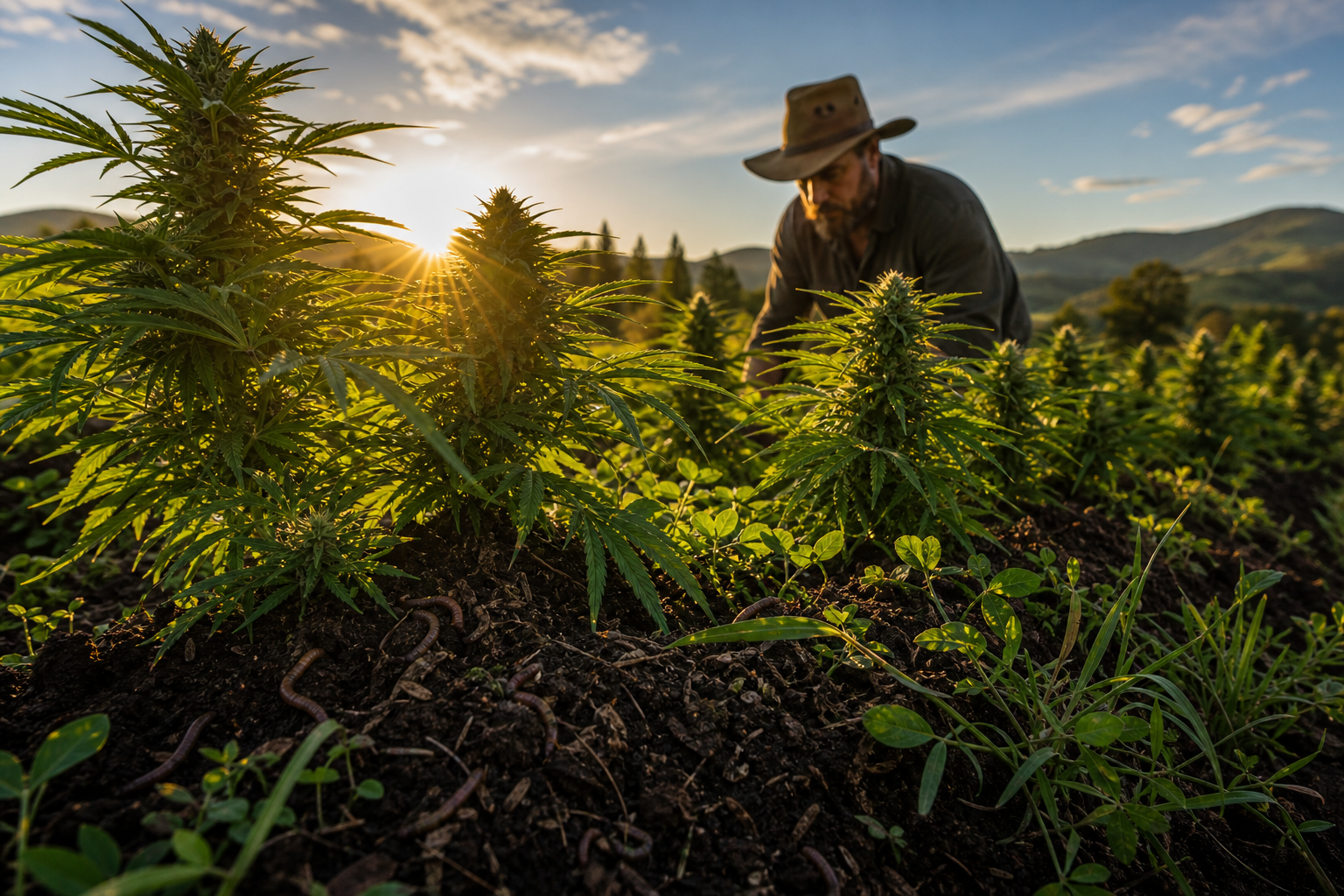
This post answers one question: what should a Michigan cannabis farm do with living soil after September harvest? Keep the bed covered. Leave healthy roots. Seed a winter-hardy cover if you still have a window. Skip the till. Let the field rest on purpose.
If you want the shopper side of the same week, why the new crop is not in the jar yet, start with why cut week is not jar week. This piece stays in the dirt.
What Should a Michigan Cannabis Farm Do With Living Soil After September Harvest? #
Keep it covered, keep it still, and keep something living in it if you can: leave healthy roots, add residue or mulch, and seed a winter-hardy cover crop instead of leaving a black, bare bed. That is the whole winter job. USDA NRCS soil-health principles say it in four lines: disturb less, keep soil covered, keep living roots, keep some diversity. After a Michigan outdoor cut, those four lines are the rest plan.
Think of it like leaving a blanket on a porch chair before a Detroit freeze. You do not "finish" the chair by stripping it. You cover it so winter does not wreck the wood.
Here is the after-cut order that matches those federal principles and Michigan timing:
| Step | What you do | Why it matters after a September cut |
|---|---|---|
| 1. Cut at the soil line | Stalks go to dry. Roots stay unless the plant was sick. | Channels and fungal threads stay in place. |
| 2. Leave residue | Chopped stems, leaves, straw, or a light mulch on top. | Rain hits cover, not bare crumbs. |
| 3. Seed if the window is open | Cereal rye first. Winter wheat or a rye/vetch mix if you still have weeks. | Living roots through winter beat a dead, open bed. |
| 4. Do not flip the bed | No plow, no rototiller "cleanup." | Tillage is the opposite of rest. |
| 5. Wait | Spring is when you terminate the cover and plant again. | Winter is the rest, not a second project. |
NRCS Conservation Practice Standard 340 lists why a cover crop earns a federal practice number: less sheet, rill, and wind erosion; more organic matter; better crumbs; habitat for soil life; leftover nutrients used instead of washed; fewer weeds; better moisture; less compaction. That is a winter job list, not a summer garden flex.
MSU's Michigan cover-crop bulletin (E2884) is blunt about the calendar: plant as early as you can, ideally at least six weeks before frost. After September, the menu shrinks. Cereal rye and hairy vetch are among the few that still have a shot at overwintering. If you miss the seed date, residue and a still bed still beat a "clean" one.
Southeast Michigan buys you a little more time than inland north. Detroit's median first 32°F is mid-October. Cadillac's median in the same MSU 1981–2018 table is September 21. A farm near the lakes is not on a Cadillac clock. It is still not California.
A cover crop is a plant you grow to protect and feed the soil, not to jar. A no-till winter means you do not plow that cover or the old roots under. You seed into what is already there, or you leave residue and wait. That is rest. Flipping the bed so it looks tidy is work that costs you next summer.
Why Do Bare Beds Lose After Cut Week in Michigan? #
Bare beds lose because winter rain, wind, and freeze-thaw hit naked soil at the exact time leftover nutrients and loose crumbs are easiest to move. The harvest just opened the ground. Then Michigan winter works it. NRCS says it without poetry: the more bare soil you leave, the more erosion you buy.
MSU horticulturist Daniel Brainard wrote the vegetable version of this years ago, and it still holds. After a heavy rain, plots without cover lost more soil than plots with cover. That was true on slopes. It was also true on flat ground. Pounding rain leaches nutrients, breaks crumbs, and taxes next year's crop. A cannabis bed after cut week is the same open surface.
Here is what a bare Michigan bed actually gives away:
| Loss | What happens | What you notice later |
|---|---|---|
| Crumbs wash | Raindrops explode open aggregates. Fines run. | Crust on top. Harder planting in spring. |
| Nutrients leave | Unused nitrogen and other leftovers ride water down or off. | You feed more next year for less life. |
| Wind sands the top | Dry, uncovered silt moves on a Great Lakes blow. | Thin, pale surface. Weeds love the gap. |
| Weed seeds win | Cut week takes the shade away. Short days tell pigweed and lambsquarters to dump seed. | A seed bank you fight for years. Brainard flagged this after vegetable harvest. |
| Biology starves | No living roots, no residue, no cover. Microbes sit in a dead pantry. | Next transplant sits in tired dirt, not a web. |
NRCS reduced-till residue guidance treats low residue (about 30% cover or less) as a winter risk window. Fall, winter, and early spring are when bare soil takes wind and hard rain. That is not a cannabis-blog take. That is federal conservation language.
USDA ARS winter-erosion work is even less romantic: a lot of soil can move when rain or snowmelt hits frozen ground. The paper's 86% figure is from Pacific Northwest dryland fields, not Wayne County. Do not steal that percent for Detroit. Steal the mechanism. Frozen soil plus meltwater plus a bare surface is a bad trio anywhere the ground freezes and thaws.
Michigan does that trio well. Southeast Michigan sits next to Lakes Erie, St. Clair, and Huron. Those lakes push first frost later than Cadillac. They also keep winter from being one long deep freeze. Thaw. Rain. Freeze again. Each cycle works a naked bed like a wet sponge left on a porch rail.
Weed pressure is the part people forget because the bed "looks done." After harvest, MSU notes that leftover weed seedlings get light and space. Late-summer pigweed and lambsquarters are built to throw huge seed counts as days shorten. You can spend next June hoeing a problem you created in September by wanting the bed to look finished.
Cover is not decoration. Cover is the cheap insurance. A living cover is best. Dead residue is next. Bare is the expensive look.
A southeast Michigan bed has a special version of this. Lakes Erie, St. Clair, and Huron hold heat into October, so the first freeze comes late. Then the same water keeps winter sloppy. You get rain on half-frozen silt in January. A farm farther inland might get one hard lock and a snow blanket. Metro Detroit often gets the cycle. That is why "we'll just let frost take it" is not a plan. Frost takes leaves. It does not tuck soil in.
Same week, the dry room is loud and the bed is quiet. Easy to forget the quiet one. The quiet one is what you plant into in May.
If you only have time for one pass after the last stalk, do this. Cut at the line. Throw residue. Seed rye if the week still has warmth. Then go back to the hang. The bed can wait a month. It cannot wait uncovered through a Great Lakes winter.
That is the whole cut-week dirt job. Not pretty. Not a photo for the menu. Next year's plants will not care that the bed looked finished in September. They will care that it was covered.
So will the first hard rain in October.
If you only remember one cut-week loss: the bed is most open the week you are most tired. That is when the rain finds it.
Wayne County and the rest of metro Detroit sit on that sloppy-winter side of the state. Cadillac already took its first freeze weeks earlier in a normal year. Do not farm a Detroit bed like it is already locked under a January crust. It is not.
Should You Leave Cannabis Roots in the Bed After Cut? #
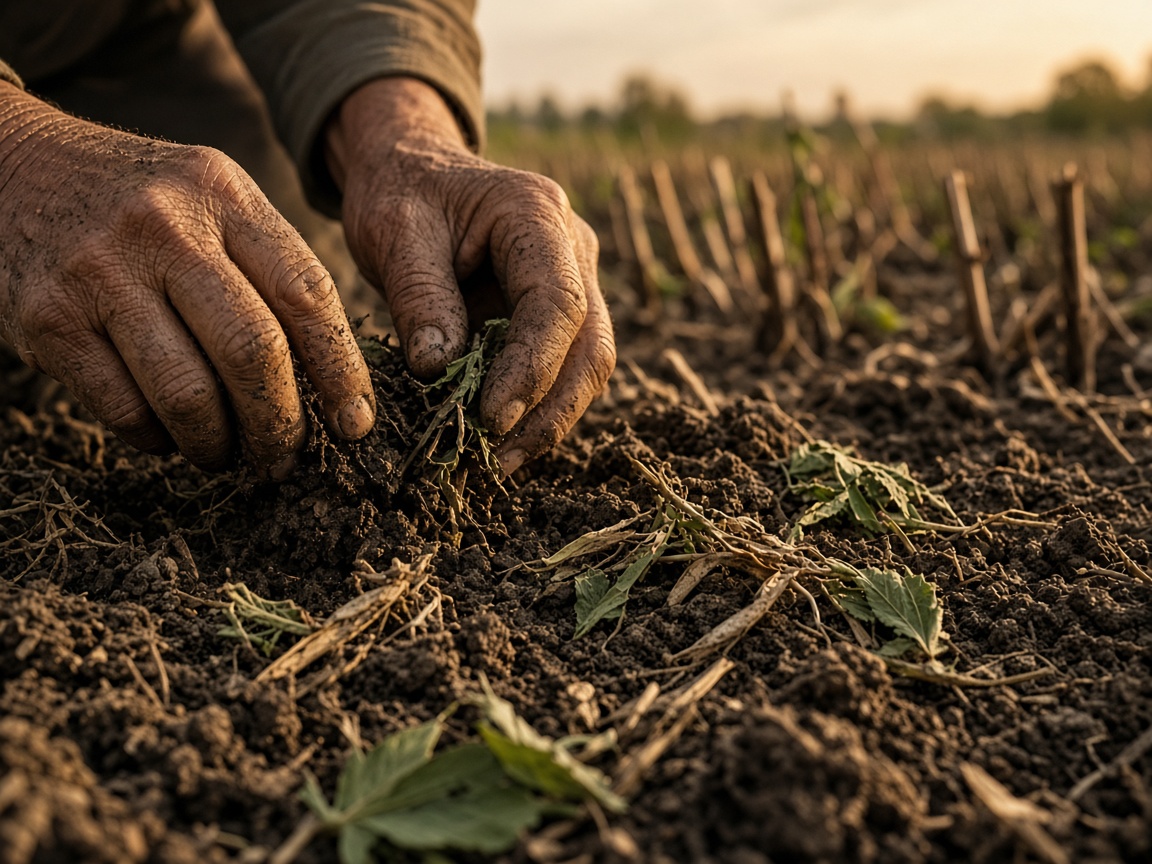
Yes. If the plant was healthy, cut it at the soil line and leave the roots. Pull a root ball only if you are dealing with disease, a rotten crown, or a pot you have to reset. That is the living-soil default. It is also the NRCS living-roots principle in farm clothes: keep something in the ground that biology can use.
People yank roots because it feels like cleaning. It feels like you "got it all." What you got is the last highway. Fine roots leave pores when they rot. Worms use those holes. Water uses those holes. Mycorrhizal fungi, the thin fungal threads that trade minerals with roots, live on that highway. A 2024 open-access tillage study (PMC11034428) and a Frontiers in Microbiology tillage review both keep landing on the same mechanical fact: when you tear the soil, you tear the fungal net. Yanking a healthy root mass is a hand version of that tear.
| Situation | Leave the roots | Pull the roots |
|---|---|---|
| Healthy outdoor bed, no-till | Yes. Cut at soil. | No. You are deleting next year's plumbing. |
| Plant had root rot, wilt, or a nasty crown | No. | Yes. Do not gift that inoculum to spring. |
| Fabric pot or a boxed mix you are dumping | Optional. | Often yes: you are resetting the container, not a field. |
| Woody crown in the way of a spring hole | Leave the fines. | Cut the crown. Do not excavate the whole web. |
A simple picture: the stalk is the chimney. The roots are the basement pipes. You do not rip out the plumbing because you took the roof off for winter.
USDA ARS puts conventional tillage and no-till in one contrast: tillage turns the whole profile. No-till opens a narrow slot and leaves the rest alone. USDA ERS defines no-till as residue left on the surface and soil left undisturbed from harvest to planting, except for a nutrient injection. Leaving cannabis roots in a healthy bed is that definition at plant scale.
Carbon is the quiet bonus. Roots are food. When they die in place, they feed microbes in the same holes they built. Hauling the whole ball to a burn pile is hauling next year's pantry off the farm. Compost those stalks if you want. That is a feed story for another day. The winter rest story is: the basement stays.
The disease exception is not a loophole to "clean everything." If one plant was sick, handle that plant. Do not till the whole row to feel thorough. A 2024 living-mulch soil-biology paper (PMC9772056) is one more reminder that keeping plants and cover in the system supports biological function better than a bare stretch. You do not need a cannabis-only root paper to follow the pattern. Living soil farms already run this way: scissors at the line, soil left in peace.
If you want the year-round "why we do not flip soil" version, that lives in no-till cannabis. This section is only the cut-week call.
Which Cover Crops Still Work After a Michigan September Cut? #
Cereal rye is the late-window workhorse. Winter wheat is the backup grain. Hairy vetch can ride along if you still have weeks before a killing freeze. Oats, buckwheat, and most mustards are early-fall tools. They are often too late after a true September cannabis cut if you wanted a winter-kill blanket. That is the Michigan menu once cut week eats August.
MSU bulletin E2884 says plant as early as possible, ideally six weeks before frost, and names cereal rye and hairy vetch among the few hardy enough to survive a late start. SARE's hairy vetch chapter wants vetch in the ground 30 to 45 days before a killing frost. Detroit's median first 32°F is October 18. Median first 28°F killing freeze in the same MSU table is November 3. Count backward. A September 10 seed date still has a shot. A September 28 rye date can still work. An October 20 vetch date is a wish.
Winter-kill vs overwinter (this is the whole decision) #
A winter-kill cover grows in fall, dies in the freeze, and leaves a dead mat in spring. No spring mow-down required. An overwinter cover sleeps under snow and wakes up hungry in April. You have to terminate it before the next cannabis transplant.
| Cover | After a September MI cut | Winter fate | Job |
|---|---|---|---|
| Cereal rye | Best late option. MSU rye notes run mid-August to late October. | Overwinters | Roots, erosion hold, spring biomass |
| Winter wheat | Good if you seed sooner than rye's last days | Overwinters | Similar to rye, a little less cold-tough |
| Hairy vetch | Pair with rye if you still have 4–6 weeks | Overwinters | Nitrogen for next year |
| Oats | Only if you still have a warm stretch | Winter-kills in Michigan | Fast fall blanket, easy spring |
| Buckwheat | Usually too late after a cannabis cut | Frost-kills; can seed itself if it flowers | Early-harvest sprinter, not a Croptober tool |
| Mustards / radish | MSU likes them after August 1 for veg | Often winter-kill | Bio-drill and weed fight; clock is tight |
Brainard's MSU piece is written for peas, garlic, and squash that come off in late July and early August. That is when oats, buckwheat, and mustards shine. Outdoor cannabis in southeast Michigan often comes down in September. Do not copy a July vegetable recipe onto a Croptober bed and call it the same article as summer companions. Different clock. Different species.
Seeding rates you can actually use #
SARE Managing Cover Crops Profitably is the rate book most Michigan educators still point at:
- Cereal rye: about 60–150 lb/acre drilled, 90–160 lb/acre broadcast
- Winter wheat: about 60–120 lb/acre drilled, 60–160 lb/acre broadcast
- Hairy vetch: about 15–20 lb/acre drilled, 25–30 lb/acre broadcast
- Oats: SARE lists a wide drilled/broadcast range; treat oats as a fall sprinter, not your October hero
Broadcast means you throw seed and hope it kisses soil. Drilled means a slot and seed-to-soil contact. After a no-till cannabis cut, a shallow drill or a hard rake-in beats seed sitting on dry stalks. You are not plowing. You are tucking.
Midwest Cover Crops Council's Michigan recipes keep repeating the same late-season answer after dry beans: winter cereal grain (wheat or rye). Cannabis is not a dry bean. The frost clock is the same state. MSU's cover-crop selector updates and Michigan vegetable cover-crop choices are the county-level tools if you want to sort by your zip instead of a blog table.
Michigan NRCS Agronomy Technical Note 54 points growers to Practice 340 and the state's eFOTG seeding tables. Use those if you are writing a conservation plan. Use rye if you are standing in a bare bed in late September with a bag on your shoulder.
Do not invent a Divine Toke seed mix, rate, or acreage. The science is public. The bag you pick is a farm decision, not a brand SKU.
What this winter cover is not #
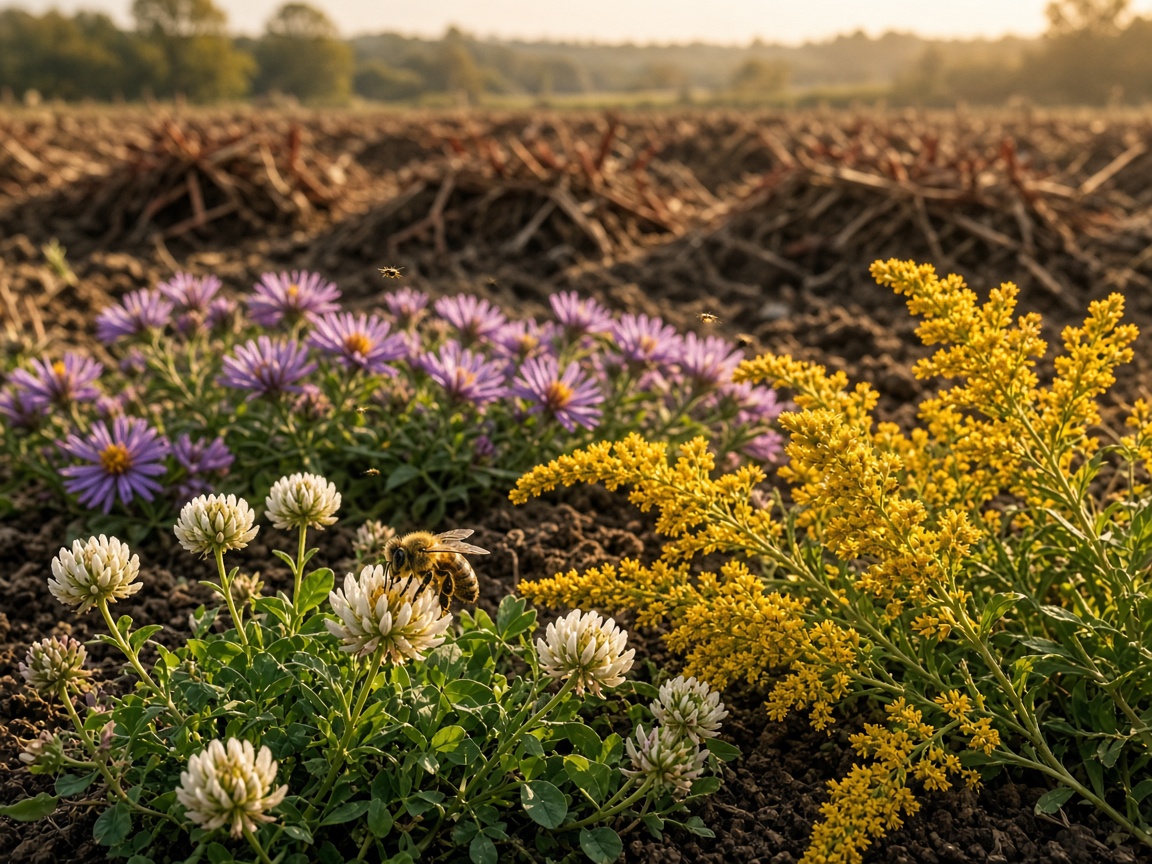
This is not the summer companion-planting story. Clover between rows in July is a neighbor. Rye after cut week is a winter coat. Different job. Different month.
This is not a compost recipe. Compost is food you make in a pile. Rest is what you refuse to wreck in the field. You can do both. They are not the same article.
This is not a hoop-house calendar. Hoops can steal a week of finish time. They do not put a living root in a bare bed after the stalks are gone.
If you seed nothing and leave the bed black, you did not "let it rest." You left it open. Rest, in this post, means covered and still. Not abandoned.
A late mix that still makes sense in southeast Michigan:
- Rye alone if you are tired and the date is late. One bag. One job.
- Rye plus a little vetch if you still have four to six weeks and you want next year's nitrogen.
- Wheat if that is the seed on the shelf and rye is not. Same idea, slightly less cold-tough.
- Residue only if the forecast already smells like the first freeze. Cover beats a heroic failed stand.
Watch the stand in two weeks. If you see a green haze, you won the late window. If you see birds and bare crumbs, add straw and stop pretending seed is still the move.
How Is No-Till Winter Cover Different From Tilling the Bed Clean? #
No-till winter cover leaves the soil still and the surface armored. Tilling the bed "clean" opens it to winter and snaps the living net you spent the season building. One looks messy until snow. The other looks ready in September and poor in April.
USDA ERS calls no-till a system where residue stays and the ground stays undisturbed from harvest to planting. USDA ARS says the same thing in shop language: tillage turns soil. No-till cuts a narrow groove. There is no soil disturbance of substance.
That is the winter difference in one table:
| Move after cut week | What the bed does all winter | What you pay in spring |
|---|---|---|
| No-till + cover or residue | Roots and residue hold crumbs. Living rye drinks leftover N. Snow sits on a mat, not on powder. | You terminate the cover. You plant into a bed that still has structure. |
| Till it clean | Bare face. Freeze-thaw. Rain on open silt. Weed seed brought up. Fungal threads cut. | You rebuild what you wrecked, then plant late into a crust. |
NRCS organic-systems guidance is explicit about the residue layer: do not till it away before you plant a cover just to make the ground look even. The 2024 NRCS / OFRF tillage guide and the cover-crop-in-organic-systems implementation guide both treat that protective layer as the point. Disturbance brings weed seed up. It also deletes the mulch you already had for free.
Fungi are the part you cannot see from the truck. A 2024 AMF-and-tillage paper (PMC11034428) and a tillage / rotation / fungal-distribution study (PMC8247931) show the same pattern in different clothes: conventional tillage rearranges and often thins the fungal community. A Frontiers review says tillage can shrink mycelium, cut infection rates, and drop diversity. You do not need the Latin. You need this: the blender is not rest.
People till in September because they are tired and they want a finish line. Cut week already took the plants. The dry room is full. The bed looks sloppy. A tiller makes a story you can tell yourself: we cleaned up. Michigan winter does not care about that story. It cares about cover.
No-till winter is not doing nothing. It is doing the quiet jobs:
- Armor: residue and rye take the raindrop.
- Roots: something is still trading carbon under the snow.
- Food: leftover nutrients stay in a plant instead of a ditch.
- Structure: worm holes and fungal glue stay glued.
If you already read why we never flip soil, this is not a remake. That post is the year-round rule. This is the week you are most tempted to break it: the week the stalks are gone and the dirt shows.
What Do Freeze-Thaw and Great Lakes Weather Do to Uncovered Soil? #
Freeze-thaw lifts, drops, and smears wet, uncovered soil. Great Lakes weather makes that cycle common in southeast Michigan: later first frost, then a winter that thaws and refreezes instead of staying locked. Bare beds take every swing. Covered beds take fewer.
MSU's fall-freeze climatology maps the lake effect in dates, not vibes. Interior Upper Peninsula and northern Lower Peninsula sites freeze first. The latest first freezes sit along the southeast and southwest lakeshores. Detroit's median first 32°F: October 18. Cadillac: September 21. Monroe: October 22. Port Huron: October 31. That extra outdoor hang time is real. So is the winter that follows: milder nights, more midwinter melt, more rain on half-frozen ground.
NWS Detroit/Pontiac treats October as the end of the Southeast Michigan growing season. That page is the consumer clock for metro Detroit. It does not promise a single 2026 frost date. MSU says you cannot forecast first freeze more than a few days out. Plan on the median. Decide on the 3-day forecast.
A frost date is when air at shelter height hits 32°F. A killing freeze is often cited at 28°F. Detroit's median 28°F in that MSU table is November 3. Soft tissue on a leftover cannabis leaf does not wait for 28°F. The soil does not wait either. Surface soil can be colder than the 5-foot thermometer. MSU flags that on purpose.
What heave actually is #
Frost heave is ice doing construction in the dirt. Water moves toward the freezing front and builds ice lenses. The soil lifts. Then it thaws and slumps. Silty, wet ground does this best. A low spot in a Detroit-area bed that holds Great Lakes rain is a heave candidate. Uncovered soil sees the air-temperature swing raw. Residue and a living cover buffer that swing.
USDA ARS documented how winter water on frozen soil moves earth. Again: do not paste their 86% onto Michigan. Paste the picture. Rain or melt on a frozen, bare face is when crumbs leave.
MSU also notes the target is moving. Mean temperatures in Michigan have warmed more than 2°F since the early 1980s. First-freeze dates at Lansing trended about 10 days later across that 1981–2018 record. Averages drift. One October night can still wreck an uncovered bed.
USDA hardiness zone is the other number people mix up. The 2023 USDA Plant Hardiness Zone Map (official viewer at planthardiness.ars.usda.gov) is the average coldest winter night, in 10°F bands split into 5°F half-zones. MSU's garden planning calendar treats much of southeast Michigan as Zone 6a–6b. That tells you what a perennial might survive. It does not tell you when to seed rye, and it does not keep a bare bed from heaving.
For the full frost-and-hoop-house season box, use farming on Michigan time. This section is only what that winter does to soil you left naked after cut week.
Practical take for a Detroit-area bed:
- Seed while the median frost is still weeks out if you can.
- If you miss it, cover with residue anyway.
- Do not wait for a "hard Michigan winter" to protect you. The lakes often will not send one clean freeze. They will send a cycle.
What Does a Simple Fall-to-Spring Rest Checklist Look Like? #
Cut at the line, cover the bed, seed if the window is open, then leave it alone until spring termination. That is the checklist. Fancy mixes are optional. Bare dirt is not.
Use this as a porch-length plan. It is not a Divine Toke acreage schedule. It is the public Michigan clock plus NRCS habits.
Right after cut (same week if you can) #
- Walk the bed. Healthy plants: scissors at soil. Sick crowns: bag those roots. Do not till the row to "be safe."
- Get stalks out of the path. They go to dry and cure. That is a hang job, not a soil job. Shoppers feel that gap in cut week vs jar week.
- Drop residue. Chopped leaf, straw, or the small stems you will not hang. Aim for ground you cannot see in sheets.
- Check the frost math. MSU Detroit median 32°F is October 18. Count six weeks backward for the "ideal" window in E2884. Rye can run later than vetch.
If you still have a seed window #
- Pick the late species. Rye first. Wheat if that is what you have. Vetch only if weeks remain before a killing freeze (SARE 30–45 days).
- Get seed-to-soil contact. Broadcast and rake, or a shallow no-till drill. Do not plow a seedbed.
- Water if the fall is a dust bowl. Seed sitting on dry residue is bird food.
If you missed the window #
- Do not panic-till. Residue and still soil still beat a black bed. NRCS 340 is the cover-crop standard. It is not a dare to wreck the surface because you are late.
- Add mulch after the surface starts to freeze if you need extra armor. Early, thick, warm mulch can keep the top too soft and invite rodents. The point is a buffer on cold ground, not a quilt in September.
Winter (the actual rest) #
- Stay off wet beds. Tire ruts in a January thaw become ice lenses and spring ponds.
- Watch ice and puddles. Low spots heave first. Next year you fix grade. This year you do not make new ones.
Spring (when rest ends) #
- Terminate the overwinter cover before it turns into a forest. Rye in a warm April will try to own the bed. Crimp, mow, or a shallow cut, then plant into the mulch. Do not flip the profile "to start fresh."
- Plant the next crop into the still bed. Small hole. Compost on top if that is your feed style. The winter work was cover and roots, not a blank slate.
Spring termination, in plain steps:
- Walk it when the rye is still short enough to crimp or mow without a fight.
- If it is already heading, you waited too long. You will fight a mat. You still do not plow.
- Leave the dead rye as mulch. That is last winter's blanket becoming this spring's shade.
- Open a planting hole, not a new field. The ERS no-till definition still applies on the first warm week of May.
A winter-kill oat stand is easier in spring. That is why people love oats. That is also why oats fail you when you seed them after a late cannabis cut. You cannot have October rye toughness and a free spring death. Pick the clock you actually have.
| Season | Default move | Failure move |
|---|---|---|
| Late September | Cut, residue, rye if you can | Rototill "cleanup" |
| October | Last rye dates; watch NWS Detroit/Pontiac | Bare bed "until spring" |
| November–March | Stay off it | Drive, till, or strip mulch for looks |
| April–May | Kill rye; plant after last-spring frost odds improve (MSU frost-free table: Detroit Metro 50% last 32°F May 3) | Let rye go to a jungle, or plow it under |
MSU's frost-free dates are the spring wall. Detroit city 50% last 32°F: April 24. Detroit Metro: May 3. Pontiac: May 6. Outdoor cannabis still waits on that spring clock. The winter rest is what you do so that May bed is not a crust.
What Do Detroit Shoppers Get From a Field That Rested? #
You get next year's flower from a bed that did not spend winter naked: better structure, a living web, and a farm that did not have to rebuild dirt in May. You do not get a faster September jar. Rest is for the soil. The hang is for the flower you already cut.
That split matters on a Detroit menu. Cut week is happening now. The new outdoor lot is still drying and sitting in a cure. We already walked that gap in September harvest on a Detroit menu. Winter cover does not shrink a dry room. It keeps the next sun-grown run from starting in tired, crusted ground.
Here is the honest consumer translation:
| What people hope | What rest actually does |
|---|---|
| "This week's jar will hit harder." | No. This week's jar was grown in last season's soil. |
| "Rye in the field means louder terps in October." | No. Rye is a winter employee. Aroma is still hang, cure, and the plant you already cut. |
| "A farm that covers beds cares about next year." | Yes. That is a real habit, not a sunset photo. |
| "Bare dirt after harvest looks professional." | It looks finished. Finished soil is the risk. |
NRCS Practice 340 is not a flavor claim. It is erosion, organic matter, crumbs, soil life, leftover nutrients. Cover crops plus compost can shift soil chemistry and the microbiome. That is a long game. Shop with your nose this month. Shop the farming habit when you pick a farm you want still around.
Divine Toke grows sun-grown organic flower in the Detroit, Michigan orbit. We do not publish a street address, a plant count, or a seed recipe. What we will say in plain sight: living soil is a partner through winter, not a tray you empty after cut week.
If you want to try the flower that comes off that kind of bed, start small. Our shop is flower, 1g pre-rolls, and the 20-pack. That is the shop. Smell the jar. Read the date. Let the soil story be the reason you come back next season, not a magic claim on this week's eighth.
What a Detroit shopper can actually ask at a counter. Is this sun-grown from last fall's outdoor run, or indoor? When was it harvested? Not "is the farm planting rye." Does this farm talk about living soil, or just a sunset photo? Winter rye will not show up in the smell of this week's jar. You might notice a farm that did not beat its dirt to death every October. That is quieter than a THC number. It is also the one that still matters in 2027.
Metro Detroit freeze dates are why this is not a California rest story. A bed that sits uncovered from a September cut through a Great Lakes thaw-freeze winter is not "dormant." It is getting worked. A farm that covers it is doing the unsexy half of sun-grown. The sexy half is the cola photo. Buy the unsexy half if you want the cola photo to keep happening.
FAQ: Fall Soil Rest After Cut Week #
What should a Michigan cannabis farm do with living soil after September harvest? #
Keep it covered and still: leave healthy roots, add residue, seed a winter-hardy cover if the frost window is open, and do not till the bed clean. NRCS soil-health principles are the short list: cover, living roots, less disturbance. After a September outdoor cut in Michigan, that list is the rest plan, not a summer garden project.
What is the best cover crop after a late September cut in Michigan? #
Cereal rye. MSU E2884 puts rye among the few covers hardy enough for a late start. Midwest Cover Crops Council Michigan recipes keep sending late harvests to winter cereal grain (wheat or rye). Vetch is a partner if you still have weeks before a killing freeze, not a last-week hero.
Can you still plant cereal rye in October around Detroit? #
Often yes, especially in the first half of October. Rye is the late species, not the excuse to wait forever. MSU rye notes used in Michigan cover-crop teaching run mid-August to late October. Detroit's median first 32°F is October 18 on the MSU 1981–2018 table. Seed-to-soil contact still matters. A bag thrown on dry stalks on October 25 is a wish.
Should you pull cannabis roots out after harvest? #
No, not from a healthy no-till bed. Cut at the soil line. Pull a root ball if the plant was diseased or you are resetting a pot. NRCS wants living roots and less disturbance. Tillage-and-fungi papers such as PMC11034428 are the mechanical warning: tearing soil tears the net.
Are oats a good winter cover after a September cannabis cut? #
Only if you still have a warm stretch and you want a winter-kill mat. After a late September cannabis cut, oats are often too late to build a real blanket. MSU loves oats for late July and early August vegetable ground because they establish fast and reliably winter-kill in Michigan. Cannabis cut week is usually later. Rye is the October tool.
Is mulch enough if you miss the cover-crop window? #
Yes as armor. No as a living root. Residue or straw still beats a black bed for rain and wind. NRCS wrote Practice 340 because a living cover also eats leftover nutrients and feeds soil life. If you miss the seed date, cover anyway. Do not till to "make up for it."
Should you till the bed clean so it "looks ready" for spring? #
No. That look is the winter risk. USDA ERS defines no-till as residue on top and soil left still from harvest to planting. USDA ARS says tillage turns the profile. A tidy September bed is an open face for freeze-thaw and a Great Lakes rain-on-frozen-soil winter.
When do you kill or terminate a winter rye cover in spring? #
Before it owns the bed. Usually as April warms and before you transplant, after last-frost odds improve. MSU's frost-free table puts Detroit Metro's 50% last 32°F on May 3. Crimp or mow. Plant into the mulch. Do not plow the winter work under to "start clean."
Does winter soil rest change how next year's flower smells? #
It can help the farm that grows next year's flower. It does not rewrite this week's jar. Cover and no-till support crumbs, water, and the fungal net (PMC11034428; PMC8519115). Smell on a September counter is still hang, cure, and the plant you already cut. Do not buy a terp story off a rye field photo.
What is the difference between USDA hardiness zone and a frost date? #
Zone is the average coldest winter night. A frost date is when 32°F usually shows up in fall or leaves in spring. Southeast Michigan is often Zone 6a–6b on the 2023 USDA map. Detroit's median first fall 32°F is still October 18 (MSU). Zone does not seed your rye. Frost does.
Can a Michigan home grower copy this rest plan? #
The soil habits, yes. A commercial field plan, no. Adults 21+ may grow not more than 12 plants for personal use, with no more than 12 plants on the premises at once (MCL 333.27955). Plants also have to follow the enclosed, locked, not-visible rules in MCL 333.27954. This post is not a grow-op manual. Cover and do not till a legal home bed the same way: scissors at the line, rye or residue, stay off it in the thaw.
Does a rested bed mean September jars hit Detroit shelves faster? #
No. Rest is next year's dirt. This year's flower is still in the dry room. NWS Detroit/Pontiac can end the field season in October. Jars still need dry, test, and cure. Read cut week is not jar week if the menu question is the one you actually have.
Let the Bed Look Empty on Purpose #
After a Michigan September harvest, living soil needs a covered, still winter. Not a cleanup till. Leave healthy roots. Seed rye if the frost math still works. If you missed the seed, leave residue. Stay off the wet bed. Terminate the cover in spring. That is rest.
For the season box that makes this a short year, read farming on Michigan time. For the year-round rule against flipping dirt, read no-till cannabis. For the counter calendar the same week, read September harvest on a Detroit menu.
If you want to try sun-grown flower from a farm that treats winter as part of the grow, start at the shop. We keep it simple: flower, 1g pre-rolls, and the 20-pack. Smell first. Let the soil rest be the long story.
This article is farm education. It is not a license, a site plan, or medical advice. Michigan adults who home-grow must stay inside MRTMA plant-count and enclosure rules. Unlicensed commercial cultivation is not legal.
Grown in Detroit. Shipped to your door.
Small-batch, sun-grown cannabis cultivated in living soil. Mail-order shipping to all 50 states.