Caterpillars and Budworms in Outdoor Michigan Buds
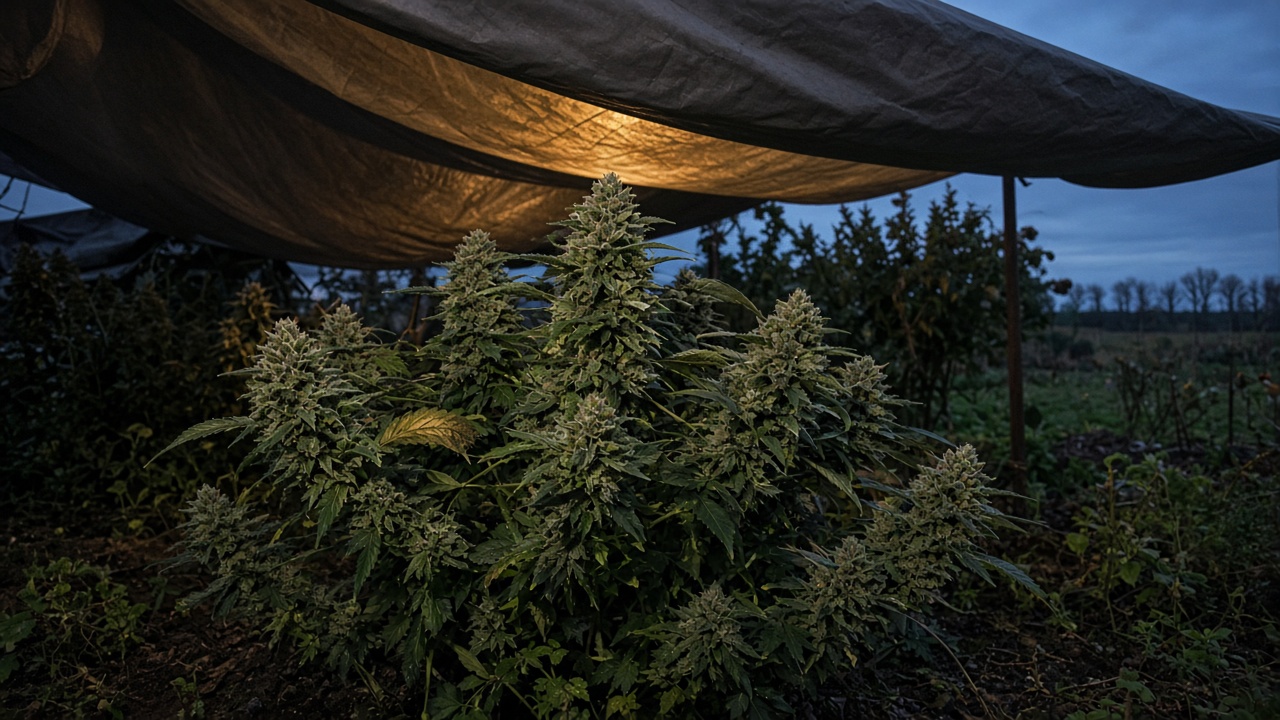
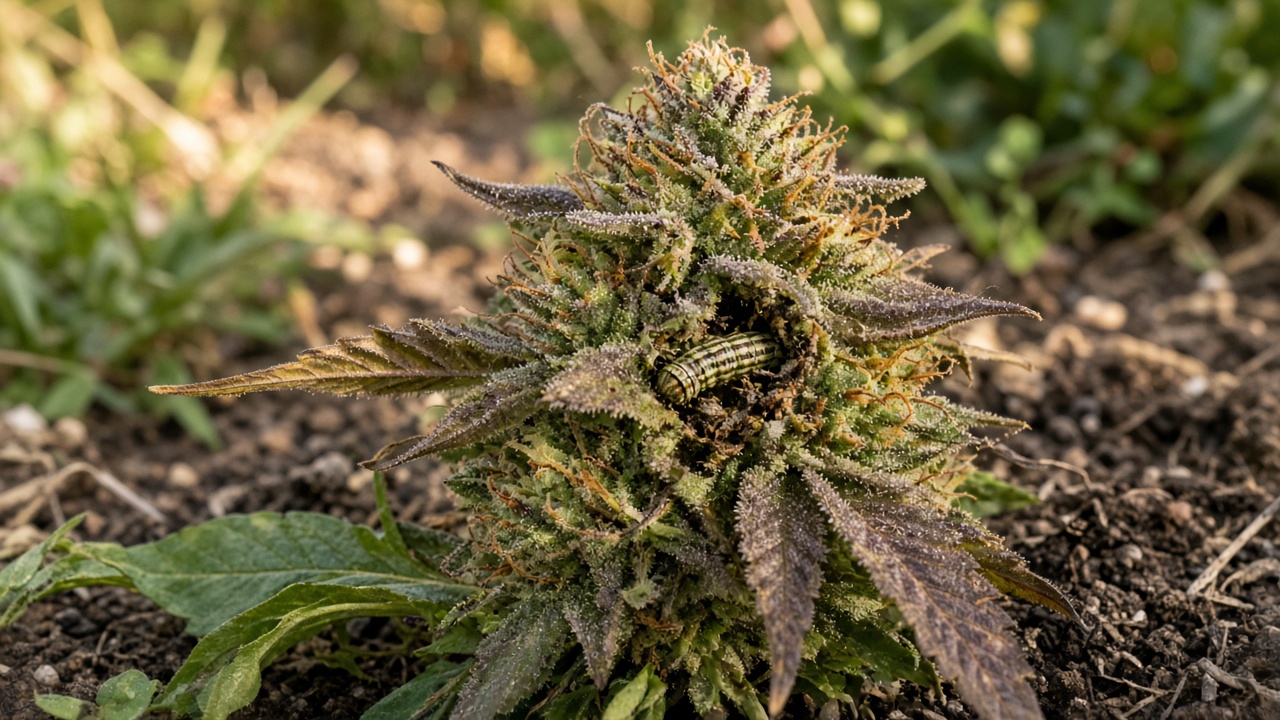
A hole in an outdoor Michigan bud at chop means a caterpillar already ate inside. Frass, those crumbs, is why that cola stays out of the jar. Open the bud.
Questions this article answers
- What do caterpillars and budworms do inside outdoor cannabis buds at chop?
- What does a hole in an outdoor cannabis bud mean?
- What is frass in a cannabis bud?
- Why should a wormy bud stay out of the jar?
- Do corn earworms get into outdoor Michigan flower?

Head Cultivator
On this page
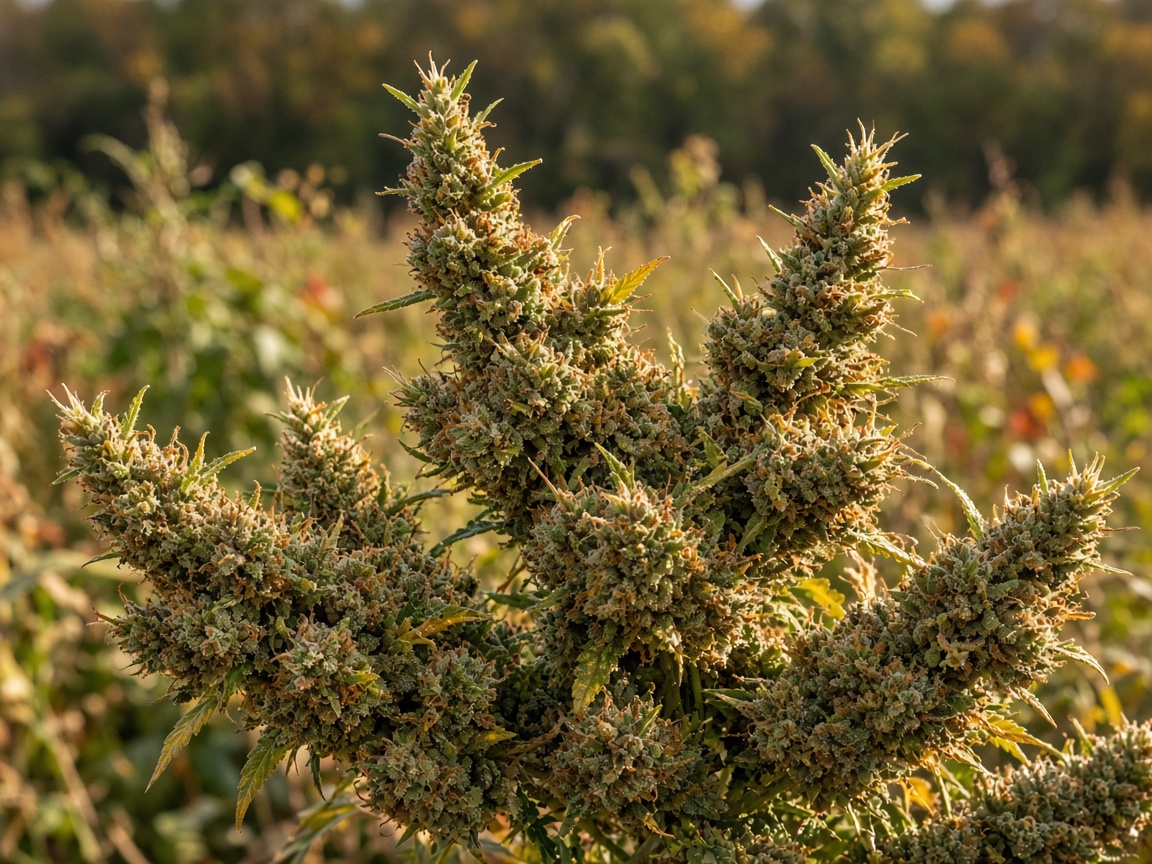
You turn a fat Michigan cola over at the trim table and there's a neat little hole in the side. Most of the time, a caterpillar already ate its way through the inside.
The crumbs in that hole are frass, which is caterpillar droppings. That bud stays out of the jar.
I'm Jamie. I split outdoor colas before they ever see a bin. Gray mold has its own page, late-September rain and bud rot. The weeks before the hole shows up are in beneficial insects.
What Does a Caterpillar Do Inside an Outdoor Bud at Chop? #
It chews a tunnel through the flower, leaves droppings in that tunnel, and opens a wound rot can use. The budworm hemp papers keep naming is corn earworm, the moth Helicoverpa zea.
Britt, Kuhar, Cranshaw, and colleagues (2021) published that account in the Journal of Integrated Pest Management. They call this moth especially hard on flower buds. The plants were hemp grown for resin, the same kind of top people jar as cannabis.
The larva tunnels the bud and can girdle it, which means it chews a ring that weakens the flower. Feeding wounds let pathogens in. Pathogens are germs that cause disease. Those wounds help bud rot get started.
The same paper says frass contaminates the harvested flower. Frass means the caterpillar's droppings. A larva left inside contaminates the flower too. They flag this most in humid climates. Great Lakes air at chop is that kind of humid. City rain numbers are in the weather section below.
Britt's group also shows a corn earworm larva that tunneled into a hemp stem. On grain plants, the same insect eats seeds. On flower hemp, the bud is the part you came for. The tunnel sits in the part that would have gone in the jar.
A 2021 review in the journal Insects says larvae of this moth feed on hemp bud material. The authors call that injury bud rot, and they point back to the Britt paper. One female can lay up to 1,500 eggs in her life, by the ceiling in that review. You don't need a field full of holes. One larva in one bud pulls that bud off the pile.
University of Idaho Extension describes the caterpillar. Hatchlings are about a tenth of an inch. Full-grown larvae reach about an inch and a half. Color runs pale green, pink, or brown, with dark and light stripes along the body. Color won't give you a species name. A striped caterpillar in a tunnel is reason enough to act.
On sweet corn, that Idaho page says the larva feeds in the ear. It leaves damage, mold, and a lot of frass. That line is about corn, which is how the moth got the earworm name. On tomato and pepper, the same page says larvae tunnel into the fruit. Secondary infection follows the tunnel. The moth can use hemp flower too, and the bud is where the feeding hides.
| What you find at chop | What the larva did | What you do with that bud |
|---|---|---|
| Chewed opening in the cola | Tunnel into the flower, per Britt 2021 | Split it before it joins the clean pile |
| Dark crumbs in the tunnel | Frass left in the flower | Keep the bud out of the jar |
| Caterpillar still inside | Larva still in the harvested top | Pull the whole bud from the sell pile |
| Dark, wet, rotted interior | Pathogens entered the feeding wound | Refuse it. Mold signs are on the bud-rot page |
| Hole lower on the stem | Britt shows a larva in a hemp stem too | Check the flower above that stem |
How long is the caterpillar inside the bud? #
The larva can be in the flower for days, then drop to the soil, and the damage stays after it leaves. You can miss the worm and still be holding its tunnel.
University of Idaho Extension times the life on corn, which is the best clock we have for this moth. Females prefer fresh silk. One female can lay up to 1,000 eggs on that fact sheet. The 2021 Insects review puts the lifetime ceiling at 1,500. Both numbers are ceilings from papers. Your plant can have one larva and still lose that bud.
Eggs hatch in 2 to 10 days, depending on temperature, per Idaho. The new larva is about a tenth of an inch. It starts feeding right away. On hemp, Britt's group says that feeding becomes bud tunneling. You may only see a small door while the larva is still tiny.
Full-grown larvae reach about an inch and a half. Idaho describes stripes and a body that can be pale green, pink, or brown. Adults are moths about three quarters of an inch long, with a wingspan around 1 to 1.5 inches. At chop you usually find the caterpillar. The moth has often already flown.
When the larva is ready, it moves into the soil and pupates. Idaho says the next adults can emerge in 10 to 25 days in a non-winter generation. The bud doesn't heal on that schedule. The tunnel, the frass, and the wound are already in the flower you cut.
| Stage | Idaho timing | What it means on a cola |
|---|---|---|
| Egg | Hatches in 2 to 10 days | A clean-looking bud can hide a hatch this week |
| Small larva | About 1/10 inch, feeds immediately | The hole may be tiny |
| Large larva | Up to about 1.5 inches, striped | You may still find it inside |
| Pupa in soil | About 10 to 25 days, then a moth | An empty hole can be a finished meal |
| Adult moth | About 0.75 inch long | The flier is gone by the time you trim |
Northern summers stack fewer generations than the South. The Insects review's Ontario example is one or two a year. One wave during flower is enough to mark a cola. Seven Texas generations are the other end of that review. A single larva still pulls a bud off the pile.
I've smoked flower for years. My tolerance isn't a typical tolerance. That doesn't change the chop rule. A tunneled bud stays out of the jar because the inside is eaten and dirty.
What Does the Hole Mean? #
The hole is the mouth of a tunnel, and what matters is inside the bud. A smooth opening can still lead to a hollow flower.
Britt and colleagues (2021) call the injury extensive bud tunneling. Extensive means the chew runs through the flower, past the doorway you saw on the outside. Girdling means a chewed ring that pinches the bud. Both start at a hole you can miss under a sugar leaf. A sugar leaf is one of the small leaves stuck in the cola.
University of Idaho Extension says the larvae pupate in the soil. Pupate means the caterpillar changes into a moth underground. An empty hole can mean the larva already dropped off to do that. The tunnel stays. The wound stays. Anything it left in the flower stays too.
Split the bud even when the hole looks empty. The larva may sit deeper than the first bract. A bract is a tiny leaf in the flower. Britt's paper shows a corn earworm larva inside hemp tissue, including a stem. A bored stem on that branch is a reason to open the cola above it.
University of Missouri Extension says later-stage armyworm caterpillars may bore into hemp buds and flowers. They contaminate those flowers with silk and frass. Silk is the fine thread a caterpillar spins. If the hole has threads plus crumbs, that Missouri note fits. You still open the bud when you see only the hole.
A surface nick on an outer leaf is a different look. Leaf holes from a looper can be wide and messy, and that Missouri guide says loopers chew foliage hard. A hole that enters the cola, the main flower top, is the chop-day problem.
| How the opening looks | Plain reading | Next move |
|---|---|---|
| Small chewed door in the cola | Mouth of a tunnel | Split the bud in bright light |
| Empty hole, no caterpillar in sight | Larva may have left for the soil | Still split it. The wound remains |
| Hole plus silk threads | Fits later-stage armyworm boring | Keep that flower out of the clean bin |
| Hole plus dark wet tissue | Pathogens may already be in the wound | Refuse it. Use the bud-rot page for mold |
| Wide holes only on big fan leaves | Leaf chewing, often a looper | Check the flower anyway if the cola is scarred |
Shoppers meet this at the jar, long after chop. If the farm missed the hole, the tunnel can already be brown inside. Do the check on the table, while the cola is still whole. Do it before anyone trims flower onto a rack. The hang itself is covered in drying cannabis flower.
What Does the Frass Mean? #
Frass means the caterpillar's droppings, and crumbs inside a bud mean something fed in there. Those crumbs are contamination in the flower you would have jarred.
Britt and colleagues (2021) say frass contaminates harvested hemp material on cannabinoid cultivars. Cultivar here means the type of plant. They are talking about plants grown for the resin in the flower. The droppings are in the product. A larva still in the bud is part of the same problem.
On sweet corn, University of Idaho Extension says earworm larvae leave large amounts of frass in the ear, along with damage and mold. That one is about corn. Same insect, same habit: it feeds out of sight and leaves waste behind. For hemp flower, the line that names frass in the harvested bud is Britt's.
University of Missouri Extension says armyworm caterpillars contaminate hemp buds and flowers with silk and frass. The crumbs can sit in the hole or deeper in the chew. You may see them before you see the caterpillar. The larva can be small, about a tenth of an inch when it hatches, per the Idaho page. Early crumbs can be sparse. Sparse still counts.
Brushing the outside of the cola leaves the tunnel alone. The crumbs that matter are packed where the larva fed. Britt ties those crumbs to contaminated harvested flower. Once a bored bud lands in a shared bin, loose frass can ride onto clean tops. Pull that bud before it touches the clean pile.
Dark crumbs plus a wet brown center means the wound may already be rotting. The fungus name and the jar rules are on the bud-rot page. Here I'm only talking about the crumbs and why the bud never joins that jar.
| What the crumbs look like | What they are telling you | Jar decision |
|---|---|---|
| Dark specks packed in a tunnel | Frass from a caterpillar feeding inside | Out of the jar |
| Crumbs plus silk threads | Missouri's armyworm note on bored flowers | Out of the jar |
| Crumbs and no larva | Larva may have left, waste stayed | Out of the jar |
| Crumbs plus a dark wet center | Feeding wound plus possible rot | Refuse. Read the mold page |
| Orange pistils only | Ripe flower hairs on a solid bud | Keep checking for a real tunnel |
Pistils are the hairs on a cannabis flower. They can be orange or brown when the plant is ripe. Hairs are thin and stuck to the bud. Frass is crumbly waste in a chew. If you are unsure, split the bud. A ripe pistil doesn't excuse a tunnel.
Which Caterpillars Show Up on Michigan Outdoor Flower? #
Corn earworm is the budworm the hemp papers center on, and other caterpillars can still wreck a cola. A half-eaten bud won't give you a clean species name. The chop rule is the same either way.
Corn earworm is Helicoverpa zea. Tobacco budworm is a second moth. A September 2026 paper in the Journal of Economic Entomology uses the name Heliothis virescens for tobacco budworm. Pandey, Dorman, Walton, and Shrestha call both moths economic pests of floral hemp. Floral means grown for the flower.
That work was in southern Oregon. In those field plots, tobacco budworm showed up in the hemp more often than corn earworm. Leave that count in Oregon. A Detroit-area outdoor plot can meet a different moth in the same month. What carries north is the shared habit. Both moths can use flowering hemp.
In their cage tests, corn earworm females laid more eggs on hemp than on sunflower or on corn. Sweet corn was a weak trap crop in that hemp system. A trap crop is a plant you hope the moth picks first. Their trial left the corn row as a weak pull. Flower still got eggs. University of Idaho Extension still says females prefer fresh corn silk when they can get it. They lay on other plants when silk is gone. Fresh silk early, and other plants after silk dries, can both show up in one Michigan August.
University of Missouri Extension (October 2025) covers two armyworms on hemp. True armyworm is Mythimna unipuncta. Fall armyworm is Spodoptera frugiperda. Early feeding shreds leaves. Later stages may bore into buds and flowers. They leave silk and frass. The wounds make fungal infection more likely.
The same Missouri guide describes cabbage looper, Trichoplusia ni. It is a green caterpillar that walks with a loop in the middle. Loopers chew large holes in leaves. Feeding on floral buds can deform or destroy a marketable flower head. That damage sits out in the open. A budworm tunnel hides in the cola. Either one can end the jar plan for that top.
A 2021 review in Insects lists Eurasian hemp borer, Grapholita delineana, as a field pest of hemp. That table doesn't describe the hole. The same review lists European corn borer, Ostrinia nubilalis, as a field pest. It says that borer responds to scent compounds corn and hemp share. I won't make up a cola picture for either borer. If the flower is bored, split it.
| Caterpillar | Where the source puts it | What chop day cares about |
|---|---|---|
| Corn earworm, H. zea | Tunnels cannabinoid hemp buds (Britt 2021) | Hole, frass, or a larva means out of the jar |
| Tobacco budworm, H. virescens | Floral hemp pest in the 2026 Oregon paper | Same chop rule. The species name can wait |
| Fall and true armyworm | Bore buds later, leave silk and frass (Missouri) | Silk plus crumbs, pull the flower |
| Cabbage looper | Chews leaves and can ruin flower heads | A wrecked head stays out of the bin |
| Eurasian hemp borer | Listed field pest in the 2021 review | No hole guide here. Still split a bored cola |
| European corn borer | Listed field pest. Notices hemp scent | Stem or flower damage still gets opened |
Idaho's earworm larva can reach about an inch and a half, with stripes, in green, pink, or brown. Hold that beside a cola and the name can still be wrong. The damaged bud still stays out of the jar. Southeast Michigan outdoor flower is in the ground while these moths are flying. Weather timing comes next.
Why Does That Bud Stay Out of the Jar? #
The bud stays out because the inside is eaten, contaminated with frass, and already set up for rot. Trimming the doorway off the outside leaves the tunnel behind.
Britt and colleagues (2021) say feeding wounds let pathogens in, and those pathogens help bud rot develop. They also say the buds can look dark and rotted. Frass contaminates the harvested flower. A larva left in the material contaminates it too. They flag the rot risk most in humid climates. Humid air is the extra push on an outdoor cola. The city numbers are in the weather section.
The fungus that usually does this job on hemp flower is Botrytis cinerea, gray mold. The Pacific Northwest handbook, revised March 2026, calls it an opportunistic pathogen. Opportunistic means it moves into tissue that is weak, damaged, or dying. It infects easily through wounds. Cool air around 50 to 80°F suits it, with a sweet spot near 68°F. High humidity and free water on the plant help it. Rain while buds are ripening can start a big outbreak. Brown, water-soaked spots are an early look.
Smell, gray fuzz, and the jar rules are in late-September rain and bud rot. A wormy bud can be headed there before you see fuzz. The jar decision happens at the tunnel.
Drying can't rewind a chew. The drying guide is about temperature, humidity, and the hang. It assumes the flower going up is intact. Britt says frass and a leftover larva contaminate harvested material. Hang a bored cola with clean tops and the crumbs can move. Keep a separate tray for damaged flower, then keep that tray out of the jar lot.
University of Missouri Extension says armyworm wounds predispose hemp buds to fungal infection. Predispose means the wound makes infection easier. The same idea shows up for corn earworm in Britt. Two caterpillars, one chop rule.
| Reason | Source | What it means at the bin |
|---|---|---|
| Tunnel through the flower | Britt 2021, extensive bud tunneling | The sellable part is eaten |
| Frass in the flower | Britt 2021, frass contaminates harvest | Droppings are in the product |
| Wound invites pathogens | Britt 2021, and the PNW Botrytis page | Rot can start before fuzz shows |
| Humid climate | Britt 2021, plus September air | Chop week favors that rot |
| Shared bin | Frass rides onto neighboring buds | Damaged flower gets its own tray |
I won't claim a percent chance that every tunnel becomes gray mold. The papers describe a path. They don't give a single national rate. On a Detroit table, I still pull the bud. The cost of being wrong is a jar that goes musty later. The bud-rot page tells you how to refuse that jar.
How Do You Check a Cola on Chop Day? #
Look at every cola in bright light. Split any bud with a hole or with crumbs. Keep damaged flower off the clean pile. The check takes a minute. A missed tunnel takes the jar.
Do this before the flower hits a shared bin. Outdoor tops are dense by chop. A dense cola hides a small door. When sun-grown cannabis is ready covers ripeness. The list below is for the worm.
- Set the cola in sun or under a bright lamp. Turn it. Look at the sides, under sugar leaves.
- Mark any chewed opening, silk, or dark crumbs. One sign is enough to split that bud.
- Pull the bud open along the tunnel. Look for a caterpillar, more frass, wet brown tissue, or a hollow center.
- If the hole is empty, keep going. Idaho Extension says these larvae pupate in soil. The caterpillar may already have left. The wound is still there.
- Put damaged buds on their own tray. Britt and colleagues (2021) say frass contaminates harvested material. Loose crumbs travel.
- Send dark, wet, fuzzy flower to the refuse pile. That look belongs to the bud-rot page.
- Wash your hands or change gloves before you go back to clean flower. Crumbs on your fingers are still frass.
| Sign in the bud | Tray |
|---|---|
| No hole, no frass, no brown tunnel | Clean pile, and keep looking |
| Hole only | Split pile, until you see the inside |
| Frass, silk, larva, or a hollow center | Damaged tray. Out of the jar |
| Dark, wet, or fuzzy interior | Refuse. Mold page from here |
A caterpillar in one bud on a branch is a reason to check the neighboring colas. Moths lay eggs across a plant. The Insects review puts a female's lifetime eggs as high as 1,500. Most of those eggs are not on your plant. A cluster on one row is still enough to slow the trim table down.
What does a clean cola look like next to a bored one? #
A clean cola has no chewed door, no crumb pile, and no hollow center when you spread it. A bored cola fails one of those three and leaves the jar pile.
Use the same light for both. Ripeness hairs can be orange or brown on either bud. Pistils are those hairs. They are thin and attached. Frass is loose crumbs in a chew. Brown pistils on a solid bud are a ripe look. Brown crumbs in a hole are a caterpillar look.
| Check | Clean cola | Bored cola |
|---|---|---|
| Outside | Sugar leaves intact, no chewed door | A small opening into the flower |
| When you spread it | Tight flower, no hollow run | A tunnel or a soft center |
| Waste | No crumb pile in the bracts | Frass, sometimes with silk |
| Live insect | None in the flower | A striped caterpillar, or none if it left |
| Color inside | Matches the rest of the cola | Dark, wet, or already brown |
| Tray | Clean bin | Damaged tray, or refuse if it is rotten |
One bored bud on a branch means you check the neighbor. Moths lay eggs across plants. One hole can have company. The Idaho page says larvae feed as soon as they hatch. A second hole can be one instar behind the first. Instar means the stage between sheds of the skin. The smaller one is easier to miss.
Where does the damaged bud go after the sort? #
Damaged flower stays off the clean rack, the clean bin, and the jar. The tunnel already happened. The rest of the job is keeping it from touching good flower.
Britt and colleagues (2021) say frass contaminates harvested material. A larva left in the bud does the same. Once crumbs are loose, they move when you toss buds together. A shared bin is how a bored cola marks its neighbors.
Keep three trays if you can. Clean. Damaged. Refuse.
- Clean: no hole, no frass, no hollow center after you spread the bud.
- Damaged: a tunnel, crumbs, silk, or a caterpillar, even if the inside is still dry.
- Refuse: dark, wet, or fuzzy tissue. That path is the bud-rot page.
Don't trim the damaged tray onto the clean rack to "save weight." The outer sugar leaves can look fine while the core is hollow. Britt calls the tunneling extensive. Extensive means the chew is larger than the door.
Leave bored buds out of the pre-roll pile. The frass and the wounded flower would be inside the paper. Divine Toke's pre-rolls are 1 gram each, and the 20-pack is 20 of those. Hiding a tunnel inside a joint breaks the same check as the jar. The flower in the paper should be flower that would have passed that check.
Hang the clean tray by itself. The drying guide is about that hang. Air from a damaged tray can carry loose crumbs if the trays touch. Leave a gap. Label the damaged tray in plain words. Write "worm" on the tape if that is the clearest word. The next person on the shift should see the label before they see a pretty sugar leaf.
A pretty outside is how a bored bud fools a fast trim. Sugar leaves can stay green. Pistils can still look ripe. Look for the door, the crumbs, or the hollow center. If you only have time for one move, split the suspect bud. Britt's tunneling is inside. The outside can wait.
| Tray | What landed here | Next stop |
|---|---|---|
| Clean | Solid cola, no tunnel | Dry rack, then jar |
| Damaged | Hole, frass, silk, or a larva | Out of the sell pile |
| Refuse | Dark, wet, or fuzzy inside | Mold page. Do not jar |
I don't run a spray at the trim table. The caterpillar already fed, and the bud's already a tunnel. Prevention for the weeks before chop is in the last section.
Why Does Late Summer in Michigan Set This Up? #
Michigan outdoor flower is ripening while migrant moths are laying, and September air sits in the mold comfort zone. The worm and the weather share a month.
Ajayi and Samuel-Foo (2021) say corn earworm pupae do not successfully overwinter above 39° N. Overwinter means survive the winter. Adults then migrate through most of the United States and southern Canada. The National Weather Service grid for Detroit sits near 42.4° N. That point is on the forecast grid. The whole idea of a local winter population fails north of that 39° line. The moths have to fly in.
University of Wisconsin–Madison, 28 June 2026, tells the Great Lakes version. Their historical picture is that corn earworm does not survive a Wisconsin winter. Pupae overwinter in the mid-South and along the Gulf. Moths fly north. They also record an exception. The winter of 2024–25 in southern Wisconsin let some pupae live, and moths showed up early. A mild winter can move the start date. Michigan still sits in that migrant path. As of that late-June note, the Great Lakes network was catching few earworms. June is early. Outdoor colas are the later problem.
The same Insects review puts generation counts on a map. One or two generations a year in Ontario. Up to seven in south Texas. Windsor sits across the river from Detroit, so the Ontario example is the neighbor's latitude. Texas is the other end of that review, with up to seven generations. The flight is the piece that applies here.
University of Idaho Extension says the moths are most abundant in late summer. Females prefer fresh corn silk. They use other plants when silk is gone. Michigan sweet corn finishes silk while outdoor cannabis is still flowering. That's the timing. The Oregon trap-crop trial, linked above, found sweet corn a weak rescue for floral hemp. A cornfield next door tells you where the moths came from. Once a cola is bored, corn can't fix it.
Then the rain. NWS Detroit normals for 1991–2020 put September in Detroit at 74.4°F by day and 55.5°F at night. Rain that month averages 3.22 inches. Flint's September normal is 73.1°F and 50.4°F, with 2.90 inches. Nights in that band sit inside the PNW Botrytis window of about 50 to 80°F. The handbook's sweet spot is near 68°F, on wet plants. Britt said feeding wounds predispose buds to rot in humid climates. A tunneled cola in a Detroit September matches that warning.
What does the flight look like once flower is open? #
Moths lay while the cola is swelling, the larva feeds inside, and September wet air meets the wound. Cut day is when you finally open the stack.
University of Idaho Extension says females prefer fresh corn silk, then use other plants when silk is gone. Outdoor cannabis is one of those other plants once it is in flower. Britt and colleagues (2021) show what that choice costs. The larva tunnels the bud.
Eggs can sit for 2 to 10 days before they hatch, per Idaho. A cola can look untouched on Monday and show a tiny door after the hatch. The larva feeds right away. It is about a tenth of an inch at first. You can walk past it.
By the time the larva is large, the tunnel is the extensive kind Britt describes. Frass is in the flower. If the larva drops to the soil to pupate, the hole can look empty. The waste remains.
Then the weather. September nights in that normals table average 55.5°F, with 3.22 inches of rain. That night temperature sits in the PNW Botrytis band. A wound plus that air is why the bud should not sit around hoping the hang hides the tunnel.
| Week of flower | What can be true | What you do |
|---|---|---|
| Silk still fresh on nearby corn | Moths prefer that silk | Keep watching the cannabis anyway |
| Silk drying, cannabis in flower | Eggs move onto other hosts | Look for tiny doors on colas |
| A few days after a hatch | Larva about 1/10 inch, feeding | Split any new opening |
| Larva full size | Tunnel, frass, maybe the caterpillar | Damaged tray |
| Larva already in the soil | Empty hole, waste left behind | Still the damaged tray |
| September rain on that wound | Rot path from Britt and the PNW page | Refuse if the inside is wet or brown |
I won't turn this into a spray week. The sort at the end of the stack is the same sort as chop day.
Write the cut date on the damaged tray. A Friday cola and a Monday cola should stay labeled. Unlabeled bins are how crumbs travel onto clean flower. If the tape says worm, leave it there until that tray is out of the room.
| Piece | Number or fact | Why chop cares |
|---|---|---|
| Detroit latitude | About 42.4° N on the NWS grid | North of the 39° N overwinter line |
| Great Lakes winter | Wisconsin: pupae usually die, moths migrate | Michigan flower depends on a flight |
| Ontario generations | 1 or 2 a year in the 2021 review | Northern summers have fewer waves, still enough |
| Late summer | Idaho: moths most abundant then | Lines up with outdoor flower |
| Detroit September | 74.4 / 55.5°F and 3.22 inches of rain | Wet, cool nights suit gray mold |
| Flint September | 73.1 / 50.4°F and 2.90 inches | Same pattern north of Detroit |
| Wound plus humidity | Britt 2021 | A bored bud in this air stays out of the jar |
Divine Toke is a Detroit-area Michigan sun-grown flower farm that sells by mail. No acreage and no moth count for our rows. The weather and the insect do what they do on outdoor flower in this state. Only buds that passed the split end up in a jar.
Where Does Prevention Live? #
Prevention is the weeks before the hole, and this page starts after the caterpillar is already inside. Spray mixes aren't covered here.
The living system that eats pests early is in beneficial insects and cannabis IPM. Why the farm skips pesticide shortcuts is in why we don't use pesticides. The wider farm story is the regenerative cannabis process. Those pages cover scouting, habitat, and why we stay off a spray schedule. Read them for the season. Come back here when the cola is already bored.
The Oregon hemp trial linked above tested sweet corn as a trap crop. It did a weak job against corn earworm in floral hemp. I'm not giving a planting recipe here. A cornfield can explain where a flight came from. It can't empty a tunnel on chop day.
University of Missouri Extension tells hemp growers to scout for feeding damage, frass, eggs, and adult insects. Scout means walk the plants and look on purpose. That habit belongs in flower, before the week you cut. On cut day the scout becomes a sort. Clean tray. Damaged tray. Refuse tray.
| Question at the table | Page that answers it |
|---|---|
| How do good bugs fit a pesticide-free season? | Beneficial insects |
| Why skip a spray program on the flower? | Why we don't use pesticides |
| How does the whole farm system fit together? | Regenerative process |
| The bud is already dark and rotten | Late-September bud rot |
| The bud is only tunneled and full of frass | This page. It stays out of the jar |
That table points you to the right page, so this one can stay on the worm in the cola.
FAQ #
What is a budworm in cannabis? #
A budworm is a caterpillar that feeds inside the flower, and the hemp papers usually mean corn earworm. Helicoverpa zea tunnels those buds, leaves frass, and opens wounds that help rot, according to Britt and colleagues (2021). Tobacco budworm is a second moth that also uses floral hemp. You can skip the Latin at the trim table. A caterpillar in the cola is the problem.
What does frass in a bud mean? #
Frass is caterpillar droppings, and crumbs in the flower mean a larva fed there. Britt's 2021 paper says that frass contaminates harvested hemp flower. Missouri Extension says armyworms leave silk and frass in bored buds. On corn, Idaho Extension describes a lot of frass in the ear, with mold. The hemp line to trust is Britt's. Those crumbs keep the bud out of the jar.
Can I cut the hole off and keep the rest of the bud? #
The hole is only the mouth of the tunnel, so cutting it off leaves the chewed flower behind. Britt calls the injury extensive bud tunneling and girdling. The rest of the bud can still hold frass and wounded tissue. That leftover piece contaminates a jar. The whole bud goes to the damaged tray.
What if I see frass and no caterpillar? #
The crumbs still count, because the larva may already have left for the soil. Idaho Extension says corn earworm larvae pupate underground. An empty tunnel can mean the caterpillar dropped off. Frass and the wound stay. Britt says that waste contaminates harvested material. Keep the bud off the clean pile.
Does a wormy bud always have mold already? #
The papers describe a path to rot. They don't promise gray fuzz on day one. Britt says wounds let pathogens in and help bud rot, especially in humid climates. The PNW handbook says Botrytis infects damaged tissue through wounds in cool, wet air. A dry tunnel today can be a brown center after Detroit rain. The bud stays out either way.
Is corn earworm the same insect that gets in sweet corn? #
Yes. Helicoverpa zea is the corn earworm, and it also feeds in hemp flower. Idaho Extension says females prefer fresh corn silk and use other plants when silk is gone. They leave frass and mold in corn ears. Britt documents the same moth tunneling hemp buds. Michigan sweet corn and outdoor cannabis can share one late-summer flight.
Do indoor buds get these caterpillars? #
This post is about outdoor flower, where migrant moths lay on plants in the open. Ajayi and Samuel-Foo (2021) say adults migrate across most of the United States and southern Canada. Idaho says they are most abundant in late summer. A moth can wander through a doorway. I don't have a study that calls an indoor room immune. The check here is for outdoor colas at chop.
Will drying kill the worm and make the bud fine? #
Drying can kill a leftover caterpillar and still leave a ruined bud. The tunnel, the frass, and the wound are already in the flower. Britt says that contamination is in the harvested material. The drying guide is for intact flower on the rack. A bored bud does not share that rack with clean tops.
Why does September in Michigan make a wounded bud riskier? #
Detroit's September nights and rain sit in the band gray mold likes, and a caterpillar wound is an open door. NWS normals put Detroit at 74.4°F by day, 55.5°F at night, and 3.22 inches of rain. The PNW handbook likes about 50 to 80°F and wet tissue, with a sweet spot near 68°F. Britt says humid climates make feeding wounds more likely to rot. That's the spot a wounded cola is in come September.
Should I spray the cola once I see the hole? #
The feeding is already done. Spray rates aren't on this page. A spray on cut day doesn't rebuild a tunnel or lift frass out of the flower. The weeks before chop belong to beneficial insects and why we skip pesticides. I'm not listing a product, a rate, or a mix.
Is a cabbage looper the same problem as a budworm? #
A looper usually chews in the open, and a budworm hides in a tunnel. Missouri Extension says looper feeding can deform or destroy marketable flower heads. Armyworms and corn earworm are the caterpillars those sources put inside buds with frass. A wrecked head stays out of the jar. A hidden tunnel does too.
Can that bud go in the jar if I do not see gray fuzz? #
Frass and a tunnel are enough, even before gray fuzz shows. Britt says the droppings contaminate the harvest and the wounds invite rot. Fuzzy gray mold is the later look, and that look is on the bud-rot page. That September air is wet enough that waiting on fuzz is a bad bet. The bud stays on the damaged tray.
What I Want in the Jar #
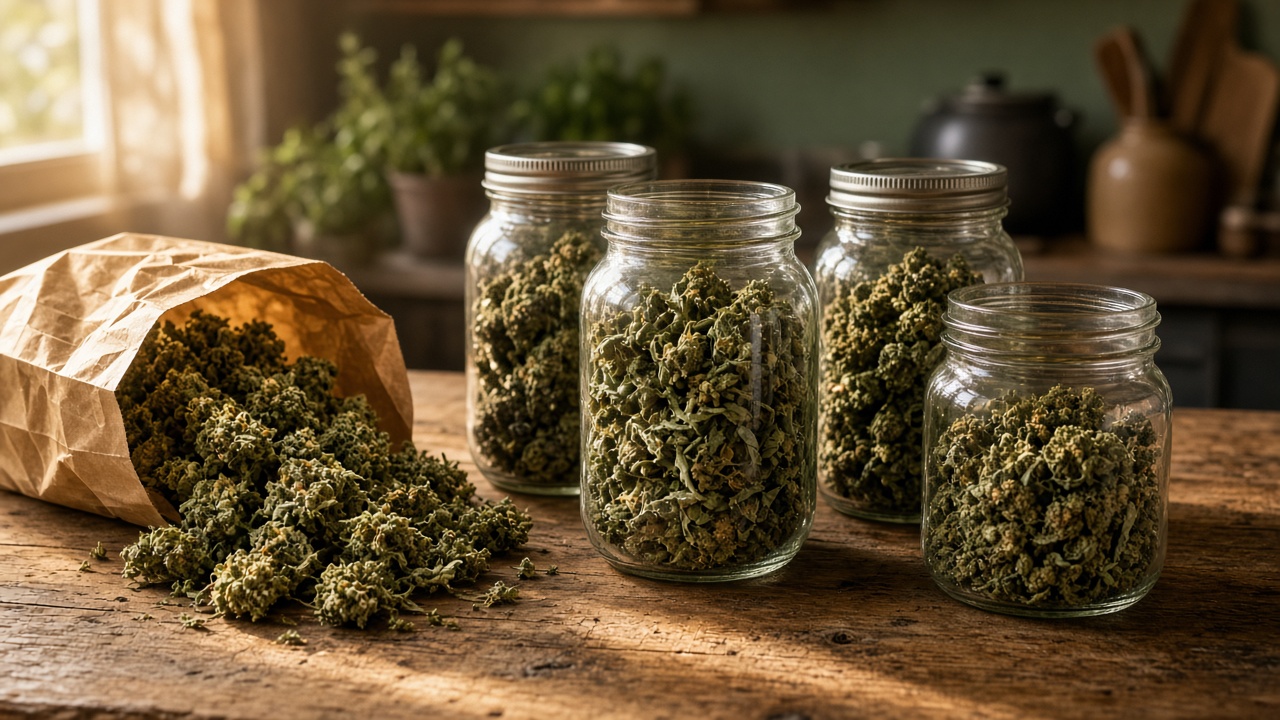
The cola that gets jarred is the one that passed the light, the split, and the tray sort. Divine Toke sells sun-grown flower by mail at divinetoke.org. There is no storefront. The catalog is flower, 1 gram pre-rolls, and the 20-pack, which is 20 one-gram joints at $120. Honey Bananas solventless rosin and Sundog Bio Hash are in the shop too.
That's the bar I hold a cola to before it's jarred. If the bud is already dark and rotten, use late-September bud rot. If you are still in the weeks before chop, start with beneficial insects and the regenerative process. Ripeness is in when sun-grown cannabis is ready.
Read this as farm education. Health questions go to a clinician. Moldy flower gets refused. The bud-rot page is that refuse guide.
Try Honey Bananas — sun-grown in Detroit
Small-batch, living-soil flower cultivated in our Detroit sun-houses. Ships to all 50 states.