Frost on the Buds: Is Frost-Hit Cannabis Still Safe to Smoke?
Early October around Detroit, people call every white sparkle on a bud frost. One of those whites is mold. Here is how to tell all three apart before you smoke.
Questions this article answers
- Is cannabis that got hit by frost still safe and worth smoking, and how does a Michigan shopper tell frost damage from mold?
- is frost damaged weed safe to smoke
- how to tell frost damage from mold on cannabis
- when is the first freeze in Detroit
- does a light frost ruin outdoor cannabis

Head Cultivator
On this page
Early October around Detroit, people call every white sparkle on a bud frost. One of those whites is mold.
I'm Jamie. I grow sun-grown flower for Divine Toke, a Detroit-rooted living-soil brand that sells online. No storefront. No local delivery. My tolerance isn't a typical tolerance. A cold night never made a jar wrong for me. A wet thaw that grew mold has.
Frost-hit flower can still be safe, but you have to know frost damage from mold. This post stays on the bud in your hand. The season clock is in farming on Michigan time, and rain rot has its own page: late-September bud rot.
Is Frost-Hit Cannabis Still Safe to Smoke? #
A light frost doesn't poison the flower. Mold that moves into frozen, wounded tissue after the thaw is the reason to refuse the jar. A cold night doesn't make the plant toxic. If the wounded tissue stays wet, mold gets its opening.
Clemson Extension describes what freezing does to tender shoots. Ice crystals form and rupture plant cells. The leaf looks water-soaked and wilted, then often turns black. That's freeze injury. By itself it says nothing about mold.
The thing to walk away from is the fungus that loves wounded, wet plant parts. On hemp, the PNW Plant Disease Handbook says Botrytis infects easily through wounds. That's the gray mold behind a lot of bud rot. The same page tells growers to avoid keeping plants wet for 12 hours or longer. A cola that froze, thawed, and stayed damp can land in that wet zone. One that froze and dried fast is a different jar.
| What you are holding | Smoke it? | Why |
|---|---|---|
| Sparkly resin, clean plant smell, no soft brown core | Yes, if the flower was already good | That white is the plant |
| A few black sugar leaves, bud still springy, smell still right | Usually yes | A burnt leaf can taste harsh. That's all it does |
| Musty smell, gray fuzz, or a brown mushy core | No | That's mold. Trimming around it won't save it |
| Wet, spongy bud the morning after a freeze | Not yet | Dry it and look inside before anyone lights it |
Licensed Michigan flower has to pass a lab screen. That screen covers the sample on test day. It says nothing about a bag that sat in a damp trunk afterward. Smell it in the parking lot anyway.
I won't tell you our field dodged frost this October. I don't publish a harvest log, an acreage, or a plant count, so I won't make one up. The same checks apply to our jars as to anyone else's.
What Are the Three Whites on a Bud? #
Shoppers use one word, frost, for three different things, and only one of them is weather. The sparkle can be the plant's own resin. The ice can be last night. The dust can be mold. Those three don't smoke the same.
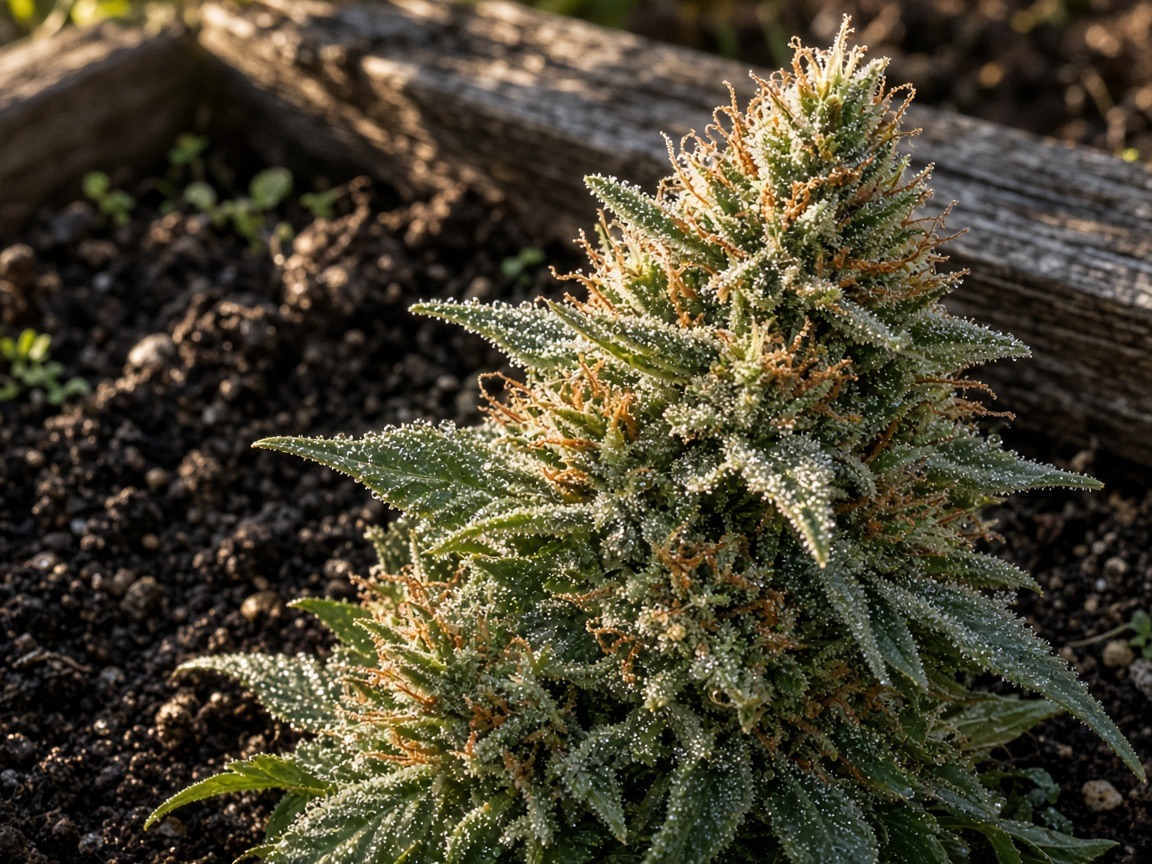
A trichome is the tiny resin gland on the flower. People call a heavy coat of them frost because it looks like sugar. It sparkles when you tilt the bud. It sticks to your fingers. It smells like the flower, not like a basement. It doesn't melt off by lunch. That's the resin you bought the jar for.
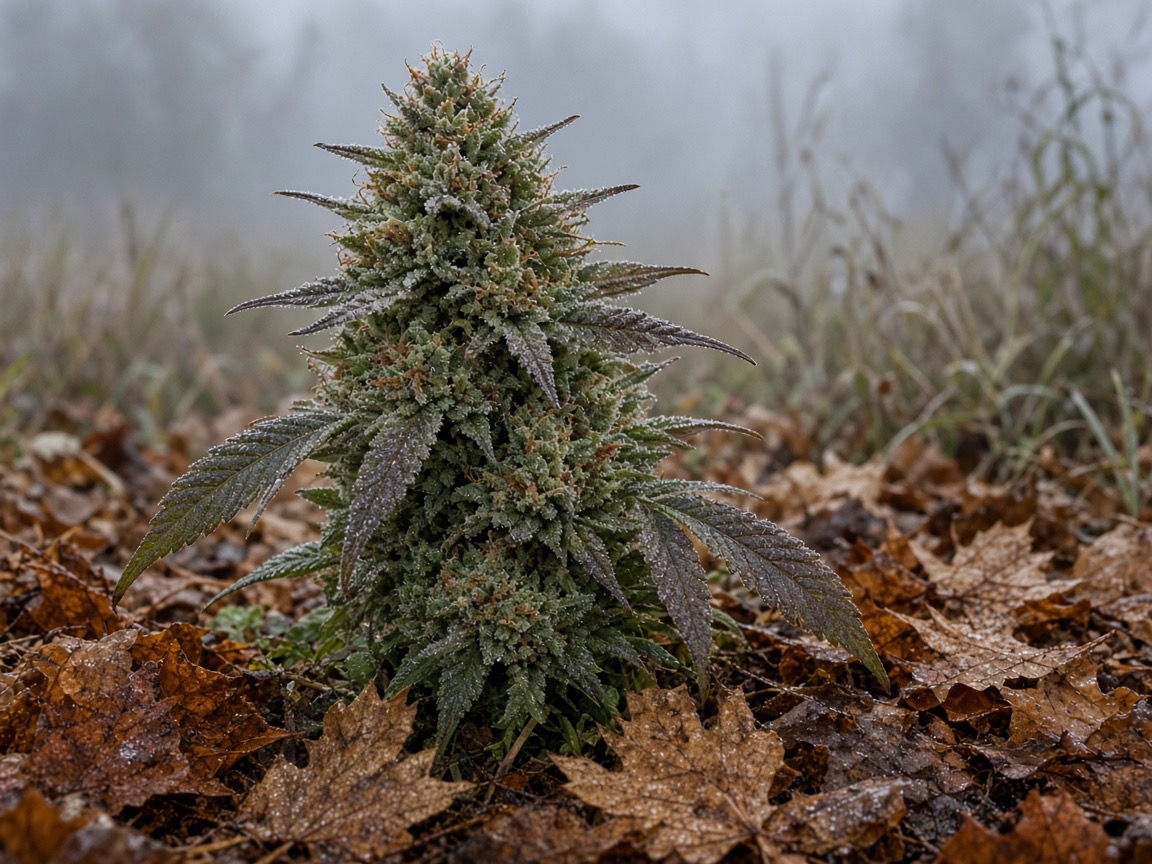
Weather frost is actual ice. The National Weather Service glossary defines frost as thin ice crystals on a surface. It can form while the official thermometer still reads in the mid-30s, because the leaf itself got colder than the air. That ice is gone once the sun hits it. If the tissue got hurt, the burn stays.
Mold is a living growth, and it's the one you refuse. Punja and colleagues (2019) found powdery mildew on cannabis leaves. They also found more than one kind of bud rot in the flowers, including Botrytis cinerea. Powdery mildew looks like flour wiped on a leaf. Bud rot looks like a brown, dying cola that can throw off gray-brown dust, which is the mold's spores spreading. The PNW handbook describes that spore mass on hemp buds.
| White you see | What it is | Touch and smell | What you do |
|---|---|---|---|
| Sparkly heads all over a healthy bud | Resin glands (trichomes) | Sticky, smells like the flower | Normal. This is the plant |
| Ice on leaves at dawn, gone by late morning | Weather frost | Cold and wet, then just a leaf | Watch the tissue after it thaws |
| Flour dust on a leaf, or gray fuzz in a brown cola | Mold | Wipes like powder, or smells musty | Refuse it. Do not smoke it |
A parking-lot photo in bad light won't settle this. Crack one bud. Smell the break. Sugar sparkles. Flour sits in a film. Ice is gone by the time you're at a counter in the afternoon.
If the bag already smells like wet cardboard, you can stop. You don't need a microscope to refuse that one. For the full mold walk-through, see late-September bud rot.
What Does a Freeze Do to the Plant? #
A 32°F night can burn tender flower tissue. A 28°F hard freeze kills most seasonal plants, and Detroit's median for that is November 3. Dawn ice alone doesn't kill the plant. Either night can leave you a bud to judge.
The National Weather Service calls a freeze a surface air temperature of 32°F or below over a wide area. A hard freeze is 28°F or lower for an extended time, cold enough to kill most vegetation. NWS Detroit/Pontiac puts the end of the Southeast Michigan growing season in October. It tracks the first 32°F and the first 28°F separately.
MSU Extension's 1981–2018 table tracks readings from a thermometer 5 feet off the ground. A bud sitting near the soil can be colder. MSU notes that the ground can run several degrees colder on a clear, calm night even when that thermometer is still above freezing. A low cola can ice up before the Detroit station reports 32°F.
| Place | Median first 32°F | Earliest 32°F in the record | Median first 28°F |
|---|---|---|---|
| Detroit | October 18 | October 2 | November 3 |
| Ann Arbor | October 14 | September 23 | November 1 |
| Flint | October 9 | September 16 | October 20 |
| Cadillac | September 21 | August 20 | October 6 |
The same MSU table shows Detroit's first 32°F landing as late as November 12. About 1 year in 10, it has already happened by October 10. The earliest 28°F in that record is October 8, so a hard freeze can hit the city in early October. The typical hard freeze there is November 3.
I'm writing this on October 7. MSU says nobody can forecast the first freeze more than a few days out. October 18 is the planning median. Tonight's forecast is what matters when a plant or a porch jar is at risk. A date circled in January isn't a promise.
Tender shoots go water-soaked and wilted, then often turn black within hours or days, as Clemson Extension describes. On cannabis, that shows up first on exposed sugar leaves and the outer cola. A light touch can leave the inside of the bud green. A hard freeze is more likely to collapse the whole top.
One lab note, because people mix this up with a backyard frost. A 2024 study (PMC11180634) freeze-dried cannabis in a lab machine. The dried flower lost a lot of its smell compounds. That's a machine test, not a wet plant going through a thaw. Don't read it as "frost makes the jar stronger" or "frost keeps the nose."
How Do You Tell Frost Burn From Mold? #
Frost burn hits the exposed parts and doesn't grow gray spore dust. Bud rot is a brown, soft core with a wrong smell. Color alone won't settle it, because brown shows up in both. Check the break, the smell, and whether the damage spreads inside the cola.
Freeze injury, per Clemson Extension, looks water-soaked and wilted, then black, often across the tissue that faced the sky. It hits the outside of the plant because the outside got cold. It doesn't start hidden in the middle of one cola.
On hemp, the PNW handbook describes Botrytis as brown, water-soaked spots on buds, then dead brown tissue and a gray-brown mass of spores. Punja and colleagues (2019) logged that same bud rot, plus other rots, inside cannabis flowers. Early rot can hide, so a pretty outside doesn't clear the inside.
Powdery mildew is the third look. In that Punja survey it was mostly a leaf problem (Golovinomyces on the foliage). It's a flat white film, while trichomes are separate sparkles. If a chalky patch wipes off a leaf like flour, don't talk yourself into "it's just frost." The weather frost already melted.
| Check | Freeze burn | Bud rot | Powdery mildew |
|---|---|---|---|
| Where it sits | Outer leaves and exposed cola tips | Inside dense flowers | Leaf surfaces, as patches |
| First look | Limp, watery, then black or papery | Brown spot, then a dead core | White flour film |
| Smell | Plant smell, maybe harsher | Musty, basement, wet hay | Can be faint. Do not wait on smell alone |
| After a day | Stays put on the tissue that froze | Can keep moving if the bud stays wet | Patches can spread on living leaves |
| Shopper move | Trim ugly leaf if the inside is clean and the smell is right | Refuse the jar | Refuse it |
Do this in order when a jar makes you pause:
- Smell the lid before you dig. Basement, mildew, or wet cardboard is a no.
- Look at the outside for flour dust versus sparkle.
- Break one bud. A green, springy core with a few black sugar leaves is freeze burn. A brown, threadbare, or hollow core is rot.
- Look for gray-brown fuzz in that break. That's the spore mass the PNW handbook describes. Stop.
- At a licensed counter, ask to see the mold and yeast lines on the lab sheet. A shrug isn't a pass.
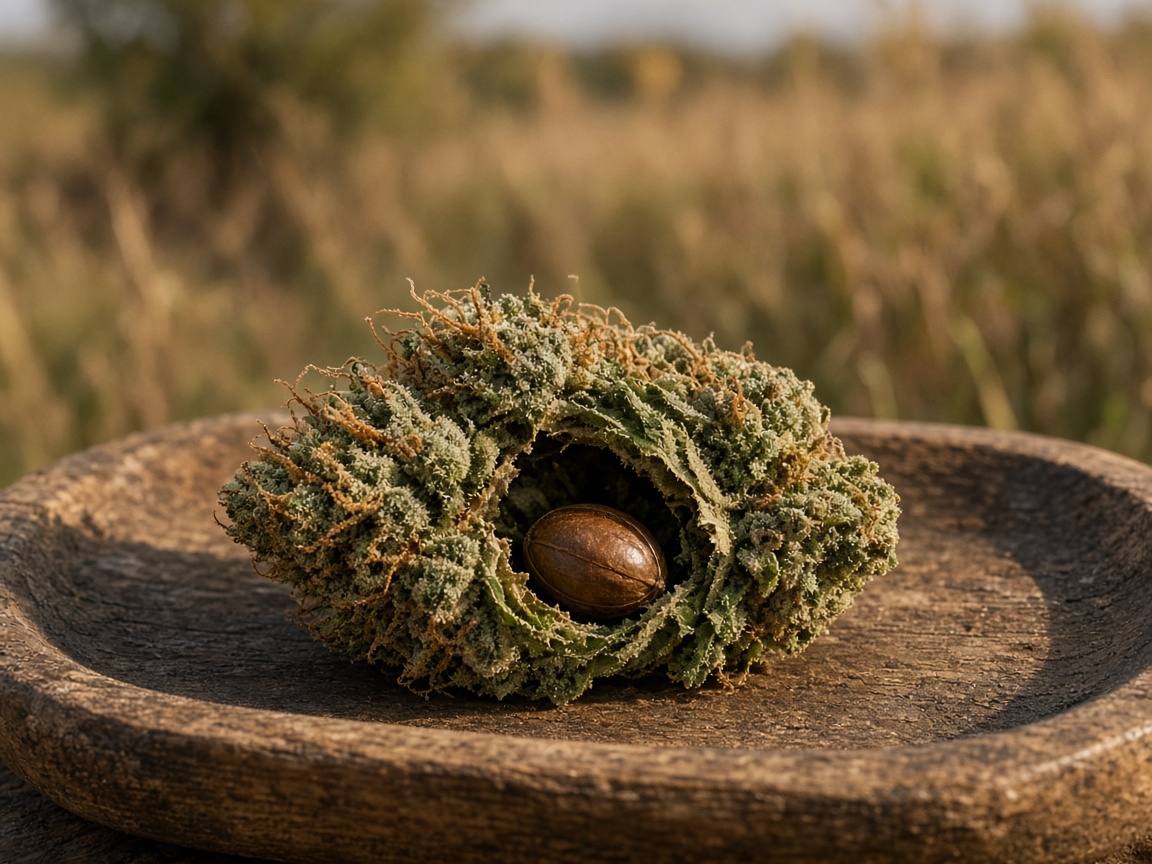
A seed in the break has nothing to do with frost or mold. It's pollen, and how pollen drift puts a seed in your bud explains how.
Dead leaf looks dramatic, and you can trim it. Rot you can't trim. If you're unsure, put it back.
Why Does the Thaw Matter More Than the Ice? #
The freeze wounds the tissue. The thaw is when that wound stays wet long enough for mold to move in. A frozen bud isn't rotting at 28°F. The risk starts when the ice turns back into water and the cola stays wet.
Ice crystals rupture cells, Clemson Extension says, and the shoot looks water-soaked. That wound matters. The PNW handbook says Botrytis infects easily through wounds. The same page says to avoid practices that keep plants wet for 12 hours or longer. Put those two facts on a cold morning and you get the rule I use. If the cola is dry by midday and the inside is sound, the frost only burned the leaf. If it's still soggy at noon inside a tight flower, you're near that 12-hour wet zone.
Not every cold night is a wet one. MSU points out that the coldest ground readings often come on clear, calm nights. That kind of frost can burn a leaf and then dry out. Fog, leftover rain, or a bud that never sees sun is the other kind.
| Morning after | What the bud is doing | Move |
|---|---|---|
| Clear, cola dry by late morning, inside still green | Freeze burn, if anything | Keep it. Dry it like normal flower |
| Leaves black, inside still sound, smell still right | Outer damage | Trim the dead leaf later. Do not panic-bag it wet |
| Still wet at noon inside the cola | Open wound plus free water | Spread it, get air on it, and inspect before any hang |
| Gray fuzz or a brown core the next day | Mold already working | Pull that flower. Do not dry it next to clean flower |
Don't bag wet, frost-hit flower "so it doesn't dry out." It needs to dry. Plastic in a warm car just makes it sweat, and sweat is free water. How to hang it is in drying cannabis flower. If a jar you're buying smells like it dried in a wet bag, refuse it. That goes even if somebody swears a frost "sealed the resins." Ice doesn't seal anything.
When Is Frost-Hit Flower Still Worth Smoking? #
Worth smoking means a clean inside, a smell that's still the plant, and no extra charge for a cold night. Safe and delicious are two different calls. Freeze-burned leaf can be safe and still smoke harsh. Mold fails both.
I've smoked a lot of outdoor flower, and dead leaf is easy to spot in the mix. Black sugar leaf tastes like burned paper. You can pick it off a bud that's otherwise sound. You can't pick mold out of a brown core and call the rest fine. The PNW handbook shows why. The rot and the gray spore mass sit in the bud tissue, not in one tidy leaf you can flick off.
There isn't enough research yet to say one night below freezing makes a bud stronger. The closest careful work I'll cite is the 2024 freeze-dry paper (PMC11180634), and that was a lab dryer where smell compounds dropped. So I'm skeptical of "frost made it louder." That paper is no reason to fear a clean, dry bud.
Purple in the leaf won't tell you about mold either. Purple can be the plant's own pigment, and it looks nothing like flour or gray spore dust. There's a separate page on that: do cold nights make cannabis stronger or just change the color. Don't pay extra because a cola changed color on a cold night. For strength, read the lab sheet. For safety, use the smell and the break.
| Jar in your hand | Worth your money? | Why |
|---|---|---|
| Clean smell, springy inside, a few dark leaves | Yes | You are buying flower, not perfect fan leaves |
| Flat nose, harsh, no mold signs | Maybe | Quality took a hit. Safety may be fine |
| Musty, gray, or brown inside | No | Mold. Walk away |
| "Frost-cured" story and a higher tag, no lab sheet | No | A story is not a result |
Licensed counters can show you the lab sheet. A parking-lot eighth (an eighth of an ounce) has no testing behind it, so nobody ran the mold screen. Divine Toke sells online, so there's no counter where I can hand you the jar. The same rules apply when the mailer shows up. If it smells wrong, don't smoke it to be polite.
What Does a Michigan Lab Pass Cover After a Freeze? #
A lab pass means that sample cleared mold counts, four Aspergillus species, and a water-activity cap at test time. It does not mean a wet bud can sit in a warm bag and stay clean. Frost doesn't erase the rules, and a pass doesn't last forever.
Michigan's Cannabis Regulatory Agency (CRA) sets the limits in its sampling and testing guidance, Version 5.2, revised September 23, 2024. They apply to bud, shake, trim, and kief from a harvest batch:
| Screen | Adult-use flower | Medical flower |
|---|---|---|
| Total yeast and mold | 100,000 CFU/g | 10,000 CFU/g |
| Aspergillus flavus, fumigatus, niger, terreus | Not detected in 1 gram | Not detected in 1 gram |
| Water activity | Pass if it does not exceed 0.65 aw | Same cap |
CFU means colony-forming units, a lab count of living yeast and mold in one gram. Water activity (written aw) is a lab measure of how much loose water is available in the flower. The guidance says a marijuana sample passes if it doesn't exceed 0.65 aw. A thawed, spongy cola is a bad candidate for that cap. Dry it before you count on a sticker.
Adult-use flower gets a higher yeast-and-mold ceiling (100,000 CFU/g) than medical flower (10,000 CFU/g). That's a rule difference. It's no reason to ignore a mildew smell. The Aspergillus line is "not detected" for both.
Aspergillus is a group of molds. Some species can infect the lungs, especially in people who are already sick. A CDC Emerging Infectious Diseases study (June 2020) looked at 2016 insurance claims. A fungal infection was coded for 40 of 53,217 people with a cannabis code (0.08%). Among 21,559,558 people without one, it was 6,294 (0.03%). After age and immune status were counted, the odds were about 3.5 times higher (adjusted odds ratio 3.5, 95% CI 2.6 to 4.8). The authors said these infections were uncommon and that the data couldn't prove cannabis was the source. That's a reason for people with weak immune systems to be strict. It doesn't mean every frosted jar is an infection.
What a pass does not cover:
- Flower that got wet again after the lab pulled the sample
- A damp basement cure
- The bud you did not send, if somebody mixed frost-rotted colas in later
- Your lungs, if you already have a mold problem and you smoke it anyway
Ask for the yeast and mold line, the Aspergillus line, and water activity. "It passed" with no rows doesn't count. What lab-tested means shows how to read the sheet.
What Should a Grower Do the Morning After? #
Open the cola, get air on anything still wet, and keep moldy flower away from the clean hang. Don't wait to see if a brown core "finishes," and don't hose the plants and call it washed. The morning after is for sorting good flower from bad.
If a freeze is in the real forecast, farming on Michigan time covers the cut-or-cover call. Winterizing the hoop house covers the hoses and plastic once the plants are down.
- Walk your plants at thaw, not at noon from the kitchen. Water-soaked leaves are easiest to see while they're still limp.
- Split a few colas from the top and from the low, shaded side. Low buds get colder. MSU says the ground can be colder than the 5-foot thermometer.
- If the inside is green and the cola will dry today, treat it as flower. Hang it with air, as drying from harvest to cure shows.
- If the inside is brown, mushy, or already fuzzy, that cola doesn't go on the same line. The PNW handbook ties Botrytis to wounds and to plants kept wet 12 hours or longer. A damp shed can cost you the rest of the harvest.
- Don't bag wet flower in the field "for later." Plastic sweats.
- After the cut, deal with the hoses and plastic. Clean-looking buds don't excuse skipping them.
| What you see at thaw | Leave it up? | If you cut |
|---|---|---|
| Light burn on tips, inside green, sun coming | Can | Dry with air. Check again tomorrow |
| Whole top collapsed after a 28°F night | No | Sort hard. Expect more loss inside |
| Wet at noon | No | Spread it now. Re-check before the hang |
| Gray spores | No | Out of the garden and out of the dry room |
If you grow in a backyard in Detroit, Flint, or up by Cadillac, use your own forecast. The MSU table puts Cadillac's median first 32°F at September 21 and Detroit's at October 18.
The MSU page adds one caution. Mean temperatures in Michigan have warmed more than 2°F since the early 1980s. At Lansing, the first 32°F and the first 28°F trended about 10 days later across 1981–2018. MSU says the printed dates can run a few days early for a recent fall. October 18 is still the planning number, and a late year can slip past it.
What Should a Detroit Shopper Check on October Flower? #
Smell the bag, break one bud, and don't pay a frost premium. October flower might be outdoor, and it may have seen a cold night. It might be indoor, with a white that's only resin. The check is the same either way.
Indoor flower never sees weather frost. If a budtender calls the sparkle on an indoor jar "frost from the cold," that's marketing for trichomes. Ice was only possible outdoors.
Licensed flower went through the CRA testing table above. A buddy's backyard bag didn't. No offense to a friend who grows clean, but with no screen, your nose is the whole lab. If you're at someone else's counter, you can ask. If the mailer is ours, you can still refuse a bad jar.
Ask these, in plain words:
- Was this outdoor, and did it hang wet after a freeze? A shrug is a skip.
- Can I smell a fresh crack, not the lid that's been open all shift?
- Can I see the yeast and mold line, the Aspergillus line, and water activity?
- Why is the tag higher than the same grower's last jar? "Frost-cured" is not an answer.
- If the break is brown inside, you're done. You don't owe the shop a purchase.
| What they say | What you do |
|---|---|
| "That's just frost" and the bud is sparkly, sticky, and smells right | Fine. That is resin |
| "Light frost, we trimmed the black leaves" and the inside is green | Plausible. Still smell it |
| "We cut around the brown" | Walk. You can't trim rot |
| "The cold made it stronger" | Ask for the lab sheet. A cold night doesn't test potency |
| "It'll be fine once you dry it at home" | You're being handed a wet problem. No |
A bag that rode in a warm car through a night shift can go bad even if the farm did everything right. The porch, the car, and the furnace-dry apartment are covered in the first-frost checklist. Don't smoke a questionable eighth because you're tired and the bag is already open. Wait until you can see the break in real light.
Frequently Asked Questions #
Is the white sugar on a bud the same as weather frost? #
No. The sugar look is resin glands. Weather frost is ice, and it melts. Trichomes stick to your fingers and smell like the flower. The National Weather Service glossary defines frost as thin ice crystals. It can form while the air thermometer still reads in the mid-30s. If the white is still there at a warm counter in the afternoon, it was never ice.
Can I smoke flower after a light frost if it smells normal? #
Yes, if the inside of the bud is still sound and the smell is the plant, not a basement. Clemson Extension describes freeze injury as water-soaked tissue that then turns black. Black sugar leaf can taste harsh. A normal smell plus a green core leaves it as a quality call.
Does a hard freeze turn cannabis poisonous? #
No. A hard freeze does not turn the flower into a poison. The National Weather Service defines a hard freeze as 28°F or lower for long enough to kill most vegetation. The danger after that kill is mold in the wet wreckage. Refuse mushy, musty flower. A clean bud is still a clean bud after a cold night.
How do I tell frost burn from bud rot in the jar? #
Frost burn sits on the outside and stays put. Bud rot is a brown core that can show gray-brown spores and a musty smell. The PNW handbook lists those brown, water-soaked bud spots and the gray-brown spore mass as Botrytis on hemp. Break one bud. If the middle is brown and threadbare, put the jar down.
Can I cut the brown part off and smoke the rest? #
No. If the core is brown or fuzzy, refuse the whole thing. Botrytis moves through the flower, and the PNW handbook says it infects easily through wounds. Trimming the ugly spot doesn't remove spores from the rest. You can trim dead sugar leaf off a clean bud. You can't trim a rotten core.
Does purple from a cold night mean the bud is stronger? #
No. Purple says nothing about strength, and it doesn't rule mold in or out. There isn't enough research yet to say one freezing night raises the compounds that get you high. A 2024 lab freeze-dry study (PMC11180634) lost smell compounds under controlled cold drying, which is a different process than a backyard frost. Cold nights and purple color has the longer answer. For strength, read the lab sheet. For mold, trust your nose.
When does Detroit usually get the first freeze? #
Detroit's median first 32°F in the 1981–2018 record is October 18. The earliest in that record is October 2, and about 1 year in 10 it has happened by October 10. Those figures are from MSU Extension. The median first 28°F hard freeze in the same table is November 3. NWS Detroit/Pontiac puts the end of the local growing season in October. Medians are for planning. The forecast is for tonight.
Will a hoop house save buds on a 28°F night? #
Don't count on it. A 28°F hard freeze kills most unprotected vegetation, and a hoop house isn't heated. The National Weather Service definition is 28°F or lower for an extended period. What plastic and covers can buy you is in the season clock. After the plants are cut, the close-down steps are in winterizing the hoop house.
Does a Michigan lab pass mean the jar can never mold later? #
No. The pass covers the sample on the day it was tested. Under the CRA guidance revised September 23, 2024, adult-use flower fails total yeast and mold above 100,000 CFU/g. Four Aspergillus species must not be detected in 1 gram. Water activity has to come in at or under 0.65 aw. A damp kitchen can undo a dry sample. Storage after you get home is in how to store your weed.
Should people with weak lungs treat a questionable jar differently? #
Yes. If your immune system is weak, or your lungs are already in trouble, do not smoke a jar you are unsure about. The CDC's 2020 claims study found fungal infections were uncommon, and it could not prove cannabis was the source. The authors still told people with weak immune systems to take the possible link seriously. This is education, not a diagnosis. Ask your own clinician about your risk.
Closing #
If the bud dried clean after a frost, it can still be worth smoking. If the thaw left it musty, gray, or brown inside, it isn't. Detroit's median first 32°F is October 18 in the MSU record, with early years already at October 2. Mold only shows up if the wet tissue sits.
Divine Toke is sun-grown, living-soil flower sold online at divinetoke.org. Pre-rolls are 1 gram. There's no counter and no local delivery. If you want to try it, shop the menu, and use the same nose you'd use on any other jar.
Related reading:
- Farming on Michigan time
- First-frost checklist for the jar, the car, and the porch
- Late-September bud rot before it hits the jar
- Winterize your hoop house before the hard freeze
- What lab-tested means in Michigan
- How to store your weed
This article is for educational purposes only and is not medical advice. Always consult your healthcare provider before starting any new wellness routine, especially if you have lung disease, mold allergies, or a weakened immune system. Do not inhale moldy cannabis.
Grown in Detroit. Shipped to your door.
Small-batch, sun-grown cannabis cultivated in living soil. Mail-order shipping to all 50 states.