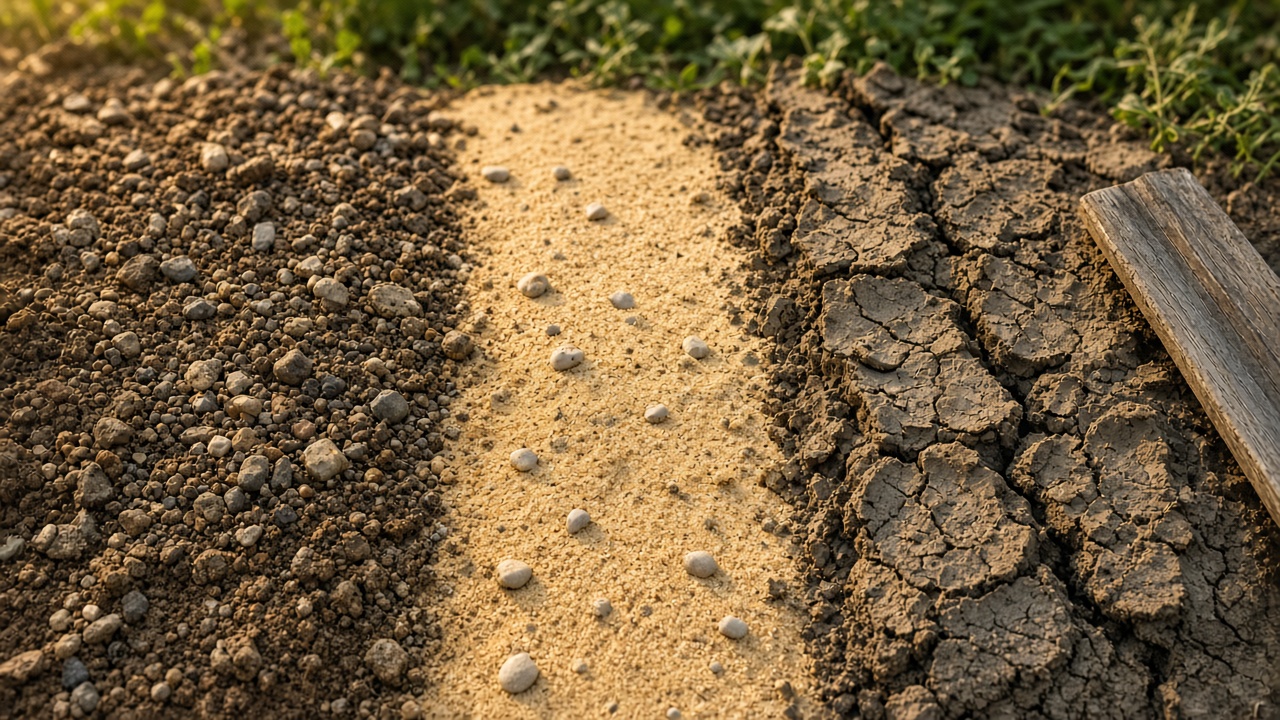
Michigan Soil Region by Region: Glacial Till, Lakeshore Sand, and Clay
Two Michigan jars, same THC. One pine, one hay. Glacial till, lakeshore sand, and clay change water and minerals, and that can change the smoke.
Questions this article answers
- How do Michigan soil regions (glacial till, lakeshore sand, clay) change cannabis flower?
- does glacial till change cannabis smell
- lakeshore sand vs clay cannabis Michigan
- can you tell soil type from a Michigan COA
- what is Michigan state soil Kalkaska

Head Cultivator
On this page
Crack two Michigan jars after a shift. Same THC number on the sticker. One smells like pine and wet leaves. One smells like dry hay and orange peel.
That’s not a brand story. That’s dirt. At Divine Toke, a Detroit-area sun-grown farm, we talk about soil regions because the plant drinks what the ground can hold. This post answers one question: how do Michigan soil regions (glacial till, lakeshore sand, and clay) change cannabis flower? They change water, air at the roots, and the minerals that stay put. That can change smell and feel. It doesn’t print a county name on the jar.
If you want the bigger “place shapes flower” map, read how Michigan land shapes flower. That piece is climate, sun, and living dirt as a whole. This one stays in three dirt types. Water has its own spoke: Great Lakes water and EGLE. After cut week, the bed has a rest job: fall soil rest.
How Do Michigan Soil Regions Change Cannabis Flower? #
They change how long water stays, how much air the roots get, and which minerals stick around. Those three things change plant stress and food uptake. That can shift terpenes, the oils that make the jar smell, and cannabinoids like THC. Genetics, irrigation, harvest, and cure still run most of the night.
Think of dirt like a sponge in a Detroit kitchen. Sand is a thin sponge. Water hits and is gone. Clay is a fat sponge that stays soggy. Glacial till is a mixed sponge: sand, silt, clay, and stones the ice left behind. Same plant. Different drink.
MSU’s Michigan soils page is blunt about the map. Sandy soils dominate the western and northern Lower Peninsula. Clays and loams dominate the south. Deep sands don’t hold moisture well and are often infertile. Clays hold moisture and can be more fertile, but they swell when wet and crack when dry. A loam is a mix of sand, silt, and clay with room for air and roots. That’s the dirt most plants like.
The ice wrote that map. MSU’s glacial-landform overview says the last big push, the Wisconsin stage, left about 9,500 to 15,000 years ago. It left moraines, till plains, outwash sands, lake-clay plains, and lake-sand plains. Those aren’t poetry. They’re the three buckets in this post:
| Region | What the ice left | How it treats a root | What a jar might show |
|---|---|---|---|
| Southeast glacial till | Mixed sand, silt, clay, stones on till plains and moraines | Patchy. Some beds drain. Wet pockets next door don’t. | Mineral, leaf, pine. Can vary field to field. |
| Lakeshore sand | Dune sand, outwash, sandy loam along Lake Michigan | Drains fast. Warms fast. Food washes through. | Brighter, thinner smell if the plant got thirsty. |
| Clay belt / lake-plain clay | Fine lake-bottom silt and clay (Saginaw, Thumb, Erie shore) | Holds water and food. Can drown roots if flat and undrained. | Heavier, earthy. Or muted if the plant sat wet. |
A terpene is a plant oil you can smell. A cannabinoid is a compound like THC or CBD. Neither lives in the dirt as a finished smell. The plant builds them. Dirt changes the building job.
A 2021 PMC review (PMC8254954) put a clean split on the table. CBD tracked more with the bacteria around the roots. THC tracked more with edaphic factors, the physical and chemical traits of the soil, like texture and minerals. It’s not a Michigan field trial, but it explains why two outdoor jars can split even when the sticker percent matches.
What this post will not do:
- Invent a Divine Toke soil test, acreage, or street address
- Rank “best soil in Michigan” as a strain name
- Tell you a COA lists glacial till (it doesn’t)
What it will do: name the three regions, name the federal soil series you can look up, and tell a Detroit shopper what they can actually check.
What Is Glacial Till in Southeast Michigan? #
Glacial till is mixed rock debris the ice dumped: sand, silt, clay, gravel, and stones in one pile. In southeast Michigan that pile sits on till plains and moraines, with wet lake-plain pockets in the low spots. It’s less one soil and more a patchwork a root just has to live in.
MSU calls till plains gently rolling ground. Soils there are often clay loams and sandy loams. They can farm for a long time if you treat them right. Moraines are the hummocky ridges where the ice paused and dumped a thicker load. Both show up around Detroit, Oakland, Washtenaw, Macomb, Monroe, and Lenawee.
Till is the reason two beds a football field apart can drink differently. One ridge sheds water. The kettle next to it holds it. That’s the southeast story. Not “Michigan is sandy loam, end of lecture.”
Wayne, Oakland, and the wet spots next door #
Metro Detroit sits on more than one parent material. Upland till can be loamy and workable. Depressions and old lake-plain flats sit wet. MSU’s landform page puts the rich lake plains in counties like Saginaw, Huron, and Monroe. Those flats need drainage. They also reach the southeast lake plain along Erie and St. Clair.
For a cannabis root, “somewhat poorly drained” is a real sentence. It means the water table comes up in a normal year. The plant isn’t sitting in a pot with a hole. It’s in a bed that floods from below after a March thaw or a September rain.
MSU soils says characteristics can change from region to region, field to field, or inside one field. That line is the southeast grower’s whole week.
Named series you can look up #
The USDA NRCS Official Soil Series Descriptions are the federal write-ups. You don’t need a lab coat. You need a name.
Selfridge is a southeast classic. Somewhat poorly drained. Sand on top of loamy till. Water table 30 to 60 cm down for some time in a normal year. The sand lets water race. The till underneath slows it. NRCS mapped about 385,000 acres. The series was established in Macomb County in 1970. The type pit in the write-up sits in Monroe County. MLRAs listed: 97, 98, 99, 111B, 111C.
Pewamo is the wet neighbor. Very poorly drained. Clay loam and silty clay. Slope 0 to 2 percent. From December to May the water table can sit from a foot above the surface to a foot below. Permeability is moderately slow. About 1.8 million acres. Established in Lenawee County in 1957. The type location is in Washtenaw County, northeast of Ypsilanti.
MSU Extension’s soil-association map (E1550) groups names the way they actually sit together. Miami–Conover–Brookston. Metamora–Blount–Pewamo–Selfridge. Those strings mean “better-drained till next to a wet hole,” not one dirt for the whole metro.
| Series | Drainage | Texture story | Why a grower cares |
|---|---|---|---|
| Selfridge | Somewhat poorly drained | Sand over loamy till | Top dries. Bottom holds. Roots hit a wet floor. |
| Pewamo | Very poorly drained | Clay loam / silty clay | Winter–spring water at the surface. Slow drain. |
| Brookston (named with Selfridge) | Poorly drained | Depressions | The kettle. Do not plant like it is a ridge. |
| Miami / Conover (E1550 association) | Well to very poorly, by spot | Deep loamy till mix | Same map unit can hide both a good row and a wet row. |
You can pull a county map yourself on the NRCS Web Soil Survey. Divine Toke doesn’t have a private pit test or a Wayne County lab sheet to wave around, and we’re not going to pretend otherwise. The series pages are already public. That’s the paper trail.
For a plant, southeast till means:
- Stones and mixed minerals the ice ground up
- Air in the sandier spots
- A perched wet season in the clayey spots
- No single “Detroit soil” smell
If the bed stays covered after harvest, that mixed till keeps its crumbs. That’s the fall rest job, not a spring till “cleanup.”
The terroir piece treats sandy loam as Michigan’s friendly mix and clay as a hole you widen. True as a farm tip. Incomplete as a map. Southeast of Detroit you can stand on Selfridge sand-over-till and look down into Pewamo. Same county. Different drink. The shopper question isn’t “is Michigan loam.” It’s “which patch grew this jar.”
What Does Lakeshore Sand Do to a Cannabis Plant? #
Lakeshore sand drains fast, warms fast, and lets nutrients wash through. A plant can root deep. It can also go thirsty and hungry in the same week. Sandy loam along the fruit belt is kinder than pure dune sand. Both are a different drink than southeast till.
MSU’s fruit-belt page puts the belt along Lake Michigan for several kilometers inland. Soils there are mostly sandy loams. They drain after a hard rain or a fast snowmelt. They still hold enough clay that they aren’t always droughty. The sand lets roots run. Orchards use trickle hose for a reason: little waste, little runoff.
Cannabis isn’t a cherry tree. The water rule still holds. Sand doesn’t babysit a hose-less week.
Fruit-belt sandy loam vs pure dune sand #
Sandy loam is sand with enough silt and clay to slow the leak. Sand is almost all large particles. Air is easy. Food isn’t.
Michigan’s state soil is a sand story. The Kalkaska series is somewhat excessively drained sand on outwash, valley trains, moraines, and terraces. Water moves high or very high. In a normal year the moisture control section is dry in some part in July and dry throughout in August. Surface pH in the typical pedon sits very strongly acid, around 4.5 to 5.5. NRCS named it the state soil in 1991. About 982,000 acres, mostly northern Lower Peninsula and the U.P. Associates include East Lake and Rubicon.
Nobody’s calling that “the Divine Toke farm soil.” It’s just the official sand type a lot of Michigan lakeshore and outwash country actually is.
Downstate dunes have their own sand names. The Selfridge write-up lists Oakville as excessively drained sand on higher rises and dunes. Same lesson. Fast drain. Thin hold.
Lake effect is the other half of the fruit belt. MSU says the lake delays spring bloom, delays fall frost, cools the hottest summer days, and takes the edge off winter lows. That’s climate on top of sand. The terroir post owns the lake-air story. This page owns the grit.
Why water and food run out fast #
Sand has low cation exchange capacity. That’s a lab phrase for “the dirt can’t hold onto charged nutrients.” Clay and organic matter do that job. Sand has little of either unless you add them.
MSU soils says deep sands don’t hold moisture well and are often infertile. Outwash plains in the north are the “problem lands” on the landform page: thin humus over infertile sand, farms that failed, land that went back to trees.
For flower, fast-dry sand can mean:
- More frequent, smaller waterings
- Split feeding, not one dump
- Compost and cover crops to add the sponge sand doesn’t have
- A plant that can look fine at noon and wilt by dinner
A thirsty plant is under stress, and stress can change resin. There’s no “sand makes louder terps” percentage to hand you here, because that number doesn’t exist. The chemistry section stays honest. The farm job on sand is simpler: hold the drink.
| Sand type | Drain | Hold | Grower move |
|---|---|---|---|
| Fruit-belt sandy loam | Fast, not instant | Some clay helps | Trickle or frequent drip. Add organic matter. |
| Kalkaska / outwash sand | Somewhat excessive | Low. Dry in July–August. | Do not treat it like loam. Cover and compost. |
| Dune / Oakville-type sand | Excessive | Very low | Almost a potting mix with no pot. Water is the crop. |
Water chemistry still sits in the jar. If the hose is Great Lakes or well water, read EGLE and the tap. Texture decides how long that water stays. The tap decides what’s in it.
Why Does Clay-Belt Soil Hold Water Too Tight? #
Clay holds water and nutrients because the particles are tiny and charged. On Michigan’s lake plains that’s a gift for corn and a risk for cannabis roots. Flat clay can sit wet, swell shut, and starve the root of air. You don’t “fix” clay by dumping sand. You rebuild crumbs.
MSU calls the lake (lacustrine) plains typical of Saginaw, Huron, Monroe, and other counties on Huron and Erie. Those flats are some of the richest farm ground in the state. They need drainage and careful handling. The same page draws the clay plain through the Saginaw River Valley, around the Thumb, and south along Huron, St. Clair, and Erie.
That’s the clay belt in plain words. Old lake bottom. Fine silt and clay. Level. Slow.
Saginaw Bay and the lake-plain clay #
A lake plain isn’t a dune. The water stood. The fines settled. When the lake dropped, the farm was already almost a table.
Southeast Michigan shares that story. Pewamo and Brookston show up in the wet holes of the till country and on the lake-plain edge. Pewamo is very poorly drained clay loam and silty clay. The winter–spring water table can sit on the surface. That’s a ditch problem, not a “add more compost once” problem.
MSU soils says clays hold moisture better than sands and may be more fertile. They also swell when wet. That can block water and roots. They crack when they dry. Clods get hard. Hard on people. Hard on plants.
Swell, crack, and drowned roots #
Cannabis roots want air. A wet clay bed is a closed room. The plant can sit in food it can’t use because the root is drowning.
What clay does well:
- Holds potassium, calcium, magnesium, and other charged nutrients
- Buffers a dry week better than sand
- Feeds a living-soil web if you don’t smash it
What clay does badly:
- Puddles after a Great Lakes storm
- Compacts if you walk or till it wet
- Stays cold in spring
- Cracks and seals in a hot August
| Clay problem | What you see | What helps | What does not |
|---|---|---|---|
| Waterlogging | Yellow leaves, sour smell, slow growth | Drainage, raised beds, living roots | Extra fertilizer on a drowned root |
| Compaction | Hard cap, standing water | Stay off it wet. Cover crops. Residue. | Rototiller “fluff” when it is sticky |
| Crust / clods | Plate on top, bricks when dry | Organic matter, mulch | Mixing in raw sand as a one-time trick |
| Cold spring | Late start vs a sand ridge | Patience, or a hoop on Michigan time | Pretending it is California |
NRCS soil-health principles stay the same on clay: disturb less, keep it covered, keep living roots, keep some diversity. After a September cut, that’s fall rest. Cereal rye and residue beat a black, shiny clay slab heading into a Detroit freeze.
A hoop house can buy weeks on a short Michigan season. It doesn’t change the clay under the plastic. Farming on Michigan time is the calendar. This page is the floor.
How Does Dirt Change Smell on Two Jars With the Same THC? #
Dirt changes the plant’s water, air, and mineral diet. The plant then builds a different mix of terpenes and cannabinoids. Same genetics can still smell different. The sticker percent is one number. The nose is the rest of the story.
Two jars. Same THC. Different dirt. That’s the night this post started on.
Water, minerals, and the tiny life in the ground #
Three levers:
- Water and air. Sand dries. Clay floods. Till does both in one field. Water stress and low oxygen both change how a plant spends sugar. Resin is a spend.
- Minerals. Nitrogen, phosphorus, potassium, magnesium, and the rest aren’t “flavor packets.” They change growth and the side paths that make oils.
- Life in the ground. Bacteria and fungi trade with roots. That’s living soil, not a region name.
The papers we can cite aren’t “Wayne County vs Oceana County” trials. They’re nutrient and soil-quality studies. Use them as mechanisms. Not as a county scoreboard.
PMC8254954 : CBD lined up more with the root bacterial community. THC lined up more with soil physical and chemical traits. If that split holds in a field, two Michigan regions can tug different parts of the panel.
A 2021 Frontiers in Plant Science phosphorus study grew two medical cultivars at 5, 15, 30, 60, and 90 mg of phosphorus per liter. At 15 mg/L or less, plants were short on function. From 30 to 90 mg/L they grew. THCA and CBDA fell as phosphorus rose. Two genotypes, same direction on those acids. “More P” wasn’t more resin.
A 2025 magnesium paper (PubMed 41372974) put the sweet spot at 35 mg/L of magnesium. Low Mg (2–20 mg/L) cut specialized metabolites. High Mg (70–140 mg/L) cut flower biomass about 12.5 percent. Deficiency is bad. Dumping more isn’t a terp hack.
A 2025 Journal of Medicinally Active Plants field paper (PMC12662754) compared hemp in a cover-crop / no-till field vs a tilled field. Cannabinoids moved in cultivar-specific ways. Total terpenes were higher in the cover-crop field, about 30 mg/mL vs 21.6 mg/mL, with a lot of spread. That’s management, not a Michigan map pin. It still says dirt care can move the oils.
Sun vs indoor is a different lever. A 2023 Molecules study (PMC9861703) found more terpene diversity outdoors, especially larger oils called sesquiterpenes. Light and weather. The terroir post already walks that. Region dirt sits under that sun.
| Lever | Sand | Till mosaic | Clay |
|---|---|---|---|
| Water | Short drink, often | Mixed | Long drink, sometimes too long |
| Air at roots | Plenty | Spotty | Easy to lose |
| Nutrient hold | Weak | Medium, patchy | Strong |
| Stress type | Drought / washout | Both, by row | Flood / compaction |
| Honest jar guess | Can smell thin if thirsty | Can smell different 50 feet apart | Can smell earthy, or dull if wet |
A Certificate of Analysis (COA) can list terpenes if the lab ran that panel. It won’t list Selfridge or Kalkaska. Smell first. Then read the sheet. How to read a Michigan terpene panel is the shop class. What terpenes are is the word list.
Can You Tell Soil Type From a Michigan COA? #
No. A Michigan COA and the jar sticker don’t list soil type, county of growth, or glacial till. They list identity, harvest date when it applies, weight, THC and CBD, the lab, and the test date. You infer dirt from the farm story and the nose. You don’t read it off the PDF.
R 420.504 is the sale-or-transfer label rule. Before a licensed sales location sells the pack, the sealed container has to carry the grower or producer name and license, the package tag, harvest date if it applies, strain name if it applies, net weight, THC and CBD as the lab reported, and a note that the real value may sit 10 percent off that report. It also names the lab and any test analysis date.
The Michigan CRA FAQ tells you to match the COA to the product you are holding. That’s batch proof. Not a soil survey.
What the sticker must show vs what people wish it showed:
| On a licensed Michigan flower pack | Soil region? |
|---|---|
| Harvest date (if it applies) | No |
| Strain name (if it applies) | No |
| THC / CBD ± 10% | No |
| Lab name and test date | No |
| Package tag | No |
| County, MLRA, or “grown in sand” | Not required |
A Detroit lunch-break buy in Ferndale or on the east side doesn’t come with a Web Soil Survey printout. If a farm wants to talk dirt, that’s extra. Trust the nose and the sheet. Skip invented acreage.
Divine Toke won’t print a fake pit ID. We grow sun-grown organic flower in Michigan. Detroit-rooted. No public street address. The proof you can hold is the batch sheet and the smell when you crack the lid.
If the flower is old, region dirt won’t save it. Heat, light, and a dry jar kill terpenes. Shop the harvest date on the sticker. Then smell.
Should Growers Amend Sand or Rebuild Clay? #
Amend sand by adding organic matter and watering in small, frequent hits. Rebuild clay by adding organic matter, keeping living roots, and staying off it when it’s wet. Don’t try to turn clay into sand. Texture is the particle mix. You change structure, not the ice.
MSU already said the quiet part. Sand needs help holding water and food. Clay needs help staying open. Loam is the mix plants like.
Cation exchange capacity (CEC) is the dirt’s ability to hold charged nutrients. Clay and organic matter raise it. Sand doesn’t, unless you add the organic matter.
| Job | Sand / lakeshore | Clay belt | Southeast till mosaic |
|---|---|---|---|
| Organic matter | Yes. That’s the sponge. | Yes. That’s the crumb. | Yes. Evens the patchwork. |
| Water | Small, often | Drain first, then water | Watch the wet holes |
| Traffic | Less of a crush risk | Stay off it wet | Same on Pewamo spots |
| Cover crop | Builds hold and CEC over years | Roots punch holes; residue covers | Both, by row |
| One-time sand dump on clay | n/a | Makes concrete if you guess wrong | Do not |
NRCS cover-crop practice 340 lists why a cover earns a federal number: less erosion, more organic matter, better crumbs, leftover nutrients used instead of washed. That’s region-blind and still true.
After a Michigan outdoor cut, the menu shrinks. MSU’s cover-crop bulletin (E2884) wants seed at least six weeks before frost when you can. Cereal rye still has a shot late. Details live on fall soil rest.
Matching a plant type to dirt is generic, not a Divine Toke cultivar list. Fast-finishing plants help a wet clay autumn. Thirsty sand wants a grower who will water. House strain names aren’t on the table for “clay” or “dune.” Allowed shop names stay Blueberry Mojito, Honey Bananas, and L.A. Sunshine, and even those aren’t soil SKUs.
How Should a Detroit Shopper Use Region Dirt? #
Use it as a reason two Michigan jars can smell different at the same percent. Then shop with your nose, the harvest date, and the COA. Don’t wait for a county stamp the CRA doesn’t require.
A tradesperson off I-75, a night-shift parent in Warren, a senior on a first legal visit in Detroit: you get five minutes at the counter. Region dirt is background. The jar is the test.
Shop list:
- Smell both jars. Same number, different dirt, different oils. That’s the whole lesson.
- Read harvest date on the sticker under R 420.504.
- Match the COA to the tag. Terpene panel if they ran one. Panel literacy.
- Ask where it grew only if the farm will talk. “Michigan outdoor” is a start. “Selfridge sandy over till” is rare and fine if true. Invented acreage isn’t.
- Buy what we actually sell if you want this farm: flower, 1g pre-rolls, and a 20-pack of 20 × 1g joints at $120. No clay-belt SKU. No lakeshore SKU.
Michigan winter and Great Lakes humidity still sit on every outdoor crop. Frost dates and hoop houses set the clock. Dirt sets the floor. Water sets the drink. You already have those posts.
| You hear | You can use | You should ignore |
|---|---|---|
| “Sun-grown Michigan” | Climate + outdoor resin story | A promise it will smell like last year’s jar |
| “Living soil” | Biology, not a region | A cure-all |
| “Sandy loam fruit belt” | Fast drain, lake air | A guaranteed citrus terp |
| “Heavy clay” | Wet-root risk | “Bad weed” as a rule |
| “Our soil test says…” | Ask to see it | A number with no lab |
A metro Detroit night doesn’t come with a soil pit. You still use the region map as a filter for hype:
- If someone says “all Michigan outdoor smells the same,” they skipped till vs sand vs clay.
- If someone says “clay means bad weed,” they skipped drainage and crumbs.
- If someone says “sand means louder terps,” they skipped thirst and a thin panel.
- If someone says the COA lists the county dirt, they haven’t read R 420.504.
Divine Toke is a Detroit-area Michigan sun-grown organic farm. We say Detroit and Michigan. We don’t publish a street. Don’t look for one on this page.
Frequently Asked Questions About Michigan Soil Regions and Cannabis #
Does glacial till, lakeshore sand, or clay change how Michigan flower smells? #
Yes, they can, by changing water, air, and minerals. They don’t stamp a smell the way a strain name pretends to. PMC8254954 tied THC more to soil physical and chemical traits and CBD more to root bacteria. Genetics and cure still sit on top. Two Michigan jars at the same THC can split because the plant had a different drink.
Which Michigan soil is best for outdoor cannabis? #
A well-drained loam with air and some hold. That mix shows up in parts of the till country and in fruit-belt sandy loams. There’s no single “best Michigan soil” medal. MSU says loam is what plants like: sand for drain, clay and silt for hold. Pure dune sand and undrained lake-plain clay are harder. Management matters as much as the map.
Is clay soil bad for weed? #
No. Clay is bad when it stays wet and airless. Drained, crumbed clay can hold food a sand bed can’t. MSU says clays may be more fertile and also swell and crack. Pewamo is very poorly drained. That series needs water management, not a funeral for clay.
Why does lakeshore sand need more water? #
The pores are large. Water falls through. Nutrients go with it. Kalkaska is somewhat excessively drained and dries in July and August in a normal year. MSU’s fruit belt still uses trickle irrigation on sandy loams. Cannabis on sand is a hose crop unless organic matter thickens the sponge.
Can I tell soil type from a Michigan COA? #
No. R 420.504 lists harvest date, strain, weight, THC/CBD, lab, and tag. The CRA FAQ is about matching the report to the pack. Soil series names live on NRCS OSD pages, not on the sticker.
Does a higher THC percent mean the soil was better? #
No. THC is one lab number. Soil can move chemistry without raising that number. The phosphorus study saw THCA fall as P rose. PMC12662754 saw cultivar-specific shifts, not a single “better dirt, higher THC” rule. Shop smell and the full panel.
Should a grower add sand to clay to loosen it? #
Usually no. Mixing sand into clay without enough organic matter can make a harder mix. Rebuild clay with organic matter, living roots, and dry feet. NRCS soil-health principles are disturb less and keep it covered. Texture is the ice. Structure is the farm.
What is Michigan’s state soil? #
Kalkaska sand. NRCS named it the state soil in 1991. The Kalkaska OSD describes somewhat excessively drained sandy drift, about 982,000 acres, mostly northern Lower Peninsula and the U.P. It’s a lakeshore and outwash story, not a Detroit till story.
Why do two jars at the same THC number smell different? #
Different terpene mixes. Dirt, water, sun, harvest, and the jar all write those oils. The THC line doesn’t. Open both. If one is pine and wet leaf and one is hay and peel, believe your nose. Then check harvest date and the terpene panel.
Does living soil erase region differences? #
No. Living soil is the biology. Region is the parent material. They stack. Living soil is bacteria, fungi, and crumbs. Sand still drains. Clay still holds. A healthy web helps either. It doesn’t turn Pewamo into Kalkaska.
Does water matter more than soil texture? #
They’re one system. Texture decides how long water stays. The source decides what’s in it. Great Lakes water and EGLE is the tap and the well. This page is the sponge. A clean hose on sand still runs out. A dirty hose on clay still sits.
How should a Detroit shopper use this at the counter? #
Smell two jars. Read the harvest date. Match the COA. Treat “soil region” as a reason the night can split, not as a county you can scan. Licensed adult-use is 21+. Divine Toke sells flower, 1g pre-rolls, and a 20-pack. Start at the shop if that’s the format you want.
If you want to try the flower, not the map #
Region dirt is why two Michigan jars can argue at the same percent, and you can’t order it off a menu. If you’re curious to try sun-grown organic flower from a Detroit-rooted farm, we keep the shop simple: flower, 1g pre-rolls, and a 20-pack of those 1g joints at $120. Smell first.
Keep reading:
- Michigan terroir: how land shapes flower
- Fall soil rest after cut week
- Great Lakes water and EGLE
- Living soil guide
- Shop
This article is for educational purposes only and is not medical advice. Always consult your healthcare provider before starting any new wellness routine.
Try Blueberry Mojito — sun-grown in Detroit
Small-batch, living-soil flower cultivated in our Detroit sun-houses. Ships to all 50 states.
You Might Also Enjoy
Farming on Michigan Time: Frost Dates, Hoop Houses, and the Short Season
August 20, 2026 · 30 min read
When Is Sun-Grown Cannabis Ready? Reading Trichomes, Pistils, and Late-Summer Weather
August 5, 2026 · 29 min read
Wet Trim vs Dry Trim at Michigan Harvest: Why Scissors Timing Changes the Jar
September 20, 2026 · 32 min read