Why Does a Joint Canoe Once the Furnace Is On?
A joint canoes once the furnace dries a Detroit house. The open side of the flower loses water and burns ahead. Shut the jar before you light the next one.
Questions this article answers
- why does my joint canoe when the heat is on
- does dry indoor air make a joint burn down one side
- how do I keep weed from drying out in the winter
- why does my joint canoe indoors but not outside
- does a canoe mean the weed is bad

Head Cultivator
On this page
The furnace kicks on, and the joint runs down one side before it ever gets passed.
A joint canoes in that dry furnace air because the open side of the flower gives up water first. The side in your fingers stays damper, so the dry edge burns ahead.
By Jamie, grower at Divine Toke. Divine Toke is Sun+Earth Certified.
Divine Toke is sun-grown flower from Michigan, and we sell it by mail. The joint in your hand still sits in a Detroit house. November is when that house starts pulling water out of the bud.
Why does a joint canoe once the furnace is on? #
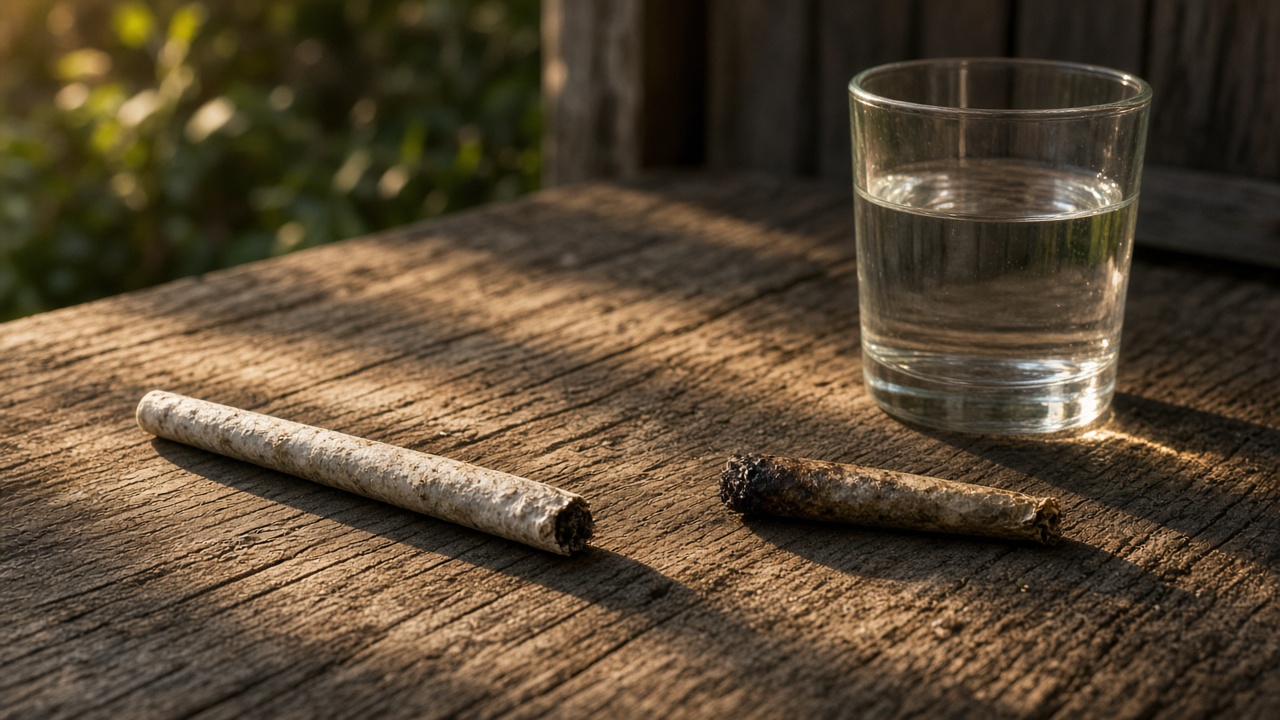
The open side dries first, and that drier flower burns ahead of the side your fingers were shielding. A canoe is the paper lip left when one lane of the column runs and the other lane lags.
The paper holds the column. The flower inside is what runs. The cherry needs air, and air takes the easy lane. Flower that just gave up its water catches faster than flower that's still a little damp. The face toward the room sits in the draft. The face against your fingers, or down in the ashtray, doesn't. So the room side runs, and the slow side leaves that paper lip.
Both edges can catch when you light the tip. Set the joint in the tray and the top face sits in the dry room while you find the lighter. Pick it up and that face is already ahead. The room took water off the open side while it sat there.
Three things usually line up before you see it.
- The indoor air is dry, which is what a furnace does when it heats air and doesn't add water.
- The bud can still give water up, which is any flower that isn't sealed away from that air.
- The column isn't even, so one lane is looser, drier, or sitting next to a stem.
A tidy roll can still canoe once the house changes. October and November can be the same eighth. The paper didn't learn a new trick. The air did. Keep the fix on the flower, the air, and the jar.
What does furnace heat do to the air in a Detroit house? #
Heating outdoor air, without adding water, drops the humidity. That percent depends on temperature, not only on how much water is already in the air. Relative humidity is the moisture in the air compared with what that air could hold at its temperature. The National Weather Service glossary says the percent moves with both the moisture present and the temperature. NOAA's humidity page says warmer air can hold more water vapor, so the same moisture becomes a lower humidity once you warm it.
That's a Detroit furnace. Cold morning air comes into the house, the burner warms it, and the water in that air doesn't get a refill. The humidity falls because the air got warmer, not because a window sucked the house empty. It heats, and it doesn't pour water back in.
November at Detroit Metro isn't a maybe. The 1991 to 2020 climate normals put the month's average at 41.2°F, with 712.5 heating degree days. A normal afternoon there is 48.6°F, and a normal morning is 33.9°F. The heat runs on an ordinary November day in southeast Michigan, not only on a cold snap. Airport humidity is still outdoor air. Your living room is the air after the furnace.
The EPA's indoor-air page tells houses to keep indoor humidity under 60 percent, and ideally between 30 and 50 percent. That's a house number, for walls and for mold in the rooms. It isn't a jar number. A Detroit living room that lands in that EPA band is still drier than the bud wants.
A second-shift worker in Detroit gets home after the thermostat has already cycled through the afternoon. The joint on the table has been in that air since the lighter. The eighth in a loose bag has been in it since the lid came off. The room is the air that matters, not the airport reading on your phone.
How damp should the bud be before the burn stays even? #
Keep the bud in a band that won't mold and won't crumble. Michigan's lab pass only watches the wet end. Water activity is the free water in the bud, the share that can move into the air around it. The FDA's water-activity note writes it as a decimal against pure water, and it says the number rises when the flower warms up. That note sets the decimal equal to the settled humidity divided by 100. So 0.55 lines up with 55 percent in the air the bud has settled with, and 0.65 lines up with 65 percent.
ASTM D8197 is the storage spec for dry cannabis flower. In a sealed jar, the flower is what sets the humidity of that little air space, and the spec points salt packs at 0.55 to 0.65.
The EPA band for a room is 30 to 50 percent. The flower band starts at 55 percent. A Detroit living room can sit inside the EPA band and still be drier than the bud. The furnace only has to leave the room under that floor.
Michigan doesn't fail a sample for the dry side. The CRA sampling guidance revised September 23, 2024 passes flower when water activity doesn't exceed 0.65, and it points labs at ASTM D8196 for the test. A legal eighth can be dusty and still pass. That pass is a lab result on a sample. Your living room isn't the lab, and the week after you open the bag isn't on that sheet.
Where the bud sits on that scale:
- Over 0.65, Michigan can fail the sample, and mold has water to work with.
- From 0.55 to 0.65, you're in the ASTM storage band, which is where those salt packs are aimed.
- Under 0.55, the flower can break in ordinary handling, and the column turns to dust and pebbles.
- Over 0.68, ASTM says dry the bud more before you trust a salt pack to pull it back.
A May 2025 smoking test in Cannabis Science and Technology compared hemp pre-rolls at 0.45 and 0.65. The drier cones were rated more irritating. Samples at 0.85 were harder to draw. They put about 30 percent as much of the measured smoke compounds into the machine as the 0.65 cones. Too dry bites, and too wet stalls. The canoe on your tray is the dry, uneven case. Harsh smoke in a throat is already in why cannabis flower makes you cough.
| What you see | What the flower is doing | What to do |
|---|---|---|
| The open side runs ahead | That edge dried in the room air | Fix the run before you pass it |
| The whole joint races and bites | The bud in the jar got too dry | Close the jar and give it a salt pack |
| One lane burns, a green chunk stays | A stem or a tight piece left an air lane | Break chunks and pick stems out |
| It goes out unless you pull hard | The pack is too tight, or the bud is too wet | Loosen the cone, or dry a wet jar a little |
| The ash looks dark | Burn temperature does a lot of that coloring | Don't grade the jar off one tray |
Why do stems and dense chunks start a one-sided run? #
A stem or a hard nug leaves a lane, and the air at the cherry takes the lane. The paper doesn't choose a side, and the gap does.
A Canadian Biosystems Engineering paper from October 23, 2026 packed cones from 0.5 grams up to 1.5 grams. The fuller cones burned uneven, left flower unburned, and ran darker. The tighter pack cut the airflow, and the burn slowed. When a joint is lit, that paper says, air gets pulled through the burning end. In the same study's oven, ash color followed temperature. It didn't follow how damp the samples were, or how fine the grind was.
They scored uneven burning when the cone was too full. They didn't score a canoe by that name. A canoe is the uneven burn you can see from the couch, one lane getting the air while that lane runs. Crushing the joint to stop a canoe copies the tight pack they measured, so even the column instead of mashing it.
The May 2025 cones were sifted so the stems were out before anyone filled them. A home grind often skips that. A stem is a stick in a soft column. The flower beside it gives the air an easy lane, that side of the paper runs, and the stick is still green. A dense chunk you didn't break does the same job. It isn't a stem, and it still blocks one side.
The cure is what the bud felt like before the house got to it. Different ways to cure a harvest is where that starting moisture gets set. A tight cola from a careful cure isn't a problem in the jar. Leaving it as a pebble in the grind is how the lane starts.
Does a dusty grind make the canoe worse? #
Dust on one side and a pebble on the other is a canoe waiting on the lighter. Fine bits catch first. The pebble lags. The paper on the fast side gets ahead, and you're holding a run you can see.
That October 2026 oven didn't repaint the ash when grind size changed, so powder isn't an ash-color problem. It's a speed problem in a joint you're actually smoking. You want pieces you can still see, close to even, with the stems in the tray and not in the paper.
- Break the nug with your fingers before it hits the grinder, so a dense chunk doesn't survive whole.
- Stop while you can still see pieces. Dust flashes, and the chunk you missed sits there.
- Flick stems out. A stick in the paper is an air lane with a green center.
Don't grind Sunday's whole eighth for a Detroit work week. Broken flower has more faces touching air. Every time the lid's off, those faces trade water with the room, and a heated room is taking. Grind what you're lighting. Leave the rest as buds in a closed jar. A week of ground flower in a loose dish turns to dust, and dust is the fast lane in the next joint.
Jar size, pack brands, and the fridge door are in how to store your weed.
How do you keep the jar from drying out once the heat is on? #
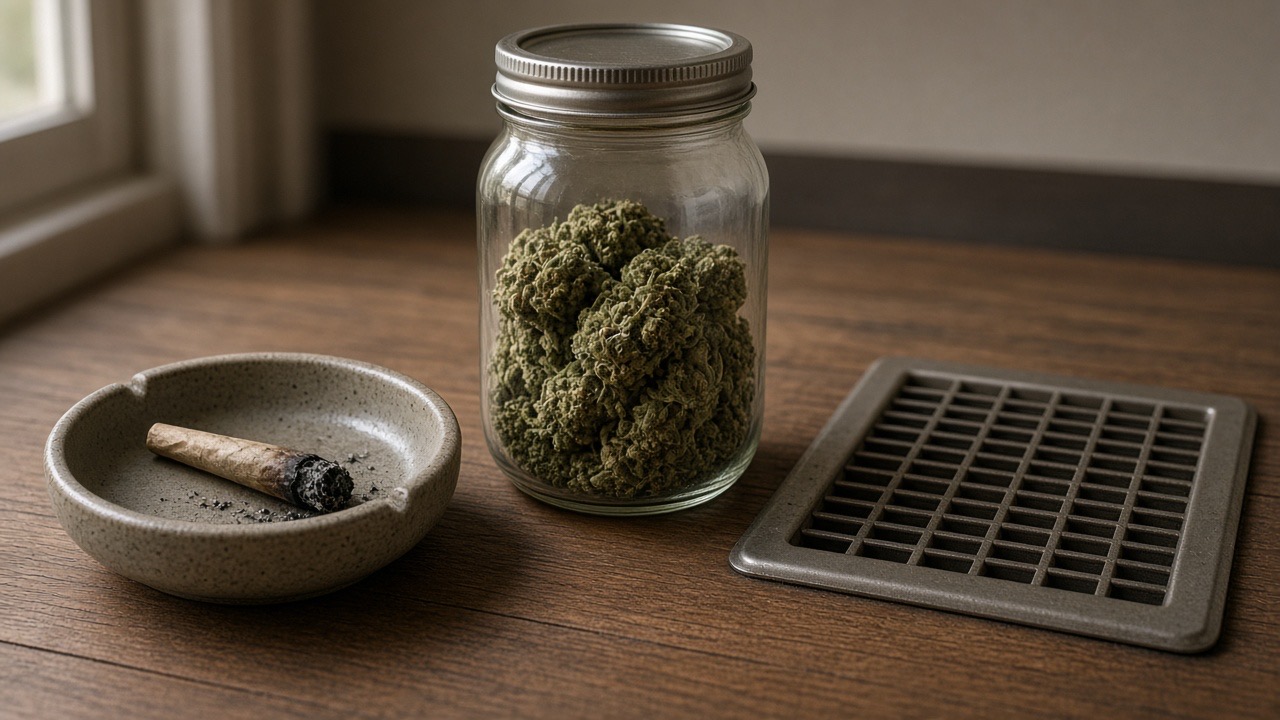
Shut the jar, keep it off the vent, and let a salt pack hold the band the bud already wants. ASTM D8197 says the flower in a sealed container sets the humidity of the air in there with it. Pop the lid in a dry Detroit room and that little pocket dumps into the house. The bud gives water up for as long as the lid stays off, because the room is thirstier than the jar was.
A nightly sniff does the same trade in small hits. You open the jar, the pocket leaves, and the bud then fills a drier pocket. In a heated Michigan house, smell it when you're about to grind, and leave it shut the rest of the night.
The FDA note says water activity rises when the product warms. A jar on a floor register in a Michigan bungalow warms the glass while the driest air in the house blows on the lid. Put the jar in a cupboard, off the vent and off a sunny November sill.
Salt packs have a rule. ASTM D8197 says if the bud is wetter than 0.68, dry it more before you trust a pack. Under that, a salt pack aimed at 0.55 to 0.65 can bring the jar back into the band. Soaking the eighth, or parking a wet peel in the jar overnight, can shove a sample over Michigan's 0.65 pass and toward mold. Dry and brittle is the canoe. Wet and sealed is the other failure. The storage guide already picks which pack percent fits a Michigan year.
The smell going quiet is the same water leaving. Terpene freshness after a Michigan harvest walks what humidity does to the nose. They meet when the furnace runs.
A spare-room hang is a different job. Branches in a room the furnace is cycling can finish too fast, and that hang is where the hay smell comes from. Don't store the smoking jar in the blast of the same vent. If you're still drying a harvest, the slow line is drying from harvest to the cure. The jar on the coffee table is already supposed to be done.
What do you do when the joint is already canoeing? #
The person holding it fixes the run before they pass it. You asked for a joint, and the furnace handed you a canoe.
I tap the ash off the fast side, stall that edge, and light the low side before the joint moves. The next pull stays with the person who fixed it, so nobody gets a paper sail and a mouthful of wrapper. If the circle wants a house rule, that's the one. The holder owns the relight.
- Knock the ash off the side that's ahead. Ash piled on the fast lane keeps that lane hot.
- Pinch or damp the running paper with a finger. That's a stall, not a soak. A soaked joint just goes out.
- Turn the slow side up and light that edge, so the cherry can meet in the middle.
- Take one pull yourself. If it runs again right away, the column's the problem, and passing it won't fix the flower.
If the whole joint is racing and crumbly, stop nursing it. The eighth in the jar is dry. Fixing the paper won't put water back in the bud. Break what's left into a bowl if you want the flower without the race, then deal with the jar before the next session.
A joint that canoes once, then burns even after you turn it, was the open side drying while it sat. A joint that canoes on every light is the grind, or a jar that's been open to the furnace all week.
Does a canoe mean the flower was bad? #
A canoe means the column was uneven, or the bud was too dry for that room. It doesn't grade the grow, and a dark ash doesn't either.
The October 2026 oven colored ash by temperature, not by how damp the samples were. The May 2025 smoking panel did see a shift. People scored the 0.65 ash lighter than the 0.45 ash, and those drier cones irritated people more. A tray photo isn't a lab. Harsh smoke from a dry edge is a real feel, and why flower makes you cough stays with the throat.
Same eighth, different month. It can burn fine before the heat settles in, because the house isn't pulling on it yet. On the Detroit Metro November normals, the month averages 41.2°F, with 712.5 heating degree days. The flower didn't switch in the jar. The air around the jar did.
Hay on the nose is the spare-room hang, not this canoe. A wet, rotten nose is a jar that got sealed damp, and terpene freshness after harvest has that. A canoe with a normal smell is usually the open side, the grind, or a jar that spent the week too close to the vent.
If the jar in the house is already dust #
The next jar still has to live off the vent, or a Detroit November will dry it the same way. We mail sun-grown Michigan flower. The shop is where that eighth comes from. The cupboard is where it has to sit once it lands.
A 1g pre-roll is the same flower in paper. If the tube sat on a heater, or in a warm mail pile, it can canoe for the same reason a joint from a dry jar can. A 20-pack is twenty of those 1g joints, and each one still meets the room once it's out of the tube. Shut the jar you already have. Grind what you're lighting. Fix a run before you pass it.
The cure that set the bud's starting moisture is different ways to cure a harvest. The hang a furnace can finish too fast is the spare-room page. The smell is terpene freshness after harvest. The throat is why flower makes you cough. The jar size, the pack, and the fridge door are how to store your weed.
Shut the jar before the furnace cycles again, and the joint after work has a fair shot at burning even.
FAQ #
Will a humidity pack fix a joint that's already rolled? #
No. A salt pack works on flower in a closed jar, and a rolled joint is already out in the room. ASTM D8197 aims those packs at 0.55 to 0.65 inside a sealed container. Fix the run in your hand, and put the rest of the eighth back under the lid.
Should the jar sit on the floor register? #
No. The register is a draft of the driest air in a heated Michigan house, and it warms the glass. The FDA's water-activity note says that free-water number rises as the flower warms. A cupboard off the vent keeps the jar away from both the heat and the draft.
Do pre-rolls canoe for the same reason in a dry house? #
Yes. A pre-roll is flower in paper, so dry room air can pull water from it the same way. The May 2025 test and the October 2026 cone test both burned filled cones, and the fuller pack burned uneven. A 1g pre-roll that sat on a heater can show up already dry.
How long can a joint sit in the ashtray before it runs? #
There's no minute count on it, and the open side is in dry air the whole time it sits. Fingers block the draft on one face, and the tray leaves the top face in the room. ASTM D8197 says flower sets the humidity of air it can reach in a closed jar, so out of the jar the room is that air.
Does relighting a canoe make the next pull harsher? #
The harsh pull is the dry edge, and a relight puts you back on it. In the May 2025 Cannabis Science and Technology test, hemp cones at 0.45 were more irritating than cones at 0.65. Stall the fast paper and light the low side if you want off that dry lane.
Should you grind the whole eighth on Sunday? #
No. Grind what you're about to light, and leave the rest as buds. Broken flower has more faces in the air, so a heated Detroit room takes water faster once the lid's off. A Sunday grind for a work week is dust before the next session.
Is a canoe the same thing as a joint that keeps going out? #
No. A canoe is one lane running, and a joint that dies is usually too wet or packed too tight. The October 2026 cones stuffed from 0.5 grams to 1.5 grams burned uneven because the tight pack cut airflow. If you have to nurse every hit or it dies, loosen the pack or let a wet jar dry a little.
Will the fridge stop the bud from drying? #
A fridge door isn't the fix for furnace air, and the storage guide already walks that swing. The FDA note says the free-water number moves with temperature, so a cold jar opened into a warm Detroit kitchen makes a fresh trade. Leave the smoking jar closed, in a cupboard, inside the 0.55 to 0.65 band.
Does Michigan outdoor flower canoe more in November? #
The room does the drying. Outdoor Michigan flower doesn't canoe on its own just because it grew outside. Detroit Metro's November normal is 41.2°F, and the furnace heats that air without adding water. The cure sets where the bud started, and November moves it if the jar leaks near a vent.
Can you lick the running side to stop a canoe? #
A damp finger on the fast paper can stall that edge, and a soak will just put the joint out. You're wetting the wrapper, not the eighth. Knock the ash, damp the run, and light the low side. If it canoes again on the next pull, the jar is the thing to fix.
Grown in Detroit. Shipped to your door.
Small-batch, sun-grown cannabis cultivated in living soil. Mail-order shipping to all 50 states.