What the Next Morning Does to Your Memory After Cannabis
Alarm at 6 a.m., keys on the counter, and the word will not come. What studies measured the morning after cannabis, and what is still not a driving pass.
Questions this article answers
- what clears overnight after cannabis
- does weed affect your memory the next morning
- edible vs smoked leftover effects the next day
- can you drive the morning after cannabis
- what did studies measure the morning after THC

Head Cultivator
On this page
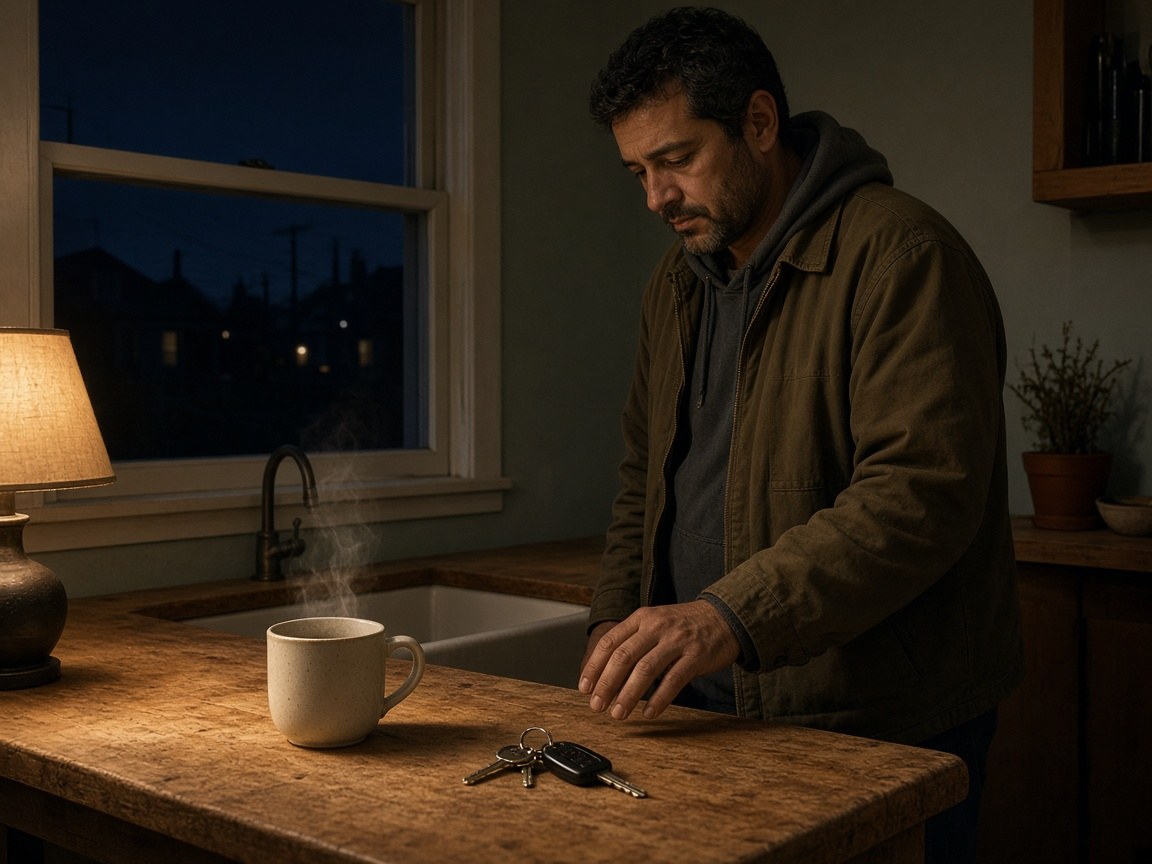
The alarm is 6 a.m. The Detroit kitchen is still dark. Coffee is on. Your keys are on the counter, and the word for the thing in your hand will not come.
That gap is the morning. Some of last night has already left. Some of it can still be slow. This page stays on that split. Memory here means the word list, the name, the step you just had. Attention means holding the next move. It is not a lecture on the whole brain.
Divine Toke is a sun-grown cannabis farm in Detroit. I grow the flower. I am not your doctor. I will not hand you an hour that makes the Lodge fine.
If you want the bigger map of why one night is not one switch, start with the high is not one thing. The locks THC fits are in the endocannabinoid system deep dive. This post stays on the morning after.
What Can Still Feel Off the Morning After Cannabis? #
A missing word, a slow list, or a body that still feels a little dosed can show up after cannabis. Most next-day lab tests did not find that hit, and a few specific ones did.
The 2023 next-day review by McCartney, Suraev, and McGregor (PMC9940812) pulled 20 studies and 345 performance tests. People were checked more than 8 hours after THC, usually between 12 and 24 hours. THC is the main compound that makes you high. On 209 of those 345 tests, the next-day score was not different from placebo or from the person's own baseline. Placebo means a lookalike with no THC.
Twelve of the 345 tests did show a worse score the next day. Those 12 lived in five older studies. None of those five was a randomized, double-blind, placebo-controlled trial. Double-blind means the volunteer and the tester both did not know who got THC. The review's own line is careful. There is limited evidence that cannabis use impairs next-day performance. Most studies, including some of the better ones, found no such effect. A few weaker ones did.
So the honest morning is not "you are wiped until noon." It is also not "sleep erased the night." The test, the dose, the route, and how often you already use cannabis all move the answer. Route means lungs, a mouth spray, or something you swallow.
What people actually notice in a kitchen, before any lab:
- The name of a tool, a street, or a coworker will not come
- A short list (lunch, boots, badge) has to be said twice
- You still feel a little dosed even when the room looks normal
- You feel normal, and a hard task is still sloppy
- Sleepiness, not a missing word, is the real drag
Words and attention are not the same morning.
| Skill | Plain version | Where it showed up the next day |
|---|---|---|
| Word memory | Saying a list back, including after a delay | Down at 10 hours after 15 mg mouth spray in Nicholson. Down at day 7 in very heavy daily smokers in Pope |
| Attention and speed | Holding a target, tapping a choice, connecting dots in order | Several of Nicholson's attention boards were not significant that same morning, in the 2023 review table. Trail making showed no group gap at 12 to 15 hours in PMC13050079 |
| A hard machine task | Landing a simulated plane | Off at 24 hours after about 20 mg smoked in two older studies. Not repeated in the better-designed 1989 flight test, per the same review |
| The feeling | "I still feel a little dosed" or "I feel fine" | Can come apart from the score. Pilots felt fine and were off. Frequent smokers still felt a drug effect and the group word test looked normal |
Those are different problems. A word that will not come is memory. A foggy, sleepy body is leftover sedation. Feeling fine while a hard task is off is the scary mismatch, and it showed up in old flight simulators. Feeling a little high while a simple word test looks normal showed up in a 2026 smoker study. Feeling is not the test. The test is not the freeway.
A 2016 review by Broyd and colleagues (PMID 26858214) found verbal learning, verbal memory, and attention were the skills most consistently worse during a high and in long-term use. Verbal means words. Saying back a list. Holding a new name. Psychomotor skill, the hands-and-speed part, was mostly a during-the-high problem in that review. Some word, attention, and planning trouble may linger after a long stop. Broyd also said we still do not have a clean map of what comes back.
That is the acute-and-chronic map. It is not a 6 a.m. clock. The next sections stay on the clock.
What Did the Next-Day Studies Actually Measure? #
They measured word lists, reaction time, attention boards, and a few very hard machine tasks, hours after a named dose. They did not measure your commute.
Read the rows as receipts. A cell is one study's dose and one study's clock. Do not average them into "weed lasts X hours."
| Study | Who, and what they took | When they looked | What was still off | What was not shown |
|---|---|---|---|---|
| Yesavage 1985 (PMID 2998213) | 10 licensed private pilots smoked one cigarette with 19 mg THC | 24 hours later | Landing and control errors. The pilots did not feel impaired | A modern double-blind redo of that exact landing task |
| Leirer 1991 (PMID 1849400) | 9 active pilots smoked 20 mg THC or a placebo cigarette | 15 minutes, 4 hours, 8 hours, and 24 hours | Impairment at each of those times. At 24 hours, 7 of 9 were off. Only 1 felt it | A 48-hour result. They tested at 48 hours. The abstract does not say what 48 hours did |
| Leirer 1989 (PMID 2604668) | Young and older pilots smoked 0, 10, or 20 mg THC | 1, 4, 8, 24, and 48 hours, calm air and rough air | Effects at 1 and 4 hours in rough air after 20 mg. Dose, age, weather, and delay stacked | The abstract does not list a 24-hour hit. The 2023 review says this better-designed flight test did not repeat the 24-hour carry-over |
| Chait 1990 (PMID 2315429) | 12 regular smokers, 40 puffs of 2.1% THC flower across an evening, versus 0% | The next morning | A few small score changes the authors called negligible, inconsistent, or likely artifacts | An alcohol-style hangover. Most mood and thinking tasks were unaffected. No leftover "high" rating |
| Nicholson 2004 (PMID 15118485) | 8 adults who were not current users. 15 mg THC as a mouth spray starting at 10 p.m. | 8:30 a.m., 10 hours later | Memory was worse. They felt sleepier. They fell asleep faster on the morning sleep test. Mood shifted | A swallowed gummy. This was a spray in the mouth. The review's table also lists several attention tasks that morning as not significant |
| McCartney 2023 review (PMC9940812) | 20 studies, 458 people, 345 tests. Typical single dose was 16 mg, with most doses between 11 and 26 mg | Mostly 12 to 24 hours | 12 tests, in 5 older studies, showed impairment | 209 tests showed no next-day effect. 121 tests were too unclear to call. 3 tests looked better, not worse |
| 2026 frequent-smoker morning study (PMC13050079) | 65 adults who smoke often, home pre-roll at night, versus 65 adults with no cannabis in the past month | 12 to 15 hours later | No group gap on word recall or a connect-the-dots speed test. Inside the smoker group, higher THC percent lined up with worse delayed word recall | A lab dose you can copy. They bought their own joints. Nobody got a placebo |
Two clocks sit next to that table and do not belong in it.
One is the during-the-high window. A 2021 driving review by McCartney, Arkell, Irwin, and McGregor (PMID 33497784) modeled how long driving-related skills stay off after THC. That paper is about the hours after you use, not a blanket next morning. I use it later, next to a 6 a.m. start. I do not let it swallow the table.
The other is a week of heavy daily use, not one evening. Pope and colleagues in 2001 (PMID 11576028) kept very heavy smokers in a monitored stop. Word lists were still worse at day 7. By day 28 the groups looked almost the same. That is a different question. It gets its own section.
If a row does not name a milligram and a route, do not borrow its hour.
What Did the 24-Hour Pilot Tests Find? #
Two older simulator studies found real control errors 24 hours after a smoked cigarette of 19 mg or 20 mg THC, and almost nobody in the seat felt it. A later simulator study from the same lab, with a stronger design, did not repeat that 24-hour finding.
Start with the 1985 paper, because people still quote it like a rule.
Yesavage, Leirer, Denari, and Hollister trained 10 experienced private pilots for 8 hours on a landing task. Each pilot then smoked one cigarette with 19 mg of THC. Twenty-four hours later, the average landing was worse. The significant misses were the number and size of aileron changes, the size of elevator changes, how far off center they touched down, and vertical and lateral drift on the approach. Aileron and elevator are the controls that tip the wings and the nose. The pilots said they did not feel impaired.
That is the mismatch. Hands off. Mouth says fine.
Leirer, Yesavage, and Morrow in 1991 ran the cleaner version of the same idea. Nine active pilots smoked 20 mg THC in one session and a placebo cigarette in another. They flew before smoking, then at 15 minutes, 4 hours, 8 hours, 24 hours, and 48 hours. Marijuana impaired performance at 15 minutes, 4 hours, 8 hours, and 24 hours. At 24 hours, 7 of the 9 showed some impairment. Only 1 of the 9 reported any awareness of the drug. The abstract says the task can stay off for as long as 24 hours after a moderate social dose, and the person may not know.
I will not add a 48-hour ending. They did test at 48 hours. The abstract does not say the 48-hour flight was clean, and it does not say it was still off. If the paper's own summary does not say it, this page does not say it.
The 2023 review is blunt about both papers. They are the only two investigations in that whole review that showed THC impairment past 12 hours. The designs were weak. The 1985 test was basically before-and-after. The 1991 test was single-blind, not a full double-blind randomized trial. Cannabis history and sex were poorly described. Simulator tech from around 1990 was crude. One of the two was rated high risk of bias.
Then the same review points at a third flight paper by the same group. Leirer, Yesavage, and Morrow in 1989 (PMID 2604668) used 0 mg, 10 mg, and 20 mg, young pilots and older pilots, calm air and rough air, and a randomized double-blind placebo-controlled design. The abstract says effects showed up at 1 hour and 4 hours in the rough-air flights after the 20 mg cigarette. Dose, age, weather, and delay all stacked on each other. The 2023 review says this better-designed flight test did not repeat the 24-hour carry-over. I am citing the review for that "did not repeat" line. I am citing the 1989 abstract for the 1-hour and 4-hour rough-air finding. I am not pretending the 1989 abstract itself wrote the words "no effect at 24 hours."
What to do with all three:
- A very hard human-plus-machine task can still look off a day later after about 20 mg smoked, in those old seats
- The people in the seat often could not feel it
- The best-designed flight paper from that lab did not repeat the day-later hit, and the 2023 reviewers do not treat the 24-hour landing errors as settled fact
- A kitchen word is not a landing in rough air
- A landing in rough air is also not permission to drive a car because you "only" feel fine
If your job is a crane, a patient, a press, or a truck, the pilot papers are a warning about hard tasks, not a slogan you can ignore because the studies are old. They are also not a law that every joint owns the next 24 hours. The review that read all of them would not sign that law.
What Cleared by Morning After Evening Smoking? #
In Chait's 1990 lab, 12 regular smokers took 40 puffs of 2.1% THC flower across an evening, and the next morning most thinking tasks and mood scores were unaffected. They also did not rate themselves as still high.
Chait (PMID 2315429) ran two weekends. One weekend was 0% THC. The other was 2.1% THC. Each weekend the smoker took 40 standardized puffs, split into five sessions in the late afternoon and evening. The next morning they did sleep and mood forms, then a battery of hand and thinking tasks.
Heart rate and "high" ratings showed the THC nights were real. Carbon monoxide in exhaled air showed the smoke was real. The morning after, there was no residual subjective intoxication. That means they did not still feel high. Most behavior tasks and mood scales were unaffected.
A few measures did reach statistical significance. Chait's own summary matters. Those leftovers were negligible in size, inconsistent with older findings, or likely artifacts of the setup. His short version: this smoking pattern was not tied to a hangover like alcohol or like a long-acting sleeping pill.
The 2023 review still files Chait with the small set of papers that found some worse scores between 8 and 12 hours. It also says a lot of those "worse" scores, across Chait and one other Chait paper, were time-production tasks. You guess when 120 seconds have passed. The reviewers say that kind of clock guess may not matter much for driving or a job site. Some of the guesses were actually closer to the real time on THC than on placebo.
Hold both facts.
The morning after a spread-out evening of smoked flower, in regular smokers, mostly looked like a normal morning on the tests Chait trusted. It did not look like a whiskey hangover. A few odd scores existed. They were not a second high.
"Cleared" has to stay small, or it becomes a slogan.
- Cleared can mean a mood scale was back to the placebo morning
- Cleared can mean a reaction-time board was not significantly worse
- Cleared does not mean every word in your head is back
- Cleared does not mean a landing, a press, or a freeway was tested
- Cleared in regular smokers does not automatically transfer to someone who uses twice a month
- Cleared after smoke does not transfer to a swallowed dose
If you want a single sentence you can say out loud: the evening-smoke lab did not find an alcohol-style hangover the next morning. That sentence has a dose, a route, and a kind of smoker attached. Take any of those off and the sentence is no longer the study.
What this does not clear:
- A bigger night than 40 puffs of 2.1% flower
- A person who rarely smokes. Regular smokers in other work often show less impairment than occasional smokers. McCartney's 2021 driving review found regular cannabis users less impaired than mostly occasional users on driving-related skills (p=0.003). Less is not zero
- A swallowed product. Chait's people inhaled
- The car. A lab morning with no leftover "high" rating is not a Michigan driving pass
Percent on a jar is a different argument. We already walked that in why a higher THC percent is not automatically a stronger high. Chait's cigarette was 2.1% THC with a puff count. Your jar's percent is not his puff count. Do not translate one into the other in your head at 6 a.m.
Why Can a Mouth Spray or a Swallowed Dose Still Touch Memory at Dawn? #
Eight adults who were not current users took 15 mg of THC as a mouth spray at 10 p.m. At 8:30 a.m. their memory was worse, they felt sleepier, and they dozed off faster on a morning sleep test.
That study is Nicholson, Turner, Stone, and Robson (PMID 15118485). Four men, four women, ages 21 to 34. Four rounds: placebo, 15 mg THC, 5 mg THC plus 5 mg CBD, and 15 mg THC plus 15 mg CBD. CBD is cannabidiol, a cannabis compound that does not bring the same high as THC. The drugs were mixed and given as an oromucosal spray. That means a spray in the mouth, over 30 minutes, starting at 10 p.m. It is not a joint. It is not a gummy you swallow.
They recorded sleep from 11 p.m. to 7 a.m. Performance, a sleep-latency test, and ratings of sleepiness and mood started at 8:30 a.m. That is 10 hours after the spray.
On 15 mg THC alone:
- Night sleep architecture did not change. The stages of the night looked like the placebo night
- The next morning, memory was impaired
- Sleep latency got shorter. They fell asleep faster when they were supposed to be up. That is sleepiness, not a better night
- They reported more sleepiness and mood changes
The 2023 review's table splits that same morning. Immediate word recall and delayed word recall were down at 10 hours after 15 mg THC. Digit recall, a 6-letter recall task, a digit-symbol speed test, a divided-attention board, choice reaction time, and a sustained attention task were not significant in that table. Words moved. Several attention scores did not. Same people. Same morning. Same dose.
CBD did not hand them a clean breakfast.
The low combo, 5 mg THC plus 5 mg CBD, cut stage-3 sleep. Stage 3 is the deep slow-wave chunk of the night. The next morning, reaction time was faster on the digit-recall task. One faster finger task is not a focus product.
The high combo, 15 mg THC plus 15 mg CBD, cut stage-3 sleep and increased wake during the night. The next morning they still reported more sleepiness and mood changes. Nicholson reads 15 mg THC as sedative and 15 mg CBD as more alerting, because CBD increased wake in the night and pushed back some of THC's leftover sedation. The abstract does not say the combo spared memory. I will not say it did.
If the problem is the night itself, the sleep map is cannabis and sleep. This page only keeps the morning piece of Nicholson's result.
Swallowed cannabis is a third clock, and it is not the spray.
The 2023 review says oral THC produced longer-lasting impairment than inhaled THC in earlier work, because the gut absorbs it slower than the lungs do. The 2021 driving review says oral impairment may take longer to fade than inhaled impairment. Neither abstract gives one oral hour that fits every gummy. I will not invent one.
The liver step has a name. Swallowed THC is changed on the first pass through the liver, including into 11-hydroxy-THC, an active form. Huestis (PMC2689518) is the pharmacokinetics review. Pharmacokinetics means how a drug moves in, around, and out. We already translated that chemistry in why edibles feel different. I am not re-teaching it. The only morning point is this: a swallowed dose is not "the same high, slower," and it is not Nicholson's mouth spray either.
Michigan puts a number on the label, not on your morning. The CRA technical bulletin revised April 24, 2025 caps adult-use edibles at 10 mg THC per dose and 200 mg THC per container. Ten milligrams is a legal ceiling on a licensed square. It is not a promise that 10 mg oral matches 15 mg of mouth spray, and it is not a promise that 10 mg oral is "half" of a 20 mg smoked research cigarette. Different doors. Different clocks.
Divine Toke does not sell that gummy. We grow flower. If you ate something from another licensed Michigan shelf, the edibles dosing guide is the shopping piece. It is still not a dawn clearance.
A simple route split:
| How it went in | What the papers actually tied to a clock | What you should not assume |
|---|---|---|
| Smoked research cigarette, about 19 to 20 mg THC | Old simulators off at 24 hours in two studies. A better-designed 1989 simulator found the hit at 1 and 4 hours in rough air, not a repeated 24-hour finding | That every joint owns the next day, or that feeling fine closes the question |
| Smoked 2.1% flower, 40 puffs, regular smokers | Next morning mostly unaffected, no leftover "high" rating (Chait) | That a heavier jar, or a rare smoker, gets the same morning |
| Mouth spray, 15 mg THC, people who were not current users | Memory worse at 10 hours. Sleepier. Several attention tasks in the review table were not significant | That a Michigan 10 mg gummy is this spray |
| Swallowed THC | Longer impairment than inhaled in the reviews, because gut absorption is slower. No single hour in those abstracts | A personal "I'm fine by breakfast" rule |
Your liver genes and your receptor layout change the ride from person to person. We already wrote that, and I am not rewriting it. The genetics piece is why everybody's high is different. The DNA-kit piece is cannabis pharmacogenomics. A mail-order gene test will not tell you whether tomorrow's word list is safe. The clock and the route still come first.
What Did Frequent Smokers Show 12 to 15 Hours Later? #
A 2026 study of 65 adults who smoke often found no group gap versus non-users on word recall or a trail-making test 12 to 15 hours after a home joint. Inside the smoker group, stronger flower lined up with a worse delayed word list, and they still felt a drug effect.
The paper is PMC13050079. Mean age was about 30 in both groups. The cannabis group smoked a legally purchased pre-roll at night, at home. The control group had not used cannabis in the past month. Everyone was tested 12 to 15 hours after the smokers' joint.
The thinking tests were verbal free recall (say the words back, including after a delay) and the Trail Making Test (connect the numbers, or numbers and letters, as fast as you can). There was no significant difference between the groups on any cognitive measure.
The feeling scale did differ. The cannabis group rated "feeling a drug effect" higher. The gap in the mean was 12.54 points, p less than 0.01. So the average smoker was not failing the word test against a non-user, and still marked the body as a little dosed.
Inside the smoker group, the flower mattered. Higher percent THC correlated with delayed verbal recall at r = -0.36, p less than 0.01. A negative correlation here means higher percent, worse delayed list. Smoking an infused, higher-THC joint went the same direction. Higher THC and THC-COOH in blood lined up with a poorer word list and a slower trail-making test. THC-COOH is the leftover breakdown product labs often measure. Blood 11-hydroxy-THC and oral-fluid THC lined up with trail-making only.
This study is observational. They picked their own legal joint. There was no placebo cigarette. You cannot turn r = -0.36 into "a 25% jar costs you four words." You can say the group average looked normal, and the people on the stronger end of that same night looked worse on delayed words.
That is the opposite mismatch from the pilots.
- Pilots, about 20 mg smoked, old simulators: task off, feeling fine, at 24 hours, in weak designs
- Frequent home smokers, 12 to 15 hours: group task looked like the non-users, feeling still a bit on, and higher potency tracked worse delayed recall
If you only trust your mood, you can miss either picture.
A 2022 meta-review by Dellazizzo, Potvin, Giguère, and Dumais (PMID 35048456) stacks the wider memory literature. They read 10 meta-analyses, 71 effect sizes, 43,761 people. Evidence quality was low to moderate. Verbal learning and memory was the strongest, steadiest finding. The harm showed up during the high and as a residual effect after the high had passed. Working memory and decision-making showed small-to-moderate effects. Attention findings included residual trouble in heavy-using youths. Language did not separate users from non-users in a significant way.
Residual means after the obvious high. It does not mean "every Detroit morning." The meta-review mixes teens and adults, heavy patterns and single doses. I am using it for one job only. When a study does find a leftover, it is usually words, not a random skill.
Broyd's 2016 line and this 2022 line agree on words. They do not give you a personal hour.
What about someone who smokes every single day? #
In very heavy daily smokers, word-list scores can still be worse a week after they stop, and in Pope's study those gaps were mostly gone by day 28.
Pope, Gruber, Hudson, Huestis, and Yurgelun-Todd (PMID 11576028) recruited people ages 30 to 55. The current heavy group was 63 people who had smoked at least 5,000 times and were smoking daily when they entered. Former heavy smokers had the same lifetime count but fewer than 12 times in the last 3 months. Controls had smoked no more than 50 times in life. Then everybody did a 28-day stop, watched with urine tests.
On days 0, 1, and 7, the current heavy group scored worse than controls on recall of word lists. That gap tracked the urine THC-COOH they walked in with. By day 28, there were virtually no significant differences on the test battery, and lifetime total use did not track the scores.
A follow-up write-up by the same group in 2002 (PMID 12412835) used 77 current heavy smokers and 87 controls and saw the same shape. Word lists down on days 0, 1, and 7. Few differences by day 28.
Read that slowly if you smoke every night after a Detroit shift.
This is not "one joint, then a bad Tuesday." This is a very high lifetime count, daily at the start, and a supervised stop. The day-7 word trouble lined up with recent exposure still in the urine, not with a permanent dent from the lifetime total. By four weeks, the paper could not find the gap.
It is also not a reason to shrug off tomorrow. If you are in that daily pattern, "I slept" is not the same cleaner as it is for someone who uses on Saturdays. The Saturday person is closer to Chait or to Nicholson's non-users. The every-night person is closer to Pope's first week, or to the 2026 smoker group, where the group average looked okay and the stronger flower still tugged delayed recall.
Tolerance is the other half of daily use. Receptors quiet down. A break is its own project. We covered the receptor clock in cannabis tolerance break science. Do not borrow a four-week receptor story to explain one groggy breakfast, and do not borrow one groggy breakfast to explain a week of word-list gaps.
What Does a 6 a.m. Detroit Shift Change? #
On October 5, 2026, civil twilight in Detroit starts at 7:06 a.m. and the sun rises at 7:34 a.m. A 6 a.m. punch-in is still night. Where that sits against a lab clock depends on when you stopped, what you took, and how hard the job is.
Those sun times are from the U.S. Naval Observatory for 42.33 N, 83.05 W, on a UTC−4 clock. That is Detroit on this Monday. Begin civil twilight at 7:06 a.m. Sunrise at 7:34 a.m. At 6:00 a.m. the kitchen window is still dark. You are not waiting on a sunrise to feel awake. You are already late if the boots are not on.
A first shift in this city often means a plant along the Rouge, a hospital floor, or a warehouse off I-94. The trades version of after-work cannabis is in Detroit shift work and wellness. The sleep version after a holiday weekend is in shift-work sleep. This page only adds the memory clock to that early start.
Here is the inhaled model people want to abuse.
McCartney and colleagues in 2021 reviewed 80 papers and 1,534 outcomes on driving performance and driving-related thinking skills. Their model, for people who were not regular users, said most of those skills would recover to a small effect size within about 5 hours of inhaling 20 mg of THC, and almost all within about 7 hours. The authors wrote that people should wait at least 5 hours after inhaled cannabis before a safety-sensitive task. Oral THC, they said, may take longer. They did not publish one oral hour.
Put a Detroit clock next to that model without turning it into a pass.
| Last inhaled dose, if it really was about 20 mg | Hours until a 6:00 a.m. start | Where that sits in the 2021 model | What it is not |
|---|---|---|---|
| About 1:00 a.m. | 5 hours | On the "most skills" line they drew for 20 mg inhaled | A clearance |
| About midnight | 6 hours | Between the about-5-hour line and the about-7-hour line | A clearance |
| About 9:00 p.m. | 9 hours | Past the about-7-hour line for that 20 mg inhaled model | A clearance |
| A mouth spray of 15 mg at 10:00 p.m. | 8 hours by 6:00 a.m. | Nicholson still saw worse memory at 10 hours, which is 8:30 a.m. in that study | The same thing as your gummy |
| A swallowed edible at 9:00 p.m. | 9 hours | The reviews say oral can last longer. They do not give you this square's hour | A reason to grab the keys |
A 1 gram pre-roll is not "20 mg" just because a study cigarette was 20 mg. The study put 20 mg of THC in the cigarette. A jar percent is not that number. How much you actually absorb depends on the flower, the puff, and your lungs. We do not have your absorbed dose. Do not invent one on the counter.
What do three Detroit mornings actually look like? #
They do not share one clock. An early inhale, a late mouth spray, and a daily heavy pattern are three different papers.
Keep the keys on the counter while you sort which morning you are in. None of these is permission to drive.
Morning A is an early inhale. Say the last smoke was around 8 p.m. and the alarm is 6 a.m. That is about 10 hours. If the amount in the body was near the 20 mg inhaled model, 10 hours is past the about-7-hour line in the 2021 driving review. Chait's regular smokers, spread across an evening, mostly looked unaffected the next morning (PMID 2315429). You still do not treat that as a green light. The model was a skill recovery line, not a statute, and your absorbed dose is still unknown.
Morning B is a late non-smoked dose. Nicholson's people started a 15 mg mouth spray at 10 p.m. Memory was still worse at 8:30 a.m., which is 10 hours, not 8 (PMID 15118485). A 6 a.m. alarm is only 8 hours after a 10 p.m. spray. You are earlier than the time their word scores were still down. A swallowed gummy is not that spray, and the reviews say the swallowed path can run longer. If breakfast is when you still feel it, you are inside the effect, not past it.
Morning C is the every-night pattern. Pope's heavy daily group still had worse word lists on day 7 of a stop. One night of sleep does not copy Chait's weekend for that group. The 2026 home-joint study is the closer cousin for frequent smokers: the group average looked like non-users at 12 to 15 hours, and the stronger flower still tracked a worse delayed list.
| Morning | Rough clock to 6 a.m. | The paper that fits | The mistake |
|---|---|---|---|
| Early inhale, if it was near 20 mg THC | About 10 hours from 8 p.m. | Past the about-7-hour inhaled model. Chait's morning was mostly flat | Calling that a driving pass |
| Mouth spray at 10 p.m., 15 mg, non-users | 8 hours by 6 a.m. Memory still down at 10 hours in that study | Nicholson | Pretending your gummy is this spray |
| Daily heavy use | Not one night | Word lists still down at day 7 in Pope | Borrowing a Saturday-smoker morning |
What you can change the night before, without a fake milligram plan:
- Move the last inhale earlier if the job is a 6 a.m. machine or a patient. The 2021 model wanted at least 5 hours after about 20 mg inhaled, and almost all of the measured skills inside about 7 hours. Earlier is the direction those hours point. It is still not a clearance
- Do not add a swallowed dose on top of a smoke because the first one "felt light." Oral can outlast the inhale. Two clocks stacked is how a quiet 9 p.m. becomes a slow 6 a.m.
- A second licensed square is another 10 mg under the CRA cap. The cap is per dose. It is not a suggestion to take two because the porch got dark early in October
- If words were missing yesterday morning, do not repeat that clock tonight and hope. Change the time or skip the night. Then tell a clinician if it keeps happening
- Sleep still does its own work. Nicholson's 15 mg THC night did not change sleep stages, and the morning was still sleepier. A short night plus THC is two weights, not one
The check is simple. If you would not want your own hands on a press, a patient, or the Lodge in this condition, the coffee does not overrule you.
Regular use changes the 2021 picture. The same paper found less impairment in regular users than in mostly occasional users. Pope found word lists still down at day 7 in very heavy daily smokers. Both can be true. Less impairment on a driving skill the same day is not the same fact as a clean word list after a daily pattern. Neither one is the Lodge at 6 a.m.
If the collar is still jumping while you look for the word, that is a different page. The pulse story is why cannabis makes your heart race. A fast beat in the kitchen is not a memory score, and a memory score is not a heart checkup.
Before the boots go on, write four lines. They take a minute.
- What time was the last dose?
- Lungs, mouth spray, or swallowed?
- Are words missing, or do you still feel dosed?
- Name the job. A hard machine, a patient, a road, or a quiet task you could do half-asleep.
If line 3 is yes, you do not talk yourself into the car because a review said "most tests were fine." If the dose was swallowed, you do not borrow Chait's smoked morning. If the job is hard, you do not borrow the easiest attention task in Nicholson's table.
Is a Clear-Feeling Kitchen a Green Light to Drive? #
No. A steady counter, a finished coffee, and a word that finally came are not a road test. Michigan law still bars driving under the influence of cannabis, and no study on this page is a legal pass.
MRTMA, MCL 333.27954, is the adult-use law. It does not authorize operating a motor vehicle while under the influence of marihuana. It also does not authorize consuming cannabis while you operate, or smoking it in the passenger area of a vehicle on a public way. Legal flower in a Detroit order does not rewrite that sentence.
The charge map, the "any amount" lane, and why a blood THC number is not a drunk-driver-style 0.08, live in blood THC versus impairment. I am not re-trying that case here. The only driving point this morning page needs is the safety one.
Do not drive if you are still affected. Do not drive because you feel normal and an old paper makes you nervous, and do not drive because a newer paper makes you confident. The pilots felt fine and the simulator was off. The 2026 smokers still felt a drug effect and the group word test looked like the control group. Feeling and performance came apart in both directions. A dark Lodge before sunrise is not the place you find out which picture is yours.
There is no Michigan clock that says "sober at 6:05." The 5-hour line in the 2021 review is a model for about 20 mg inhaled, on driving-related skills, with a "wait at least this long" attached. It is not a statute. An edible does not inherit it. A heavier night does not inherit it. A person who uses every day does not inherit a free pass from it either.
If you are impaired, you stay off the road. If you are not sure, you stay off the road. Coffee is not the test. The keys can sit.
Frequently Asked Questions #
Does cannabis always mess up memory the next morning? #
No. In the 2023 review, 209 of 345 next-day tests showed no THC effect, and 12 tests did. Those 12 came from five older studies that were not randomized, double-blind, placebo-controlled trials, per PMC9940812. A missing word in your kitchen can still be real. A review average is not your Tuesday.
What cleared overnight in the better smoking labs? #
In Chait's weekend study, most next-morning thinking tasks and mood scores were unaffected, and people did not still rate themselves high. That was 12 regular smokers and 40 puffs of 2.1% THC flower, not an edible, in PMID 2315429. A few small score changes showed up. The author called them negligible, inconsistent, or likely artifacts.
Why do people still quote the pilot landings? #
Because 10 pilots were measurably worse at a landing task 24 hours after 19 mg smoked THC, and they did not feel it. That is Yesavage 1985. A 1991 rerun with 9 pilots and 20 mg found the same shape out to 24 hours. The 2023 review says a better-designed 1989 flight study from the same lab did not repeat the 24-hour hit. Quote the landing. Also quote the failure to repeat it.
Is my gummy the same as the 15 mg mouth spray? #
No. Nicholson's 15 mg was a mouth spray at 10 p.m. in 8 people who were not current users, and memory was worse at 8:30 a.m. That is PMID 15118485. A swallowed edible uses the gut and the liver. Reviews say that path can last longer than inhaling. They do not give your square a personal hour. Michigan's adult-use cap is 10 mg THC per dose on a licensed edible, in the April 24, 2025 CRA bulletin. Ten milligrams is a ceiling, not a match for 15 mg of spray.
I smoke every night. Is my word list off for a week? #
In Pope's very heavy daily group, word-list recall was still worse on day 7 of a monitored stop, and the gap was mostly gone by day 28. That group had smoked at least 5,000 times and was daily at the start, in PMID 11576028. One Saturday joint is not that sample. An every-night pattern is closer to it than a rare one is. It is still not a life sentence. The day-7 gap tracked recent exposure.
I feel fine at the counter. Can I drive? #
No. Feeling fine is not a driving test, and this page will not clear you for the road. MCL 333.27954 does not let you drive under the influence of marihuana. The pilots felt fine while the simulator was off. Stay off the road if you are affected or if you are not sure. The statute detail is in blood THC versus impairment.
Can I still feel a little dosed and match other people on a word test? #
Yes, that happened in the 2026 home-joint study. The smoker group was not worse than non-users on the word test, and they still rated a drug effect higher by 12.54 points. The paper is PMC13050079. Inside that smoker group, higher THC percent still tracked worse delayed recall, r = -0.36. A normal group average can hide the stronger flower.
Does a higher THC percent guarantee a worse morning? #
No guarantee. In that same 2026 smoker group, higher percent THC correlated with worse delayed word recall 12 to 15 hours later. That is a correlation in people who already smoke often, on joints they bought themselves, not a lab dose. A higher percent also does not automatically mean a stronger felt high while you are using. That separate myth is the THC percent piece. Do not mash the two papers into one rule.
What should I tell a Michigan doctor if mornings stay foggy? #
Tell them the form, the clock, and whether words, sleepiness, or both are the problem. "Most nights, one short smoke after 9, and by the 6 a.m. alarm I lose ordinary words" is a usable sentence. "I take weed for sleep" is not. The script for the visit is talking to your doctor about cannabis in Michigan. Bring the package if the product was a labeled edible from a licensed shop. Do not stop a prescription on your own because a morning felt slow.
Will CBD erase the next-morning memory dip? #
Nicholson's study does not show that. With 15 mg THC plus 15 mg CBD, people still reported more sleepiness and mood changes the next morning, even though CBD looked more alerting during the night, in PMID 15118485. The abstract says memory was impaired after 15 mg THC alone. It does not say the combo fixed memory. A faster finger score after 5 mg THC plus 5 mg CBD is one task, not a morning cure.
How is one groggy breakfast different from a tolerance break? #
One breakfast is last night's dose, route, and sleep. A tolerance break is days to weeks of receptors quieting down after daily use. Pope's word-list gap in very heavy smokers was still there at day 7 and mostly gone at day 28 (PMID 11576028). The receptor story is tolerance break science. Do not skip work for a month because of one slow name, and do not expect one night of sleep to reset a daily pattern.
What if the fast heart is the thing that is still there? #
Then you are on the pulse page, not the memory page. A racing collar after cannabis is its own chain, in why your heart races. Chest pain, fainting, trouble breathing, or a seizure means emergency services. A missing word does not explain a heart that will not settle. A settled heart does not prove the word list is back.
What to Do With a Foggy Detroit Morning #
The word comes, or it does not. The coffee is not the judge. If you inhaled a modest amount early, a lot of lab tests the next day were flat. If you used a 15 mg mouth spray close to bed, memory was worse 10 hours later in eight people who did not already use. If you swallowed something, the reviews say the clock can run longer, and they refuse to give you one hour. If you smoke very heavily every day, word lists can stay off for days after you stop, then mostly return inside a month in Pope's sample.
None of those sentences is a reason to pick up the keys.
If you want flower, Divine Toke grows it in living soil under Michigan sun and ships it mail-order from Detroit. We do not sell a strain for memory, and we do not sell a gummy that "clears by 6." A smaller night and an earlier stop are the levers. The jar is not a shift plan.
If this pattern keeps eating the first hour of work, say it to a clinician in plain clock time. Bring what you took. Keep the prescriptions you were given unless that clinician changes them.
This article is for educational purposes only and is not medical advice. Always consult your healthcare provider before starting any new wellness routine. It is not legal advice, and it is not a driving clearance.
Grown in Detroit. Shipped to your door.
Small-batch, sun-grown cannabis cultivated in living soil. Mail-order shipping to all 50 states.