Fall Allergies and Cannabis: When Flower Helps a Stuffy Head and When It Makes It Worse
Your pocket already has a tissue in it, and you still want a joint. What Detroit ragweed week does to a stuffy head, and when the smoke makes it worse.
Questions this article answers
- Does cannabis help fall allergies or does smoke make a stuffy head worse?
- When is ragweed season in Detroit and southeast Michigan?
- Does smoking weed worsen nasal congestion?
- Are edibles better than smoking during allergy season?
- Can you be allergic to cannabis?

Head Cultivator
On this page
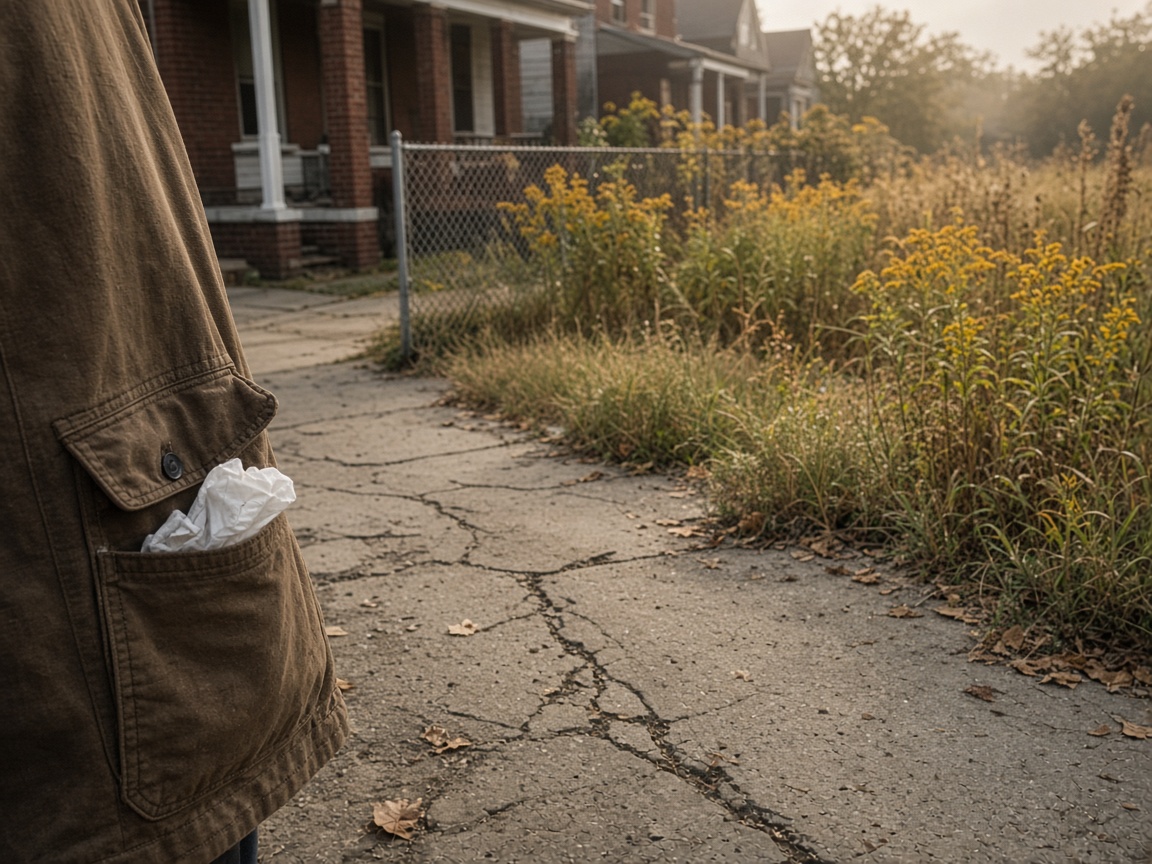
Your jacket pocket already has a tissue in it. You still want a joint when the shift lets out.
I'm Jamie. I grow sun-grown flower for Divine Toke in Detroit. This is the ragweed weeks. Pollen, a packed nose, and the porch question of whether flower helps. It is not a skin post. It is not a knee post.
Cannabis smoke is more likely to irritate a stuffed head than to treat fall allergies. A little plant chemistry in a lab dish is not a joint clearing the air on a Detroit block. Some people still feel a minute of relief. The papers do not call that an allergy treatment.
Does Cannabis Help a Stuffy Head, or Does Smoke Make Fall Allergies Worse? #
Smoke lines up with more cough, phlegm, and wheeze. It has not been shown to treat ragweed. A stuffed nose from pollen and a burnt airway from a joint can feel like one bad hour. They are two different problems stacked on the same face.
Allergic rhinitis is the clinic name for the pollen reaction. Sneeze, itch, watery eyes, and a nose that will not empty. In a lot of the country, including a southeast Michigan fall, that season now starts earlier than the old calendar. The AAAAI ragweed page says symptoms used to begin in mid-August and run through September. In many places they now begin in early August and extend through October.
That is the month you are living in if you are reading this on a late-September Saturday in Detroit. Nights have already cooled. The pollen has not signed out.
| What you hoped the plant would do | What the evidence actually supports |
|---|---|
| A joint will open a ragweed nose | Smoked cannabis is tied to cough, phlegm, and wheeze |
| CBD or THC treats the allergy | No trial in this research treats ragweed with those chemicals |
| Regular users report fewer sinus symptoms, so weed is medicine | That finding is one survey. It is not a treatment test |
| Skip the burn and the nose has a better shot | Edibles and tinctures keep smoke out of the airway. They do not erase pollen |
Here is the split I want you to keep:
- Pollen is an outside problem. Ragweed throws light pollen on the wind. Your immune system treats it like an invader. The nose swells and runs.
- Smoke is an inside problem. Burning plant material makes an irritating cloud. Your airway answers with cough and mucus. That can happen with no pollen at all.
- A true cannabis allergy is a third problem. Some people react to the plant itself. More on that below. Avoidance is the usual advice, not another hit.
If your nose is packed and you light up, you can get both at once. The pollen is still in the air. The smoke is now in the nose. Calling that "allergy relief" is how a rough week gets rougher.
The wider swelling story, joints and all, lives in the cannabis and inflammation map. This post stays on the nose, the smoke, and the fall air.
When Does Ragweed Hit Southeast Michigan? #
Ragweed is already in the air by early August in many places, usually peaks around mid-September, and can hang on through October. Detroit does not get a private calendar. We get the same wind, plus our own weather.
The ACAAI ragweed allergy page says there are 17 ragweed species in the United States. They typically bloom and throw fine pollen from August into November. Pollen usually reaches peak levels in mid-September. ACAAI says this pollen can cause seasonal allergic rhinitis, the hay fever that affects as many as 25 million people in the U.S.
I do not have a dated National Allergy Bureau count for metro Detroit in this piece. Do not treat a national peak as today's number on your block. Treat it as the season you are standing in. If you want today's air, check a real pollen counter and the state air alert. A pretty sky is not a count.
What the Detroit thermometer is doing while the weeds bloom #
The nights drop in September. The ragweed does not wait for a freeze to bother you. NWS Detroit/Pontiac monthly normals put Detroit's August days near 81.4°F and nights near 63.2°F. September slides to about 74.4°F by day and 55.5°F at night. October is about 62.0°F and 44.0°F.
You feel that on the walk to the car. A hoodie comes back. The tissue stays in the pocket. Those are the same weeks ACAAI calls the usual peak.
The NWS Detroit/Pontiac first-fall-freeze page says October is the month the growing season ends across Southeast Michigan. I am not going to invent a frost date that kills every grain of pollen on a Tuesday. AAAAI already runs the symptom window through October. Plan on a long tail, not a one-week event.
| Month around Detroit | Typical day / night (NWS normals) | What the pollen season is doing |
|---|---|---|
| August | 81.4°F / 63.2°F | AAAAI says many places now start in early August |
| September | 74.4°F / 55.5°F | ACAAI says the usual peak is mid-September |
| October | 62.0°F / 44.0°F | Growing season ends this month in Southeast Michigan. Symptoms can still linger |
The tall plant is not always the one stuffing you up #
The showy tall weed gets the blame. A low one in the grass is a primary cause. The AAAAI ragweed handout says the tall goldenrod species of ragweed gets blamed for most of the pollen. A primary cause of symptoms is the tooth-leaved ragweed that lives low in the grass.
That matters on a vacant lot, a fence line, or the edge of a plant parking lot. People point at the yellow top they can see. The stuff down by your boots can be the one in your nose. You do not need a botany class. You need to stop treating "I can see a tall weed" as the whole diagnosis.
Mornings hit harder, which is rude if you work days #
During ragweed season, levels are often highest in the morning. That line is from the ACAAI ragweed page. ACAAI also says to keep windows closed at home and in the car, and to change clothes after you have been outside. Pollen rides in on clothes, hair, and pets.
If you start a day shift in Detroit, you walk into the high window. If you work seconds at a plant, a hospital, or a warehouse, you may miss the peak on the clock and still wear it home. The porch joint at 11 p.m. is not "after pollen." It is smoke on top of a day of pollen that came in on your shirt.
A warm, sunny September afternoon is still inside Michigan's ozone season too. More on that in the shift section. Pollen is not the only thing in the air.
What you carry inside after the lot #
The pollen does not stay in the parking lot. It rides home on you. ACAAI's clothes-and-hair line is easy to ignore because you cannot see the grains. You feel them an hour later on the couch.
A workable indoor reset, still just the allergy-group advice applied to a Detroit house:
- Shut the windows before you leave if the morning is the high-pollen window. Cracking them "for a minute" on a breezy day is how the bedroom gets a dose.
- Change the work shirt before you sit down. The hoodie that lived in a weeds-edge lot should not be the blanket.
- Rinse your hair if you were outside for a long chunk of the shift. A hat helps only if you do not drop it on the pillow.
- Wipe the dog's coat if the dog did the yard. Pets are a shuttle. They are not being dramatic.
- Do not dry sheets on a line while ragweed is up. You will sleep in the count.
None of that requires cannabis. If you skip it and then smoke in the same room, you did the irritating step and skipped the free one. The plant cannot outwork a house full of the pollen you just imported.
Why Does Cannabis Smoke Make a Stuffed Nose Feel Worse? #
Burning cannabis is tied to bronchitis symptoms. Those symptoms are cough and mucus, not a cleared allergy. The plant and the smoke are not the same exposure. Combustion means burning. Burning makes ash, tiny particles, and hot gas. Your nose and chest did not ask for that on a high-pollen morning.
The 2017 National Academies report on cannabis health effects says smoking cannabis on a regular basis is associated with chronic cough and phlegm production. It says quitting cannabis smoking is likely to reduce chronic cough and phlegm. The same chapter says it is unclear whether cannabis use is associated with COPD, asthma, or worsened lung function.
Read that twice so you do not walk away with a cartoon. I am not saying a joint equals a pack of cigarettes. I am saying regular smoking tracks with cough and phlegm, quitting often helps those symptoms, and the asthma question is still open. Open is not the same as safe.
What the older review and the quit study add #
More than one research group has watched the cough show up, and watched it ease when frequent use drops. A 2007 review by Tetrault and colleagues in JAMA Internal Medicine looked at marijuana smoking and the lungs. All 14 studies that checked long-term smoking and respiratory complications found more cough, phlegm, and wheeze. One pooled example was an odds ratio of 2.00 for cough, with a 95% confidence interval of 1.32 to 3.01. In plain talk, about double the odds of cough in that combined example. The same review did not find a consistent link to airflow obstruction, the "tight tubes" measure. Study quality varied. It is a review of older papers, not a new Detroit clinic.
A 2015 European Respiratory Journal study followed 1,037 young adults in the Dunedin cohort. Frequent use meant 52 or more times in the past year. After adjusting for tobacco, asthma, sex, and age, frequent cannabis use lined up with morning cough (odds ratio 1.97), sputum (odds ratio 2.31), and wheeze (odds ratio 1.55). Sputum is the mucus you cough up. Cutting back or quitting was tied to those symptoms falling toward the levels of people who did not use cannabis.
That last line is the practical one. If September smoke is making the morning cough worse, less smoke is a real lever. You do not have to swear off the plant forever to test it. You have to stop putting burning flower in an already angry airway for a couple of weeks and see what the morning feels like.
Irritation is not the same thing as an allergy cure #
A nose that runs after a hit can feel like help. That feeling is not a pollen score. I hear a version of this on porches. Someone says the hit makes the nose drip and they can breathe for a minute. Onions do a version of that too. A drip is not proof the ragweed lost.
What a real allergy treatment would have to show, and what these smoke papers do not show:
- Fewer sneezes on a validated nose score, not a vibe
- Less need for your usual allergy pill or steroid spray
- Better nasal airflow on a measurement, not a sigh of relief
- The same result in people who did not also quit tobacco or change the weather
The smoke studies measured cough, phlegm, and wheeze. They did not measure ragweed season in Wayne County. Do not borrow a cough paper and call it a hay fever paper.
Tobacco makes this messier. A lot of people who smoke cannabis also smoke cigarettes. The Dunedin analysis adjusted for tobacco and still saw the cannabis link. Your own week might not be that clean. If both are in the car, you cannot tell which burn is the problem. For a stuffed September, both are a bad idea in a closed cabin.
What Do Studies Say About Cannabinoids and Allergic Rhinitis? #
I did not find a randomized trial that treats allergic rhinitis with CBD or THC. Cannabinoids are the plant chemicals people name most, including THC (the one that gets you high) and CBD (the one that does not, at typical doses). The human paper that gets passed around is a survey. Surveys can spot a pattern. They cannot prove a treatment.
A 2022 JAMA Otolaryngology study by Orozco, Lin, and Hur looked at 2,269 U.S. adults ages 20 to 69 in the 2013 to 2014 National Health and Nutrition Examination Survey. Regular cannabis use meant 15 or more times in the last 30 days. Sinonasal symptoms showed up in 45.0% of regular users and 64.5% of never-users. The odds ratio for regular users was 0.22, with a 95% confidence interval of 0.10 to 0.50. Current tobacco smokers were more likely to report symptoms, with an odds ratio of 1.96. Nasal congestion was the most common sinonasal symptom in the survey, at 62.8%.
The authors said more research is needed to explain the link. Believe them. This is not a test of a CBD oil, a THC capsule, or a ragweed season. It did not clock how people used cannabis. Smoke, edibles, and "sometimes" were not a clean split. People with miserable noses may also skip a daily habit. That can make users look "better" on a questionnaire without the plant treating anything.
| Study | What it actually did | What it does not prove |
|---|---|---|
| Orozco 2022, JAMA Otolaryngology, 2,269 adults | Survey link between frequent cannabis use and fewer reported sinus symptoms | That CBD or THC treats ragweed or opens a Detroit nose |
| Tetrault 2007 review, 14 studies | Long-term marijuana smoking lined up with cough, phlegm, and wheeze | That smoke is an allergy medicine, or that it always harms airflow numbers |
| Hancox 2015, 1,037 young adults | Frequent use lined up with morning cough, sputum, and wheeze. Cutting back lined up with relief | A dose of flower for hay fever |
| National Academies 2017 | Regular smoking associated with chronic cough and phlegm. Quitting likely reduces them. Asthma link unclear | A reason to smoke through an asthma flare |
Why a lab dish is not your nose #
Cells in a dish can react to cannabinoids and still tell you nothing about a Saturday in Detroit. I am not going to dress up mouse work or mast-cell experiments as a nose spray. Mast cells are immune cells that dump histamine, the chemical behind a lot of itch and drip. Some lab papers poke those cells with research chemicals that are not the flower in your jar. Results go both ways. That is a reason to stay humble, not a reason to shop for a "CB2 allergy strain." I will not name one. We do not sell one.
If a label says the flower is for allergies, that is marketing. Michigan bars deceptive medical claims on cannabis products. Your nose still has to live through the week.
What I will say, with a hedge: early research on cannabinoids and immune cells is mixed and mostly not in humans with hay fever. Many people find a little calm at the end of a long day. Calm is not the same as less pollen in the air.
A stuffy head and a cannabis allergy are different #
You can be allergic to pollen and, separately, allergic to cannabis. The AAAAI cannabis allergy page says inhaling cannabis can bring a runny nose, sneezing, itching, and swelling and watering eyes. Wheezing and shortness of breath can show up too. Anaphylaxis, the severe whole-body allergic reaction, has been reported, most often with hemp seed. AAAAI's practical line is that treatment is generally avoidance.
That list looks a lot like fall allergies. The timing is the clue. If you only melt down in ragweed weeks, outdoors, on windy mornings, pollen is the first suspect. If your eyes and chest jump when you open a jar in January, the plant itself is the suspect. If both are true, smoke is a bad bet in September. Avoidance means you stop inhaling it. It does not mean you push through "to see."
Hemp seed in a smoothie is a different route than a joint, and it is the one AAAAI flags most for the severe reaction. Do not test that theory in a parking lot.
When Does a Hit Feel Like Relief, and When Does It Backfire? #
A hit can feel like relief for a minute and still be the wrong tool for the week. I am not going to tell you your own nose lied. I am going to tell you what that minute usually is, and when it turns on you.
People describe three different "it helped" moments. Only one of them is even in the neighborhood of the survey above. None of them is a ragweed cure.
- The drip. Smoke makes eyes water and noses run. A blocked nose that starts dripping can feel open. The pollen did not leave. You added an irritant that made fluid move.
- The exhale and the shoulders. A long day, a parked car, a little THC. Your jaw unclenches. You notice the nose less because the rest of you dropped a notch. That is a mood change. It is not an antihistamine. Antihistamine is the name for the allergy pills that block histamine.
- The survey pattern. Regular cannabis use lined up with fewer reported sinus symptoms in the 2022 JAMA Otolaryngology paper. The authors did not know why. Do not spend a ragweed week trying to become a "regular user" so a questionnaire will like you.
When it backfires the same night #
Backfire is cough, a tighter chest, or allergy symptoms that start when the jar opens. Use this list before you spark one out of habit.
- You already wheeze, or you have an asthma diagnosis. The National Academies chapter could not settle whether cannabis causes asthma. It could settle cough and phlegm from regular smoking. An unclear asthma link is not a green light to inhale through a flare.
- Your eyes and nose jump when you touch flower, even out of season. That fits the AAAAI description of cannabis allergy. The advice there is avoidance.
- You are in a closed car with the windows up because of pollen, and you fill that same car with smoke. You trapped the irritant in with you. The secondhand smoke post covers what a contact high is and is not. A coughing passenger does not need that debate. They need the window logic to match the goal.
- You have to be sharp for a night shift or a drive home. Relief that makes you unfit for the road is not relief. More on the clock below.
If your lips look blue, you cannot finish a sentence, or the chest tightness is new and fast, that is urgent care. Do not troubleshoot it with another puff. This article cannot see you. A clinician can.
What I will not tell you to do #
I will not tell you to drop your allergy medicine because you bought flower. Your pill, your nose spray, and your inhaler are a plan someone already made. Cannabis is not a reason to ghost that plan for September. If you want to add the plant, ask the person who manages your asthma or your allergies.
Many people find a non-smoke night easier to explain in that room than a pocket full of joints. You still have to say it out loud. I cannot do that visit for you.
Bring the question in boring words. Tell them you smoke, your nose is packed in ragweed season, and you need to know if smoke piles on.
What to take into that visit #
A clinician can use a short list. They cannot use a vibe. Write it on your phone before you go. Leave the strain poetry at home.
- How many mornings this month you woke up coughing, and whether those were smoke mornings
- Whether the nose is worse outdoors in the morning, which is the ragweed pattern, or worse the second you open a jar
- What you already take: allergy pill, nose spray, inhaler. Names and doses, not "the usual"
- Whether you also smoke tobacco. That changes how anyone reads a cough
- Whether you drive to a plant, a hospital, or a site before the edible would be gone
Ask what they want you to stop, if anything. Do not announce that you already stopped the inhaler. If they shrug at cannabis, you still have the pollen steps. Windows, clothes, and the air alert do not need a permission slip.
Which Ways of Using Cannabis Skip the Smoke? #
Edibles and tinctures keep smoke out of your nose. They do not start on a smoke-break clock, and they do not cure pollen. A tincture is a liquid you hold in your mouth or swallow. An edible is food or a gummy with THC in it. Neither one burns. That is the whole airway advantage. The high is a different animal because your liver gets involved.
If you want the side-by-side on onset and feel, read tincture vs flower vs edible and why a tincture high is not a flower high. The chemistry of the edible delay is in why edibles feel different. Short version: inhaled THC hits in minutes. Swallowed THC waits, then can feel stronger and last longer, because the liver changes it.
| Route | What it does to a stuffed airway | The catch on a work night |
|---|---|---|
| Joint, pipe, or pre-roll | Puts combustion smoke right where the nose is already swollen | Fast. Also the route tied to cough and phlegm |
| Vape cartridge or dry-herb vapor | Still an inhale. Hot aerosol can sting a raw nose | Not a free pass. Cartridge oil has its own cut problem |
| Edible | No smoke in the lungs or nose | Slow start. Easy to take too much. Can still be with you at dawn |
| Tincture held in the mouth | No smoke, if you do not inhale the drops | Adult-use servings are still easy to overdo. Read the milligrams |
Michigan already caps the non-smoke serving #
On adult-use edibles, the state cap is 10 mg THC per dose and 200 mg per container. That is from the CRA technical bulletin dated April 24, 2025, under R 420.404. The same bulletin puts adult-use tinctures, capsules, and oil-based drops at 10 mg per dose and 200 mg per container. Medical edibles can be higher per dose. A medical card is not an excuse to start at the top.
Ten milligrams is a ceiling on a labeled piece, not a homework assignment. The edibles dosing guide is the place to learn why a smoker should start lower than a full piece. If you eat the whole serving because the joint "didn't happen," you traded a cough for a too-strong night. Your nose will still be stuffed in the morning. You may also still be high.
Adult-use cannabis in Michigan is for adults 21 and older. That is the line on the CRA consumer connection page. If you are under 21, this article is not a shopping list.
Vapor is not the clever middle #
A vape skips some of the burning and still asks your nose to inhale a cloud. I am not going to cite a tiny "switch to a vaporizer and your lungs cheered" study I did not verify line by line. I will say the obvious. Your airway is swollen from pollen. Hot vapor is still hot vapor. Cough can still show up.
Cartridge oil is a separate mess. Cuts and dirty oil are the subject of the vape cartridge buying guide. A clean cart is still an inhale. It is not an allergy product. If the goal is "do not irritate a stuffed head," the non-inhale routes are the ones that match the goal.
Divine Toke's shop is sun-grown flower, 1-gram pre-rolls, and a 20-pack of 20 one-gram joints. I am not going to pretend we sell a ragweed tincture. If you want a non-smoke product tonight, buy it from a licensed Michigan seller who actually makes it. Read the milligrams. Do not let a porch habit pick a pre-roll just because that is what is in the cup holder.
What Should a Detroit Shift Worker Do on a High-Pollen Day? #
Control the pollen you can, and do not add smoke you do not need. You probably cannot call off because your nose is packed. Auto plants, hospital floors, warehouses, and trades vans do not pause for ragweed. The plan has to fit a clock you do not control.
ACAAI's morning peak matters here. Day shift walks into the high window. Second shift may clock in after the worst hour and still carry pollen home on a hoodie. Night shift can meet the next morning's peak on the drive home if the windows are down. Pick the version that matches your badge, not a generic "wellness routine."
Michigan's ozone season is still open in September and October. EGLE's March 20, 2026 air-quality note says ozone season runs from March 1 through October 31. PM2.5, the fine dust, is forecast year-round. Those particles come from industry, vehicles, wildfire smoke, and dust. A clear blue sky over the river does not mean the alert is green. If you work outside, check the day's Air Quality Alert before you treat a long afternoon as "just allergies."
Pollen and the state alert are neighbors, not twins.
- Ragweed is a plant particle your immune system can treat as an invader. It peaks on the allergy calendar, often in the morning.
- Ozone is a gas that builds on warm sunny days. Michigan still forecasts it through October 31.
- PM2.5 is fine dust from traffic, industry, wildfire smoke, or a dirty air mass. EGLE forecasts that one all year.
- You can have a stuffed nose on a quiet air day. You can also feel wrecked on an Air Quality Alert with no weeds in the yard.
- Stacking a joint on an alert day adds smoke to whatever the state already flagged.
If you only have energy for one check before a long outdoor shift, make it the alert. Then decide about the porch.
| Clock | What Detroit air is doing | A move that does not make it worse |
|---|---|---|
| Morning, day shift | Ragweed levels are often highest | Windows up in the car and at home. No joint in the cabin |
| Midday, warm September | Still inside ozone season through October 31 | If EGLE has an alert, do not add a workout or a smoke break outside |
| Second shift ends | Pollen may be lower, but it is on your clothes | Change the shirt. Shower if you were outdoors. Then decide on cannabis |
| Late porch or parking lot | Nose can still be packed from the day | Skip the burn. If you want the plant, use a small non-smoke dose at home |
| Next dawn | An edible from last night can still be active | If you are not sober, you do not drive to the plant |
A simple order that fits a real evening #
Pollen control first. Cannabis second, and only if you are home and done driving. This is the order I would want a friend to use. It is not a medical protocol.
- Keep the windows up on the Lodge, on I-94, on Jefferson, and in the house. That is the ACAAI car-and-home line, applied to a Detroit commute.
- Change clothes when you get in. Pollen on a work shirt becomes pollen on the couch.
- Rinse your face. You do not need a spa. You need the yellow dust off your eyelids.
- Check whether the state called an air alert. Ozone and fine particles can stack on ragweed. They are not the same thing, and they feel like the same headache.
- If you still want cannabis, do it where you sleep, not in the driver's seat. A pre-roll is the smoky choice. An edible or tincture from a licensed seller is the choice that skips the burn. Start under the 10 mg adult-use piece, not on it.
- Set a time you will not drive. Edibles do not care about your alarm. The blood THC and impairment post is the Michigan driving piece. Read it before you convince yourself you are "fine for the freeway."
If a coworker hotboxes the van, you do not owe them your lungs because the shift was long. Step out. The contact-high argument can wait for a day your chest is quiet.
One second-shift Saturday, told straight #
You can want a joint and still leave it in the cup holder. Here is a version I see, with the times rounded. It is an example, not your time clock.
You get off around 11. The lot smells like cut weeds and coolant. Your nose has been packed since the drive in, because the morning count was the high one and the shirt kept it. Detroit's night air in late September is already down near that 55°F normal. It feels like fall. The ragweed did not get the memo.
The easy move is a pre-roll before you even put the car in gear. Windows are up, which is correct for pollen and terrible for smoke. Ten minutes later your eyes run. You call it relief. Then you cough on I-94 and your passenger is mad. You get home, eat, and the nose is packed again because the pollen was never the thing the joint removed.
The other move takes ten more minutes. Shirt off. Face rinsed. Window stays shut. If you still want cannabis, it is a small edible or a tincture at the table, not a burn in the driveway. You are done driving. You are not due back at dawn, or if you are, you skip it. The nose may still be annoying. You did not add a morning cough to a Sunday overtime text.
That is the whole product decision. Flower is for a night your airway is quiet. A 1-gram pre-roll is a smoke. On this Saturday, smoke is the part that makes the stuffed head worse.
A medical card does not turn allergies into a qualifying condition #
Fall allergies are not on Michigan's named medical-marijuana list. The CRA eligible-conditions page names cancer, glaucoma, arthritis, chronic pain, Crohn's, and a specific set of other conditions. It does not name allergic rhinitis. It does not name hay fever. A card is not a coupon for smoking through September.
Adults 21 and older can already buy adult-use cannabis without a card. The card changes taxes, possession, and medical product limits. It does not change the physics of smoke in a swollen nose. If your real issue is severe chronic pain, that is a different conversation with a Michigan physician, and it is a different article. Do not borrow a pain certification to justify a ragweed joint.
What Mistakes Make a Stuffy Detroit Fall Worse? #
The usual misses are blaming the tall weed, smoking to "open up," and treating a survey like a prescription. None of these require a new gadget. They require you to stop doing the thing that feels obvious.
- Pointing at the tall plant and calling the case closed. AAAAI says the tall goldenrod species of ragweed gets the blame, while tooth-leaved ragweed low in the grass is a primary cause. You can be right that "weeds are up" and wrong about which one is in your nose.
- Lighting a joint because the nose is blocked. The drip can feel like a win for a minute. Tetrault's review and the Dunedin quit study both tie frequent smoking to cough and mucus. You may be trading a stuffed nose for a morning cough.
- Reading the 2022 sinus survey as a dose. Fewer reported symptoms among frequent users is not a script for "smoke more until the ragweed stops." The paper says the mechanism is unknown.
- Closing the car against pollen, then filling it with smoke. You did the hard part (windows up) and undid it.
- Eating a full 10 mg edible because you skipped the joint. The CRA cap is a legal maximum on adult-use pieces, not a beginner dose. A too-strong edible does not unstuff you. It can still be working when the alarm goes off.
- Assuming a cool night ended the season. Detroit's September nights are already near 55.5°F. AAAAI still runs ragweed symptoms through October. A hoodie is not an all-clear.
- Skipping the air alert on a warm afternoon. Ozone season runs through October 31. Fine particles are a year-round Michigan forecast. Allergy pills do not cancel an EGLE alert.
- Stopping a prescribed inhaler or nose spray on your own. Bring cannabis up with your clinician. Do not swap a studied allergy plan for a jar because a friend had a good Saturday.
If you want one rule for the fridge: on a high-pollen day, the joint is the option most likely to irritate the head you are trying to clear.
Frequently Asked Questions #
Smoke is the route most likely to irritate a stuffed head, and the studies do not show that cannabis treats ragweed. The short answers below each carry one number or one rule you can check.
Does cannabis help fall allergies? #
Smoke does not, as far as the studies go, and cannabinoids have not been shown to treat ragweed. The National Academies report ties regular cannabis smoking to chronic cough and phlegm. A 2022 survey of 2,269 adults found fewer reported sinus symptoms among frequent users and said the reason is unknown. That is not a fall-allergy treatment.
Is the tall plant in the lot the one stuffing my nose? #
Often it gets blamed, and often a lower ragweed is the bigger problem. The AAAAI ragweed page says the tall goldenrod species of ragweed gets blamed for most of the pollen. Tooth-leaved ragweed, low in the grass, is a primary cause of symptoms. There are 17 U.S. species on the ACAAI page. You can react without a tall yellow bouquet in the yard.
What time of day is ragweed pollen highest? #
Often in the morning, during the season. That is the ACAAI line. It is why a Detroit day shift walks into the worst hour, and why windows should be up in the car before you even think about a morning smoke.
When does ragweed season ease off around Detroit? #
Plan on early August through October, with a usual peak around mid-September. Do not bet on one frost date. AAAAI says many areas now start in early August and run through October. ACAAI puts the usual peak in mid-September and bloom from August into November. NWS Detroit says October is when the growing season ends across Southeast Michigan. I do not have a Detroit pollen count that ends the season on a named day.
Can I be allergic to cannabis itself? #
Yes. Inhaling it can cause a runny nose, sneezing, itching, watery eyes, and wheezing. The AAAAI cannabis allergy page says treatment is generally avoidance. Severe reactions have been reported, most often with hemp seed. If the jar bothers you in winter, that is a different problem from September ragweed.
Is vapor easier on a stuffy nose than a joint? #
It skips some burning. It is still an inhale, and it is not an allergy treatment. Hot vapor can still make you cough. Cartridge cuts are their own issue, covered in the vape buying guide. If the goal is to stop irritating a packed nose, use a route that does not enter the airway.
Do edibles treat hay fever? #
No. They avoid smoke. They do not remove pollen. Adult-use infused edibles in Michigan are capped at 10 mg THC per dose and 200 mg per container on the April 24, 2025 CRA bulletin. Start lower than a full piece if you usually smoke. The delay is explained in the 11-hydroxy-THC post.
I have asthma. Should I smoke during ragweed season? #
I would not. Regular smoking is tied to cough and phlegm even though the National Academies says the link to asthma itself is unclear. Unclear is not permission. If you wheeze, talk to your clinician before you add any inhaled cannabis. Do not stop an inhaler because flower is legal.
Can I drive to a morning shift after an edible the night before? #
Not if you are still high. Edibles last longer than a joint, and a 6 a.m. start is a bad time to guess. Michigan roads do not care that you were treating a stuffy nose. Read blood THC versus impairment before you build a night dose around a dawn commute. If you needed the plant, take it when the driving is done.
Does secondhand cannabis smoke in a car matter when I am already congested? #
Yes. You are breathing the same irritant, just from someone else's hand. Windows-up is the right pollen move and the wrong smoke move if the cabin is lit. The contact-high post sorts myth from exposure. Your cough does not need to wait for that argument.
Should I skip my allergy pill if I use cannabis? #
No. Do not drop a medicine on your own because you used cannabis. I do not have a study that says THC replaces an antihistamine or a steroid nose spray. Many people find they still need the allergy plan all through the ACAAI peak in mid-September. Ask a pharmacist or your clinician before you stack a new cannabis habit on those drugs.
Are fall allergies a reason to get a Michigan medical card? #
No. Allergic rhinitis is not on the named list. The CRA conditions page includes chronic pain and arthritis, not hay fever. Adults 21 and older can buy adult-use products without a card, per the CRA consumer page. A card does not make smoke gentle.
When is a stuffy head an emergency? #
When breathing fails, not when you are annoyed. New chest tightness, wheeze you cannot settle, blue lips, or the feeling you cannot finish a sentence needs urgent care. A tissue and a missed joint can wait until morning. An asthma flare on top of ragweed should not be managed from a blog.
What If You Still Want Flower After the Pollen Drops? #
Buy flower for a clear-air night, not as a ragweed treatment. If your nose is quiet and you want sun-grown flower, that is the lane Divine Toke actually grows in Detroit. We sell flower, 1-gram pre-rolls, and a 20-pack of 20 one-gram joints. There is no public shop address and no allergy SKU. Orders are mail-order. If you are 21 or older and the air is decent, start at the Divine Toke shop.
On a high-pollen morning, a pre-roll is the choice that puts smoke in the airway this article just spent all these words warning you about. If you still want the plant that day, use a licensed edible or tincture, keep the dose small, and keep the keys down. The explainers are how you take it, how edibles hit, and how to dose them.
A warm September afternoon can still be an ozone day through October 31. A cool 55°F night does not mean the ragweed clock stopped. Change your shirt. Check the alert. Then decide if you need cannabis at all.
This article is for educational purposes only and is not medical advice. Always consult your healthcare provider before starting any new wellness routine.
Grown in Detroit. Shipped to your door.
Small-batch, sun-grown cannabis cultivated in living soil. Mail-order shipping to all 50 states.