Smalls vs Tops at Harvest: What the Bag Weight Actually Buys
A cheaper bag of smalls can be the same plant as the fat tops. A Michigan label sells grams, not bud size. Here is what that scale actually buys you today.
Questions this article answers
- Is a cheaper bag of smalls the same flower as tops, or are you paying for bud size?
- are popcorn buds less potent than cola tops
- what is the difference between smalls shake and trim
- does a Michigan cannabis label say smalls or tops
- how to compare cannabis price per gram

Head Cultivator
On this page
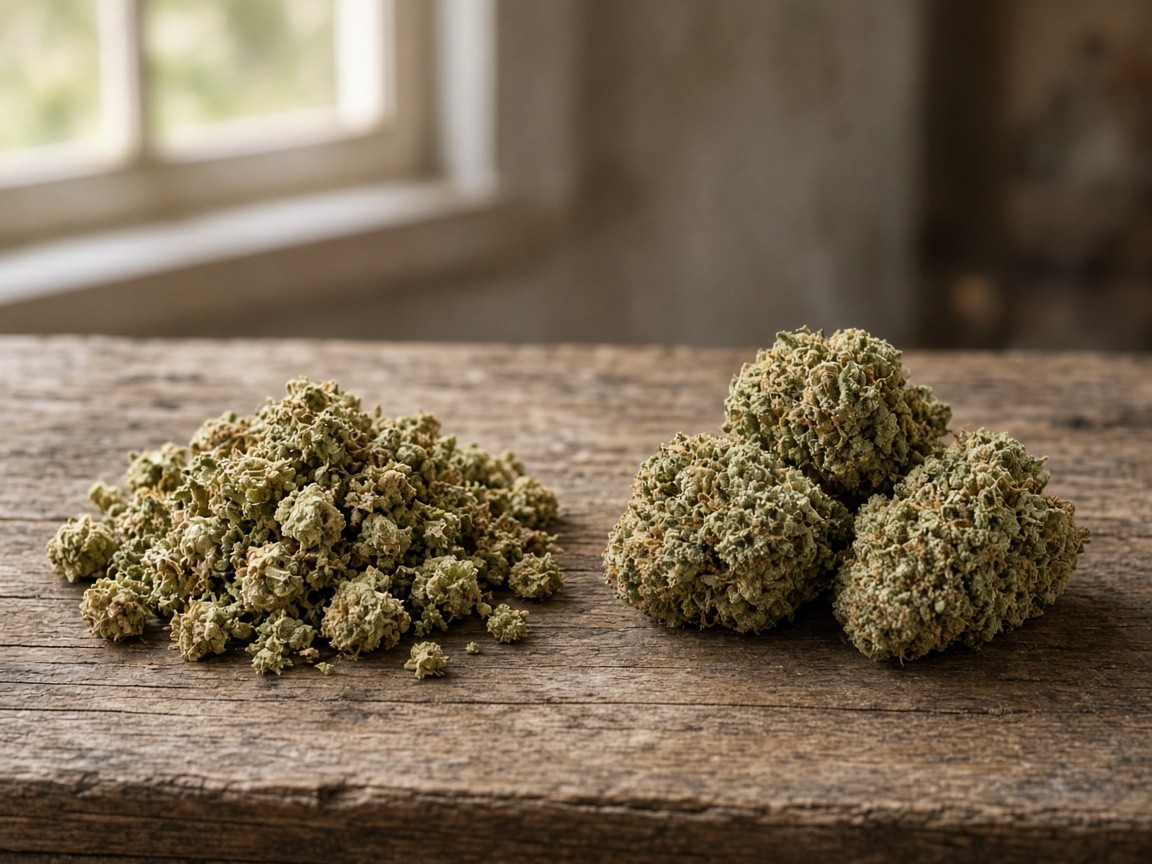
The clerk sets two jars on the glass. Same grams on the sticker. One jar is all little popcorn buds. The other holds three fat tops.
I'm Jamie. I sort sun-grown flower after a Michigan cut. The cheap bag can be the same plant. It can also be the shaded bottom. The label won't say which.
Are Smalls the Same Flower as the Fat Tops? #
Sometimes the little buds are the same harvest, sorted by size. Sometimes they grew in the shade under the colas, and the chemistry is not the same. The sticker sells grams. It doesn't promise every bud saw the same light.
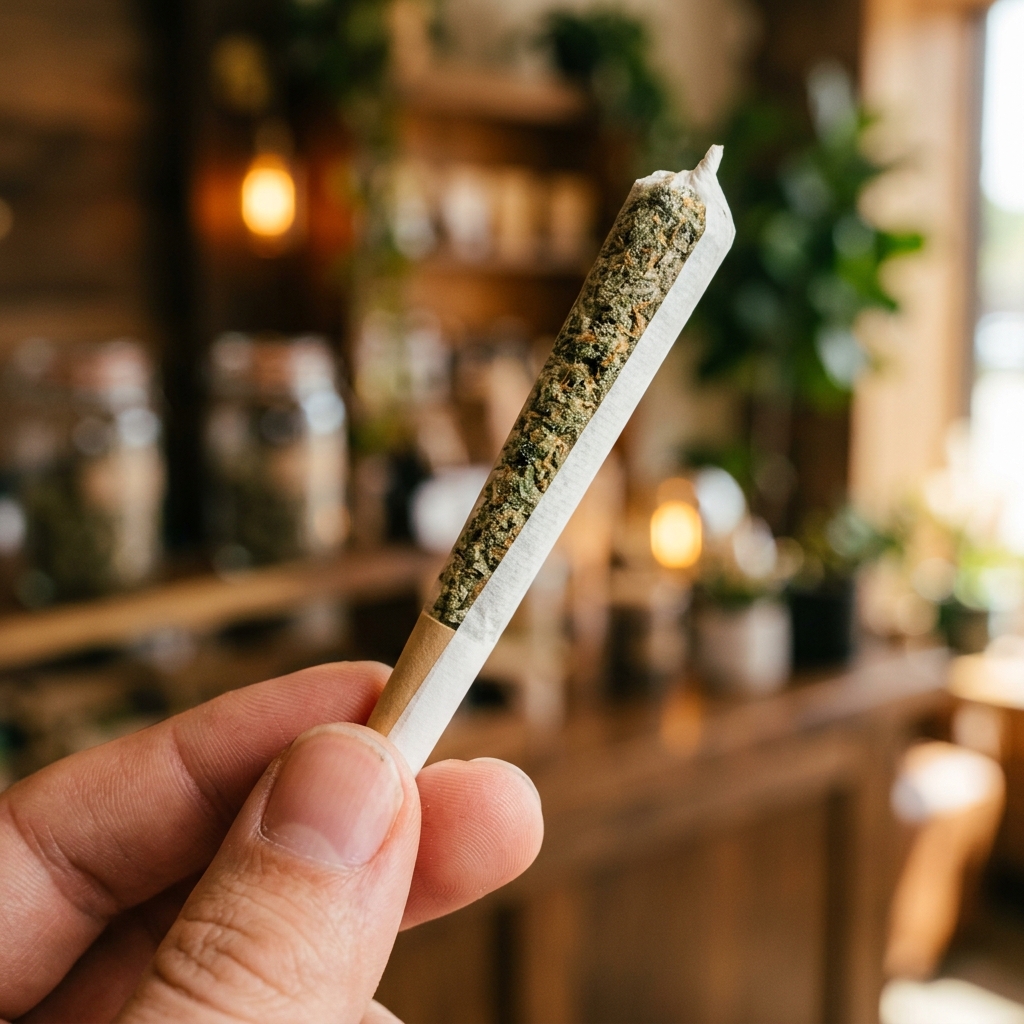
A small (shop talk also says popcorn) is an intact little flower. A top or cola is the fat cluster at the end of a main branch. Same genetics can sit in both jars. Same genetics is not the same test.
Three bags get mixed up at a Detroit counter after a shift:
| What you think you bought | What may be in the bag | What to trust |
|---|---|---|
| Same plant, small buds only | A size sort after trim | The package tag and the COA for that tag |
| "Same strain" at a lower price | A different harvest, an older cure, or a blend | Harvest date and package tag, not the name |
| Cheap flower | Shake, sugar leaf, or stem dressed up as smalls | Intact buds you can still see |
Strain name is the family. The package tag is the batch. Michigan's flower label rule, R 420.504, makes the seller print net weight and the lab's THC and CBD. It does not make them print "these grew on the bottom."
On a sun-grown plant the light gap is real. The cola sits in the September sun. The lower buds sit under leaves. A 2022 greenhouse study on a high-CBD medical cultivar found bottom flowers with cannabinoid levels up to 90% lower than the top flower on the same plants (Danziger and Bernstein, Frontiers in Plant Science). That plant was bred for CBD, with THC under 1%. It was not a high-THC Detroit eighth. The lesson still travels. Shade can move the number. Pretty size is a separate fact.
If the two jars share one package tag and the nose is still alive, you are mostly paying for bud size. If the tags differ, you are shopping two products that share a name.
A fatter bud is not automatically a stronger night. The percent has its own traps. Read why a higher THC percent is not a stronger high before the big cola wins on looks.
What Do Smalls, Popcorn, Shake, Trim, and Colas Mean? #
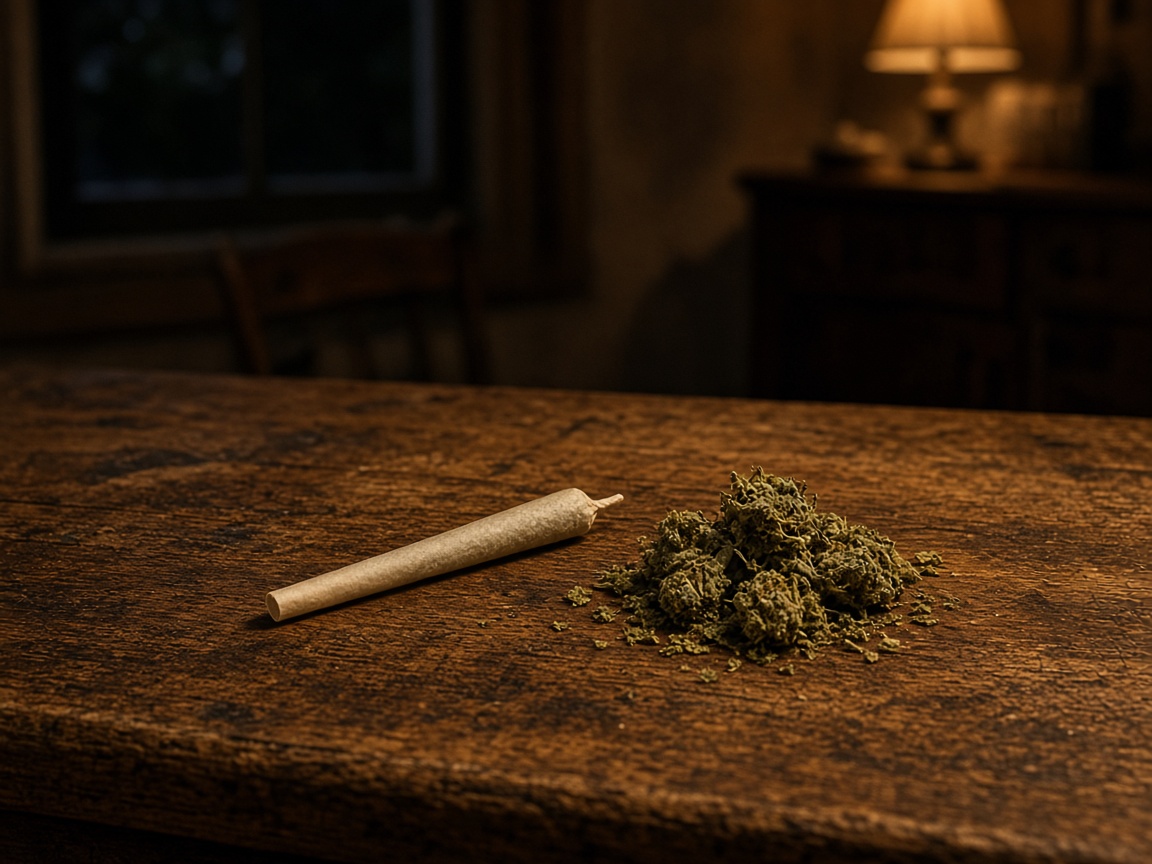
Smalls and popcorn are intact little flowers. Shake is broken flower. Trim is the leaf the scissors took off. A cola is the fat top cluster. Shops use the words loosely. Michigan doesn't define them on the label.
Think of a corn stalk. The ear at the top got the sun. The little ears lower down are still corn. They are not the husk, and they are not the kernels that fell in the truck. Flower grades work like that.
| Word on a menu | What it should mean | What it is not |
|---|---|---|
| Smalls / popcorn / minis | Whole little buds, often from side branches or the lower canopy | Dust, or a bag of stems |
| Tops / colas / "top shelf" | The large end clusters, usually the ones that saw the most light | A lab grade, or a promise of a higher percent |
| Shake | Flower that broke in the trim, the tote, or the jar | The same thing as an intact small |
| Trim / sugar leaf | The small resin-dusted leaves cut off the bud | The bud itself |
Sugar leaves are the little leaves that hug the bud and sparkle. Fan leaves are the big solar panels. Trim is mostly sugar leaf plus whatever bud bits the scissors took with it. A bad smalls bag hides that leaf inside the weight.
Popcorn and smalls are usually the same idea. One shop's "small" is another shop's "mini." There is no Michigan ruler that says a popcorn bud must be under half an inch. If the bud is still a bud, with a shape and a calyx stack, call it flower. If it falls apart into crumbs when you pinch it, you are holding shake.
Tops cost more for reasons that are not all chemistry:
- They photograph better in the jar.
- They take longer to grow into that size.
- A careful trim on a big cola is slower than a tumble of little buds.
- Shoppers have been trained to pay for the look.
None of those reasons is a THC test. The test is a separate piece of paper. A cola can be leafy and harsh. A small can be dense and loud. Your nose still gets a vote. The COA (certificate of analysis, the lab sheet for that batch) gets the other vote.
Divine Toke sells sun-grown flower, not a made-up "popcorn strain." If a menu invents a cultivar name just to label the little buds, that name is marketing. The plant already had a name. The size sort came later.
Pre-rolls are a different pile. Ground flower in a paper is not a jar of tops, and it is not automatically a jar of smalls. How to read a tube is in what is actually inside a pre-roll. This page stays on the bag of flower.
How Does a Harvest Sort Fill the Bags? #
After the dry, someone screens the flower by size. The big intact colas go in one pile. The little intact buds go in another. The crumbs and the leaf go in a third. That's the whole smalls product. No new plant. No new cultivar name required.
On a Michigan sun-grown cut, the sort often follows the plant from top to bottom:
- Cola tops. The end clusters that sat in the light. These are the jar people photograph.
- Side-branch buds. Real flowers, just never as long as the main cola. A lot of honest smalls live here.
- Lower-canopy popcorn. The shaded stuff. This is the pile the greenhouse papers are warning you about.
- Shake. Whatever broke while the crew moved totes.
- Trim. Sugar leaf in a bin, headed for extract or a cheap pre-roll. Not a flower SKU.
A careful crew can keep those piles apart. A rushed crew can let trim ride along in the smalls bag because little buds hide leaf. You won't see the crew. You'll see the bag.
What you can check without a farm tour:
| Check | Pass | Fail |
|---|---|---|
| Bud shape | You can still see a formed flower | Dust, fans, or bare sticks |
| Color | Green to gold, with some frost | Brown slime, or gray dust |
| Stem | A short stick inside a bud | A stem that weighs more than the flower |
| Smell, lid cracked | Still a plant | Hay, basement, or nothing |
| Package tag | Matches a COA | "Trust me" and a strain poster |
September in southeast Michigan is cut week for a lot of outdoor flower. The menu fills up. That rush is when size sorts get sloppy, because there is more plant than table. What September harvest means on a Detroit menu covers the calendar. The sort above is the part that decides which grams cost less.
If the shop will not let you see the flower, you are buying a picture. Sealed bags happen. Then the COA, the net weight, and the shop's return habit are all you have. Don't let a window photo of a cola sell you a bag of popcorn you can't smell.
Can the Bottom of the Plant Test Lower Than the Top? #
Yes. Bottom flowers can hold a lower cannabinoid percent than the top flower on the same plant. The gap is not the same on every cultivar, and bud diameter is not the cause by itself. Light and position do the work. A little bud that grew in the sun can test like a top. A little bud that grew in the shade often will not.
Cannabinoids are the compounds that include THC and CBD. Most of them sit in the resin glands, the trichomes, that look like tiny crystals on the bud. A higher percent means more of that compound in each gram. A bigger bud is not a bigger dose until you weigh what you actually smoke. A gram is a gram. The percent is how strong that gram is.
Two studies are worth keeping straight. They are not Michigan outdoor lots. They are the cleanest published looks at "top versus bottom."
| Study | Plant | What they measured | What a shopper can use |
|---|---|---|---|
| Danziger and Bernstein, 2022 | High-CBD medical cultivar in a greenhouse. THC under 1% | Cannabinoids at five spots on the plant, at 1 or 2 plants per square meter | Bottom flowers were up to 90% lower than the top flower. The top flower barely moved when they crowded the plants. The bottom got worse in the shade |
| Filer, 2022, reporting Bernstein | Medical cultivar NB100 | THC by gas chromatography, which heats the sample | About 12% THC up top and 6% on the lower flowers of that one cultivar. Heat in the lab turns THCA into THC, so this is not a raw jar print |
Read the 90% line slowly. It is "up to," on the lowest inside flowers, on a CBD-dominant plant, in that trial. That's not a law that your 24% cola becomes a 2% popcorn. It's proof the bottom can fall off while the top stays put.
The crowd matters. In that same greenhouse trial, packing plants tighter (2 per square meter instead of 1) cut cannabinoids at the bottom again. In the untreated plants, the bottom location dropped about 71% to 76% when the stand got denser. The authors tied that to light starvation low in the canopy. Leaves down there even started to die off.
A 2018 lighting trial points the other direction. Hawley and colleagues in HortScience put lamps under the canopy. Danziger and Bernstein cite that work as raising cannabinoids in the bottom third. More light down low can pull the little buds back toward the tops. A Michigan sun-grown field does not have those lamps. The September sun hits the colas. The popcorn lives in the shade of the plant's own leaves.
What this does not prove:
- That every small on a menu is a weak bottom bud. Some "smalls" are broken pieces of tops that did not stay pretty.
- That trichome count equals the percent. A bud can look frosty and still test ordinary. Gland size and how ripe the glands are also count.
- That outdoor Michigan flower always shows a twofold gap. Cultivar, spacing, and how hard the grower thinned the canopy all change it.
If you want the harvest clock, not the size sort, when sun-grown cannabis is ready covers trichome color. This page is about which part of that plant landed in the bag.
What Does a Michigan Flower Label Say About Bud Size? #
It says the net weight, the lab's THC and CBD, and that those percents may miss by 10%. It does not have to say smalls, popcorn, mids, or top-shelf. Those words are voluntary marketing. The required lines are in R 420.504.
Before a licensed shop sells you flower, the container has to be sealed and labeled. For the size question, these lines matter:
| Required line | What it tells you | What it hides |
|---|---|---|
| Net weight, in grams or ounces | The legal amount you paid for | Whether that weight is colas, popcorn, or stem |
| THC and CBD from the lab | The percent for the tested batch | Which bud on the plant the lab ground up |
| "May vary by 10%" | A built-in window around the printed number | A grade, or a smalls discount |
| Harvest date, if applicable | When it was cut, when they print it | How long it sat after the cut |
| Strain name, if applicable | The cultivar name they claim | That smalls and tops share a batch |
| Lab name and test date | Who passed it, and when | Trim style, or bud size |
| Package tag | The ID that should match the COA | Nothing, if you actually match it |
The 10% line is easy to skip. A jar printed at 20% THC can legally sit near 18% or 22% and still match the sentence on the label. That window is bigger than a lot of "smalls versus tops" arguments people have in the parking lot. If two bags are 2 points apart, you may be inside the label's own slop, not looking at a different plant.
Harvest date is required when it applies. It is not a bud-size field. A September cut on the sticker does not mean the little buds and the fat tops were dried the same week they were packed. That gap has its own page: harvest date versus pack date on a September jar. Use it when the dates confuse you. Stay here for the grams and the bud size.
Safety tests are a different rule, R 420.305. Potency, foreign matter, microbes, pesticides, metals, mycotoxins, and water activity are in that lane. Water activity is how much water is available to mold, not how frosty the bud looks. The CRA testing bulletin passes flower at 0.65 aw or below. A cola and a small from a licensed batch both had to clear that gate. Passing it does not mean they smell the same.
Terpenes are the smell oils. Michigan does not require a terpene panel on every flower label. A blank terpene page is not a failed safety test. It means you are judging nose by nose.
Adults 21 and older can possess 2.5 ounces in public under MCL 333.27955, with no more than 15 grams of that as concentrate. The CRA's adult-use summary matches that. An ounce of popcorn and an ounce of colas are the same legal weight. The law does not care that one jar looks fuller of little nugs. Count grams, not how pretty the pile is.
What Do Michigan Prices Show for Flower vs Shake? #
Michigan prices flower in one bucket and shake or trim in a cheaper bucket. It does not publish a smalls price. A discount bag of popcorn can be a fair size sort inside the flower average, or it can be tired flower wearing a cute name. The state number will not tell you which jar you are holding.
Two official prints, from two different desks:
| Source | What it measures | Number | What it is not |
|---|---|---|---|
| CRA quarterly update, September 2025 | Average retail adult-use flower | $62.30 per ounce in July 2025 (April was $62.23) | A smalls price, or a 2026 menu |
| Same CRA update | Average retail medical flower | $88.89 per ounce in July 2025 (April was $79.80) | Proof that medical flower is "better buds" |
| Michigan Treasury, July 1 to September 30, 2026 | Wholesale tax benchmark for flower | $641.41 per pound | A price you pay at the counter |
| Same Treasury list | Wholesale tax benchmark for shake/trim | $349.82 per pound | A smalls price. Smalls are still flower |
Treasury builds those wholesale numbers from retail, then divides by 1.5. They assume retail sits 50% above wholesale. It is a tax yardstick for the quarter that includes this September. It is not a budtender's quote.
Do the pound math in the open so it stays honest. A pound is about 453.6 grams.
- Flower benchmark: $641.41 ÷ 453.6 grams is about $1.41 a gram at wholesale.
- Shake/trim benchmark: $349.82 ÷ 453.6 grams is about $0.77 a gram at wholesale.
That gap is leaf and broken material versus flower. It is the state's way of saying trim is not buds. If a "smalls" ounce is priced like shake, ask what you are actually buying. Intact popcorn should live closer to flower than to sugar leaf.
The retail ounce is the number a Detroit shopper feels. $62.30 ÷ 28 grams is about $2.23 a gram for average adult-use flower in July 2025. Medical was $88.89 ÷ 28, about $3.17 a gram. The medical jar was not $3.17 because the buds were fatter. Tax, purchase channel, and who is buying move that average. Bud size is not on the CRA slide.
Oversupply is why the ounce got cheap. Unlimited grow licenses flooded Michigan with flower. Smalls get pushed first because they are harder to make look expensive. That is a market habit. It is not a lab result. CRA still does not split the $62.30 into "tops" and "popcorn."
Use the averages as a sniff test, not a target:
- An ounce of smalls far under the adult-use average can be a real break, or old weight they need gone.
- An eighth of tops far above $2.23 a gram is you paying for the look, unless that batch's COA is actually richer.
- A shake price on a bag that claims to be flower is the red flag. Treasury already priced shake in its own row.
How Do You Compare Price per Gram on Two Bags? #
Divide the shelf price by the labeled grams. Then read the THC on that same package tag. An eighth and an ounce are not the same shopping unit. The ounce looks like a deal because the pile is bigger. The gram is the only fair compare.
Shop math uses 28 grams as an ounce and 3.5 grams as an eighth. The CRA's July 2025 adult-use average was $62.30 an ounce, which is about $2.23 a gram ($62.30 ÷ 28). Hold that number in your head at a metro Detroit counter. It is a statewide average from 2025, not today's special. It still stops you from calling a $10 gram "normal Michigan flower."
Here is the checkout, with made-up shelf tags so the steps are clear. These are not CRA prices.
| Bag | Pretend shelf price | Labeled weight | Price per gram | Versus the $2.23 average |
|---|---|---|---|---|
| Smalls ounce | $50 | 28 g | $50 ÷ 28 = $1.79 | Under the old average |
| Tops eighth | $35 | 3.5 g | $35 ÷ 3.5 = $10.00 | About four times the smalls gram |
| Shake ounce | $25 | 28 g | $25 ÷ 28 = $0.89 | Down in Treasury's trim neighborhood |
On that pretend menu, the tops cost about 5.6 times more per gram than the smalls ($10 ÷ $1.79). You are paying for bud size unless the COA shows a real gap. A twofold lab gap, like the 12% versus 6% flowers in the Bernstein result Filer cites, would still not earn a five-times price. You would be buying the look, plus maybe some strength.
Run it on the tags in your hand:
- Write the price.
- Write the net grams from the label, not from how full the jar looks. Little buds pack with more air. The jar can look bigger and weigh the same.
- Divide. Price ÷ grams = your number.
- Open the COA for that package tag. Compare total THC, not the strain story.
- If the cheap bag's THC is close and the nose is close, the discount is the bud size. Take it if you want grams.
- If the cheap bag's THC is far lower, or the date is much older, the discount may be the bottom of the plant or a tired cure. Pay the gap only if you like that jar anyway.
Total THC on a Michigan flower label is the lab's THC plus the THC that heat will make from THCA. The label still has to warn you the printed value can miss by 10% (R 420.504). Two bags inside that window are a tie. Do not pay extra for a 1-point story.
Weight tricks that are still legal grams:
- More stem in the smalls. Stem is heavy and does not smoke like flower. Pick a bud apart. If the stick is most of it, your price per gram of smokable bud just went up.
- More sugar leaf left on. Leaf weighs something and burns harsh.
- Shake settled at the bottom of a "smalls" jar. The top looks like buds. The bottom is crumbs. Shake the jar once before you decide. Do not powder the trichomes on purpose. One tilt is enough.
A union shift and a long commute home do not change the division. They change how much fuss you want at the counter. Do the division on your phone in the parking lot if the line is loud. The jar will still be the same jar when you get there.
Pocket Card for the Counter #
Keep this on your phone. It is the whole compare.
- Price on the tag.
- Grams on the label. Not the look of the jar.
- Price divided by grams.
- $62.30 an ounce was the July 2025 adult-use average. About $2.23 a gram. Your jar can differ.
- THC on the COA for this package tag.
- 10% window around that THC print.
- Water activity at or under 0.65.
- Harvest date if they printed one.
- Nose. Hay and basement are outs.
- One bud pulled apart. Stem should not be the product.
- Lid back on before you walk to the car.
If you only do three, do the division, the tag match, and the smell. The rest is how you avoid a second trip.
What Changes in the Jar Besides Bud Size? #
Little buds show more surface for the same weight, so they can dry out and go quiet faster if the lid stays off. Fat colas hold more water in the middle while they hang, which is a mold risk in a wet Michigan September. The high is still about the percent and the dose. The jar changes how long the smell and the smooth burn last.
Fresh cannabis flower is about 78% to 80% water before the dry (2022 postharvest review, PMC9404914). That water has to leave. The same review says the cola is where the plant keeps the most trichomes. Trichomes are brittle. Scissors, tumblers, and a long ride in a tote knock them off. Every extra touch is a chance the resin ends up in the trim bin instead of your jar.
Smalls meet the scissors more often. Each little bud has its own leaf. A single cola is one object. A bag of popcorn is dozens. More cuts, more tumbling, more broken glands. That is a handling fact. It is not a rule that smalls are always harsher.
A 2024 trimming study (PMC11249524) found a trade, not a winner:
- Mild trim before the dry kept the higher cannabinoid concentration.
- Trim after the dry kept more of the terpenes, the smell oils.
You do not get both prizes from one scissors plan. The full timing story, including Michigan humidity, is in wet trim versus dry trim. The hang itself is in drying from harvest to cure. I am not redoing those pages. The size angle is this: naked little buds dry faster than a leafy cola, because the water has a shorter path out. Faster is good if the room is cool and the bud was wet in the middle. Faster is bad if the room is hot or the lid is open on a kitchen counter.
| What you notice | More likely with smalls | More likely with fat tops |
|---|---|---|
| Jar looks full | More pieces, more air between them | A few chunks, more empty glass around them |
| Dry, hay, or quiet nose after a week open | More surface cooked off the smell | Still loud if the inside stayed sealed in the cure |
| Harsh leaf taste | Sugar leaf left on because each bud was fiddly | A bald cola that got a long hand trim |
| Damp core, or a brown spot | Less common if the buds were truly small | Classic on a thick cola in a rainy September |
| Even grind for one joint | Often easier. They are already bite-size | You break a chunk and the rest stays a trophy |
Dense colas and Michigan rain are a pair. Water sits inside a thick bud longer. That is how bud rot starts. The field version of that week is in late September rain before the jar. A small bud is not immune. It just has less middle to hide a wet spot. If either jar smells like a basement, do not buy it because the buds are cute.
Heat is a different killer than size. In one hemp drying method in that postharvest review, terpene retention fell from 82.1% to 29.9% when the temperature went from room conditions to 90°C. That is an industrial oven, not a closet hang. I am not saying your popcorn lost 70% of its smell because it was small. I am saying heat beats bud size. A cool dry protects both jars. A hot car in a Detroit parking lot wrecks both.
Once it is home, the smalls lose the argument faster if you leave the jar open. More surface meets the kitchen air. A humidity pack can hold moisture in a range. It cannot put evaporated oils back. Storage basics live in how to store your weed. For this bag: lid on, cool, dark, and do not keep shaking it to "fluff" the look. Shaking is how smalls become shake.
When Should a Detroit Shopper Buy the Smalls? #
Buy the smalls when the batch COA is close to the tops you liked, the jar still smells like the plant, and the price per gram is actually lower. Skip them when the bag is dusty, stem-heavy, or a different package tag than the flower you came for. You are buying grams of flower. You are not buying a smaller version of the high.
A workable yes:
- The package tag on the smalls matches a COA you can open, or the shop pulls it up without a fuss.
- Total THC is in the same neighborhood as the tops, inside that 10% label window, or the gap is smaller than the price gap.
- Buds are intact. You can see calyxes, not a pile of dust with three nugs on top.
- The nose is still there with the lid cracked. Pine, pepper, sweet, gas, skunk. Something. Hay and basement are nos.
- Water activity on the COA is at or under 0.65, per the CRA bulletin.
- The per-gram price beats the fat buds by enough to matter to your week. A dollar off an eighth is theater. A gap like the pretend $1.79 versus $10 example is a real choice.
A workable no:
- The clerk calls it smalls and the bottom of the jar is shake.
- Stems outweigh the flower when you break one bud.
- The harvest date and the pack date are far apart and nobody can say where it sat. Use the harvest-date page for that fight.
- The percent is much lower and they still talk like it is "the same eighth, just smaller."
- You wanted one pretty cola for a gift. Smalls are a bad gift if the person opens jars for the look. They are a fine gift if the person smokes grams.
Sun-grown September flower in Michigan makes the choice sharper than an indoor room with lamps on the lower branches. Outdoor popcorn often is the shaded bottom. Indoor "smalls" are often a size sort of the same lit canopy, plus whatever broke. Ask which one you are looking at. "Same room, screened by size" is a different buy from "lower branches we could not sell as tops."
What I would do with our own sun-grown flower, without inventing a smalls menu we do not run: read the tag, smell the jar, and keep the lid shut between sessions. If the batch is loud, bud size is the luxury. If the batch is tired, a bigger cola will not rescue it.
Pre-rolls are the other door. Divine Toke shop pre-rolls are 1 gram each. A 20-pack is twenty of those 1-gram joints at $120. There is no half-gram shop pack. A joint is ground flower. It will not show you cola shape. If you want to see what you are smoking, stay with the jar. If you want one session without a grinder, the pre-roll quality guide is the checklist. Do not assume a cheap pre-roll is "just smalls." It may be trim.
Detroit weeknights are practical. You got off a shift. You do not need a trophy bud to prove the plant worked. You need a gram that still tastes like something, at a price that does not wreck the grocery run. Smalls can be that gram. They can also be the leftovers. The COA and the nose split those two piles. The menu word "smalls" does not.
What Mistakes Turn a Cheap Ounce into a Bad Buy? #
The usual miss is comparing the ounce price to the eighth price, then skipping the COA. The second miss is calling every little bud a bottom bud. The third is letting the jar sit open until the popcorn goes quiet and you blame the plant.
I see the same slips at Michigan counters. They are fixable in the time it takes the line to move.
- Eighth versus ounce. A $35 eighth and a $50 ounce are not "about the same." One is $10 a gram. One is $1.79. Write both numbers. The CRA's July 2025 adult-use average, $62.30 an ounce, is the backdrop (quarterly update). Your tag can be higher or lower. The division still rules.
- Strain name as a batch. "Same name as last month" is not "same package tag." Flower from a new cut week is a new jar. The September harvest page is why that week is busy in Detroit. Busy is not a reason to skip the tag.
- Outdoor smalls and indoor smalls treated as one word. Sun-grown popcorn often sat under the cola. Indoor smalls are often a screen size, plus whatever broke under lights. Ask which canopy you are buying. Sun-grown versus indoor is the longer version of that light gap. This page only needs the bud-position half.
- A generic COA. A strain page PDF that does not match the package tag is a poster. R 420.504 ties the potency line to lab testing of the product. Match the tag or you are reading someone else's flower.
- Stem and leaf counted as the deal. Break one bud. If the stick is the weight, your smokable gram cost more than the sticker math. Sugar leaf left on smalls burns hot and tastes green. That is trim that never left the bag.
- Shaking the jar for fun. Little buds become shake when you treat them like a maraca. One tilt to see the bottom is enough. The crumbs at the bottom were already shake. Do not make more.
- Hot glass. A Detroit parking lot in late September can still cook a closed jar on the dash. Heat, not bud size, is what dropped terpene retention from 82.1% to 29.9% in the hot hemp method in PMC9404914. Get the jar into the house. Then keep it shut. Storage steps are in how to store your weed.
- Chasing the percent and ignoring the nose. A higher THC print on a dead jar is a number without a smell. The potency myth is the long version. Short version: if it smells like hay, the percent will not put the oils back.
- Buying smalls for the look. If you wanted one intact cola for the table, popcorn will disappoint you even when the math is right. Buy the look when you are paying for the look. Buy the grams when you are paying for the grams.
- Assuming a pre-roll solved the question. Once flower is ground, size is gone. A 1 gram joint can be tops, smalls, or trim. The tube does not show you. Read pre-roll quality before you let a low price answer a jar question.
None of these mistakes require a new strain name. They require a scale, a tag, and a nose. That is the whole shop skill.
Frequently Asked Questions #
Are cannabis smalls lower quality than tops? #
Often they are lower in looks and price, not automatically lower in THC. Smalls are a size word. Quality is the cure, the trim, and the test. In a 2022 greenhouse trial, the lowest flowers ran up to 90% lower in cannabinoids than the top flower (Danziger and Bernstein). That was a high-CBD cultivar, not every Michigan bag. Match the package tag before you call the cheap jar "the same weed."
Do popcorn buds get you higher because they are small? #
No. Bud diameter does not dose you. The percent on the COA and how much you use do. A gram of 20% flower is a gram of 20% flower whether it was one cola chunk or four little buds. The Bernstein result reported by Filer (2022) went the other way on one medical cultivar: about 12% THC on the upper flowers and 6% on the lower flowers, measured by a lab method that heats the sample.
Are smalls the same thing as shake? #
No. Smalls should be intact little flowers. Shake is flower that already broke. Trim is the leaf the scissors removed. Michigan Treasury prices those differently on purpose. For July through September 2026, the wholesale tax benchmark is $641.41 a pound for flower and $349.82 a pound for shake or trim (Treasury Q3 2026 list). If your "smalls" look like the cheap row, you are not buying flower.
Does a Michigan label have to say smalls or top-shelf? #
No. R 420.504 requires net weight, lab THC and CBD, and a statement that the value may vary by 10%. It also asks for harvest date and strain name when those apply. It never asks for popcorn, mids, or tops. A shop can print those words. The rule does not check them.
Why are smalls cheaper if the grams match? #
You are paying for bud size, bag appeal, and sometimes a real chemistry gap. The state does not set the discount. Average adult-use flower was $62.30 an ounce in July 2025, about $2.23 a gram if you split that ounce into 28 grams (CRA September 2025 quarterly update). A tops eighth at $35 would be $10 a gram. That gap is the look, unless the COA is wildly different. CRA does not publish a separate smalls average, so your tag is the only price that counts.
Can tops and smalls from one plant test different? #
Yes. The top flower and the shaded bottom flower on one plant can carry different cannabinoid percents. In the Danziger and Bernstein density trial, crowding the plants barely moved the top flower and hurt the bottom. On their untreated plants, bottom cannabinoids fell about 71% to 76% when density went from 1 to 2 plants per square meter. A size screen of sunny tops is a milder gap than "everything from the lower branches."
Does a higher THC percent always live in the big buds? #
No. The big bud is where the gap shows up most often, not where it is guaranteed. Broken pieces of a cola can be sold as smalls and test like the top. Shaded popcorn can test lower and still look cute. Read the percent, then read why the percent is not the whole high. The label's own 10% window (R 420.504) can swallow a 1 or 2 point fight.
Do smalls dry out faster in the jar? #
They can, because the same gram has more surface in the air. Fresh flower starts near 78% to 80% water (PMC9404914). After the cure, open air pulls smell off whatever face is exposed. Little buds have more face. Keep the lid on. A hot car does more damage than bud size. That review saw terpene retention fall from 82.1% to 29.9% in one hemp method when drying heat hit 90°C. That is an oven, not your cupboard.
Are smalls a good fill for a 1 gram pre-roll? #
They can be, if the fill is still flower and not trim. Shape disappears once it is ground. Divine Toke's shop pre-rolls are 1 gram. There is no half-gram shop SKU. A 20-pack is twenty 1-gram joints at $120. Ground flower will not show you whether it started as popcorn or as a cola. Use the pre-roll guide for the tube. Use this page for the jar you can still see.
What should I ask at a Detroit counter before I buy the cheap ounce? #
Ask for the package tag, the COA for that tag, and whether the smalls were screened off the same harvest as the tops. Then ask the price per gram out loud. Also clock water activity at or under 0.65 on the CRA testing bulletin, and remember a public possession cap of 2.5 ounces under MCL 333.27955. The cheap ounce and the pretty eighth count as the same kind of weight. Buy the one whose gram price and nose you can defend on the ride home.
If You Want the Flower, Read the Grams #
The bag weight buys grams. Bud size is what the extra money usually buys on top of those grams. Sometimes the little buds are the shaded bottom and the percent moved. Sometimes they are the same flower in a humbler shape. Michigan will not print which one you got.
If you are curious, start with sun-grown flower you can smell, then check the tag before you let the jar's looks set the price. The harvest week behind a Detroit menu is in what September harvest means. The dry that happens before that jar is sealed is in drying from cut to cure. The scissors are in wet trim versus dry trim. None of those pages are a strain menu. Divine Toke does not need a fictional popcorn cultivar to make this make sense.
This article is for education. It isn't medical advice, and it isn't a lab result for the jar in your hand. If you use cannabis for a health reason, talk with your own clinician. Don't drive after you smoke. A cheap ounce is still flower.
Grown in Detroit. Shipped to your door.
Small-batch, sun-grown cannabis cultivated in living soil. Mail-order shipping to all 50 states.