CBC on a Michigan COA: What Cannabichromene Does When the Line Is Tiny
The CBC line on a Michigan COA is usually tiny. It barely smells, and a trace amount does not change the high. Here is how to read that row on the lab sheet.
Questions this article answers
- what is CBC on a cannabis lab test
- does CBC get you high
- how to find CBC on a Michigan COA
- does a small amount of CBC change the high

Head Cultivator
On this page
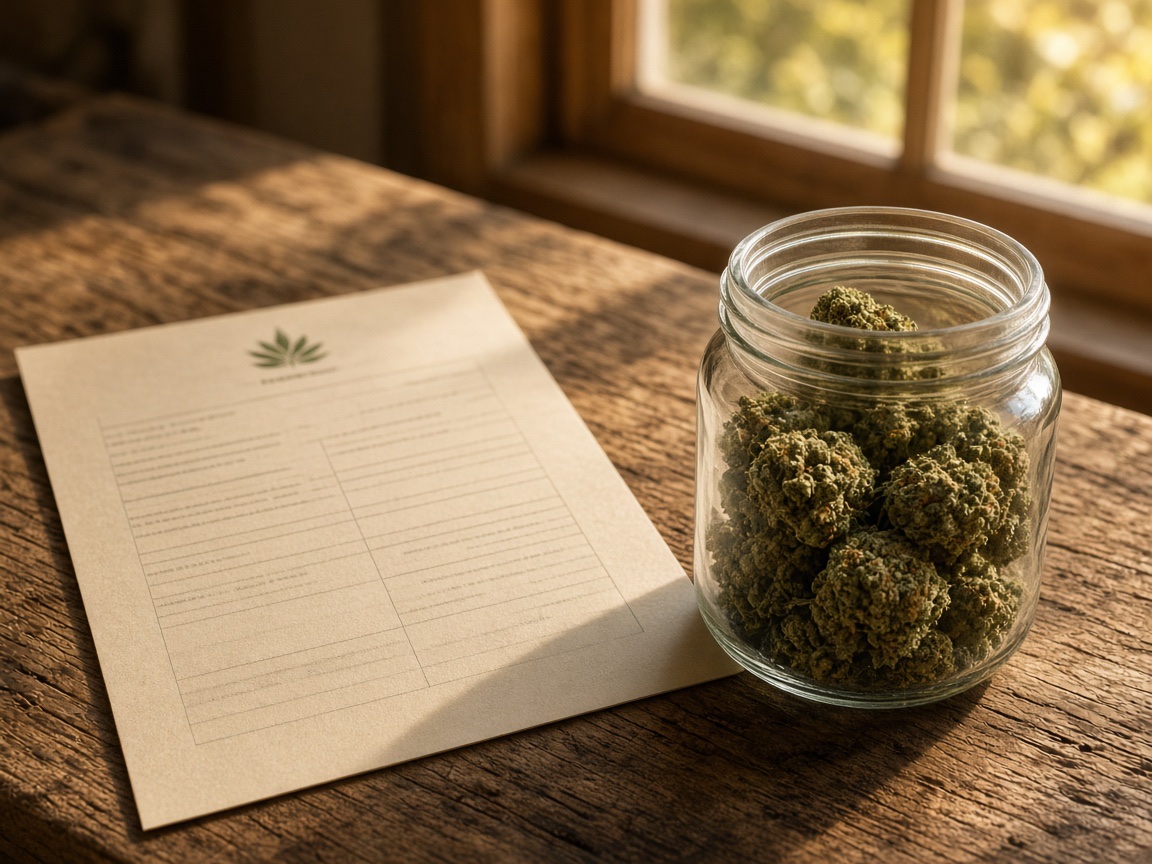
The budtender slid the lab sheet across a Detroit counter after your shift. The jar sticker already showed THC and CBD. Down the cannabinoid list, CBC was a speck. You cracked the lid. It smelled like the flower. Not like a new ingredient had walked in.
What Is CBC on a Michigan Lab Panel? #
CBC is cannabichromene, a minor cannabinoid. On ordinary flower the line is small, and that speck does not run the high. THC still does that job.
A cannabinoid is one of the plant's main active chemicals. THC is the one that gets you high. CBD is the famous quiet one. CBC is a third name. It shows up on some lab sheets. It almost never shows up on the Michigan sticker.
The sheet is a Certificate of Analysis, or COA. That is the lab report for one batch. The sticker is the legal label on the bag. They are not the same page.
Licensed adult-use sales in this state sit under the Michigan Regulation and Taxation of Marihuana Act. You have to be 21 to buy. The Michigan Cannabis Regulatory Agency is the office that sets the testing and label rules. A Detroit counter after second shift is still that system. Auto plants, hospitals, and trades get out. People buy flower. The sticker answers THC and CBD. CBC is extra. You have to ask.
| Name on the sheet | Plain meaning | Easy mix-up |
|---|---|---|
| CBC (cannabichromene) | The neutral form, after heat has done its work | Reading it as CBD because the letters are close |
| CBCA | The acid form still sitting in raw flower | Adding it to the THC number |
| THC | The cannabinoid that gets you high | Assuming every line on the sheet does that |
For the wide map, start with what cannabinoids are. The survey of the other minors is minor cannabinoids explained. This page stays on CBC.
At Divine Toke, a sun-grown organic cannabis farm in Detroit, Michigan, we do not sell a CBC strain. If a batch sheet lists CBC, it is one small line in the whole flower. Not a product name.
Why Doesn't CBC Change the Smell of the Jar? #
CBC barely has a smell you can shop by. The nose on a jar is terpenes, plus a few sulfur compounds. A tiny CBC percent does not add a new scent.
Terpenes are the light fragrant oils in the flower. They evaporate into the air at room temperature. A 2023 aroma study said cannabinoids such as THCA "comprise a large fraction by weight" and still "do not contribute to the scent of cannabis due to their low volatility." The same paper said terpenes "volatilize with ease under ambient conditions" and that is why they matter as aroma compounds (PMC10601067).
Low volatility means the molecule does not jump into the air. CBC is in that heavy cannabinoid class. PubChem lists cannabichromene as C21H30O2, with a molecular weight of about 314.5. That is the same size class as THC. It is not the size class of a light pine or citrus oil. The 2023 paper did not name CBC as an aroma driver. You should not expect it to.
The skunk a lot of Michigan smokers know is a different chemical story. A review of cannabis odor says that skunk was once blamed on terpenes, and newer work points to sulfur compounds, including one called 3-methyl-2-butene-1-thiol (PMC9236214). Still not CBC.
| What you notice | What usually makes it | What it is not |
|---|---|---|
| Citrus, pine, mango, gas | Terpenes | A CBC percent |
| Skunk | Sulfur compounds, not the CBC row | Proof the CBC line is high |
| No new smell, tiny CBC number | Normal | An automatic lab error |
Smell and the CBC row answer different questions. If you want the smell side of a Michigan sheet, read how to read a terpene panel. Michigan's package rule does not require that terpene panel on the bag. It does not require CBC on the bag either. More on the rule below.
How Does the Plant Make CBC? #
The plant starts with one acid, then an enzyme steers a share of it into CBCA. Heat later turns CBCA into CBC. On THC-forward flower, most of the starter goes toward THC. CBC stays the small branch.
A 2026 review walks that path in plain chemistry. Cannabigerolic acid (CBGA) is the starter. An enzyme called CBC synthase (CBCAS) converts CBGA into cannabichromenic acid (CBCA). Heat then speeds decarboxylation, which pops CBCA into CBC (PubMed 42464425).
Decarboxylation is the heat step. Smoking, vaping, or a hot oven knocks a little carbon dioxide off the acid form. What is left is the neutral cannabinoid. The same kind of pop turns THCA into THC.
Think of CBGA as flour on the bench. The enzymes are the bakers. Most of the flour becomes the THC loaf. A smaller scoop becomes the CBC biscuit. The biscuit is real. It is not the meal. The longer version of that starter story, written for CBG, is what CBG does on a Michigan COA. This page does not redo it.
PubChem lists CBCA as C22H30O4, weight about 358.5. Neutral CBC is about 314.5. Divide 314.5 by 358.5 and you get about 0.877. THCA and THC are the same sizes, C22H30O4 and C21H30O2 (PubChem THCA, PubChem THC). That is why the familiar 0.877 factor shows up in "total THC" math. The same ratio fits CBCA if a lab chooses to print a total CBC. Many sheets never do that math. Read the note on your PDF. Do not invent a total the lab did not print.
| Form | Where it sits | What heat does |
|---|---|---|
| CBGA | Starter acid in the plant | Most of it has already been steered elsewhere by harvest |
| CBCA | CBC's acid form in raw flower | Becomes CBC |
| CBC | Neutral form | Already past the heat step |
A Detroit COA can list one of those rows, two of them, or a total. The state sticker still does not have to show any of them.
What CBC Percentage Is Typical on Flower? #
When a 2020 study of 17,612 cannabis chemical profiles actually measured CBC, the average was 0.120%, and the highest value was 1.79%. The authors also wrote that CBC "is always found in very low levels when compared to THC and CBD."
That paper is Vergara and colleagues in PLOS ONE (PMC7462266). Table 1 is the receipt. It is a commercial lab set, not a Michigan-only census. Use it as a scale. Use the COA in your hand for the jar you are buying in Detroit.
| CBC stat in that data set | Number | How to read it |
|---|---|---|
| Plant profiles in the whole set | 17,612 | Not a Michigan head count |
| Samples that included a CBC number | 6,487 | The rest had no CBC measurement |
| Share missing a CBC test | 63.14% | Not the same as "CBC was zero" |
| Average, when measured | 0.120% | About 1.2 mg of CBC in one gram of flower |
| Spread around that average | 0.128% | A lot of values sit near the average |
| Highest value they recorded | 1.79% | A real tail, not the normal jar |
The paper says clients often skip CBC because it is less abundant and less understood than THC or CBD. A blank row can mean "not on this test." It does not automatically mean the flower has none.
A percent is by weight. 0.120% means 1.2 milligrams of CBC in a gram of flower. If a sticker says 20% THC, that same gram holds about 200 milligrams of THC. The CBC is a side dish next to that. Do not treat 0.120% as a law, and do not treat it as a Divine Toke batch. Your batch COA wins.
A 2026 review still calls CBC the fourth most common cannabinoid in many varieties, after THC, CBD, and the CBG family (PubMed 42464425). Fourth in line can still be a crumb. If the first slice is THC and the second is small CBD, the fourth slice can be 0.1% and the ranking is still true. Rank is not size.
| What the number means on flower | Rough band | What to say at the counter |
|---|---|---|
| Not listed | Often "not tested" in big data sets | Ask if the lab ran it |
| Around 0.1% | Near the 2020 average of measured samples | Ordinary, not a special CBC flower |
| Around 0.5% to 1% | Above typical, still under the recorded max of 1.79% | Read it, do not let the menu nickname replace it |
| Above ~1% | Uncommon in that data set | Match the sheet to this bag before you believe it |
Turn the percent into milligrams before you get impressed #
A percent is weight, not a feeling. On flower, 1% means 10 milligrams in a gram. You move the decimal. 0.1% means 1 milligram in a gram. The 2020 average of 0.120% is 1.2 milligrams in that gram (PMC7462266).
Do the same move for THC so the scale stays honest. A jar at 20% THC holds about 200 milligrams of THC in a gram. That is arithmetic, not a Divine Toke batch and not a Michigan average. It is how percents work. Set the CBC crumb next to it.
| Figure | What it is | Milligrams in one gram |
|---|---|---|
| 0.120% CBC | Average when the 2020 set actually measured CBC | About 1.2 mg |
| 1.79% CBC | Highest CBC value in that same table | About 17.9 mg |
| 20% THC | A round sticker number used only as math | About 200 mg |
Even the high end of that CBC table, 17.9 mg in a gram, is still a small pile next to 200 mg of THC. And you will not pull every milligram into your blood through a lighter. Combustion wastes some. A smoked trace is smaller than the row.
Metro Detroit shoppers staring at a menu board should do this on the phone if they want. One gram. Move the decimal. If the CBC row is under 1%, you are looking at single-digit milligrams, often just one or two. That is not the dose in the mouse papers below.
If a menu board says "CBC flower" and the COA sits near that 0.120% average, the board is louder than the plant. Match the sheet to this bag before you pay extra for the nickname.
What Did the CBC Studies Actually Test? #
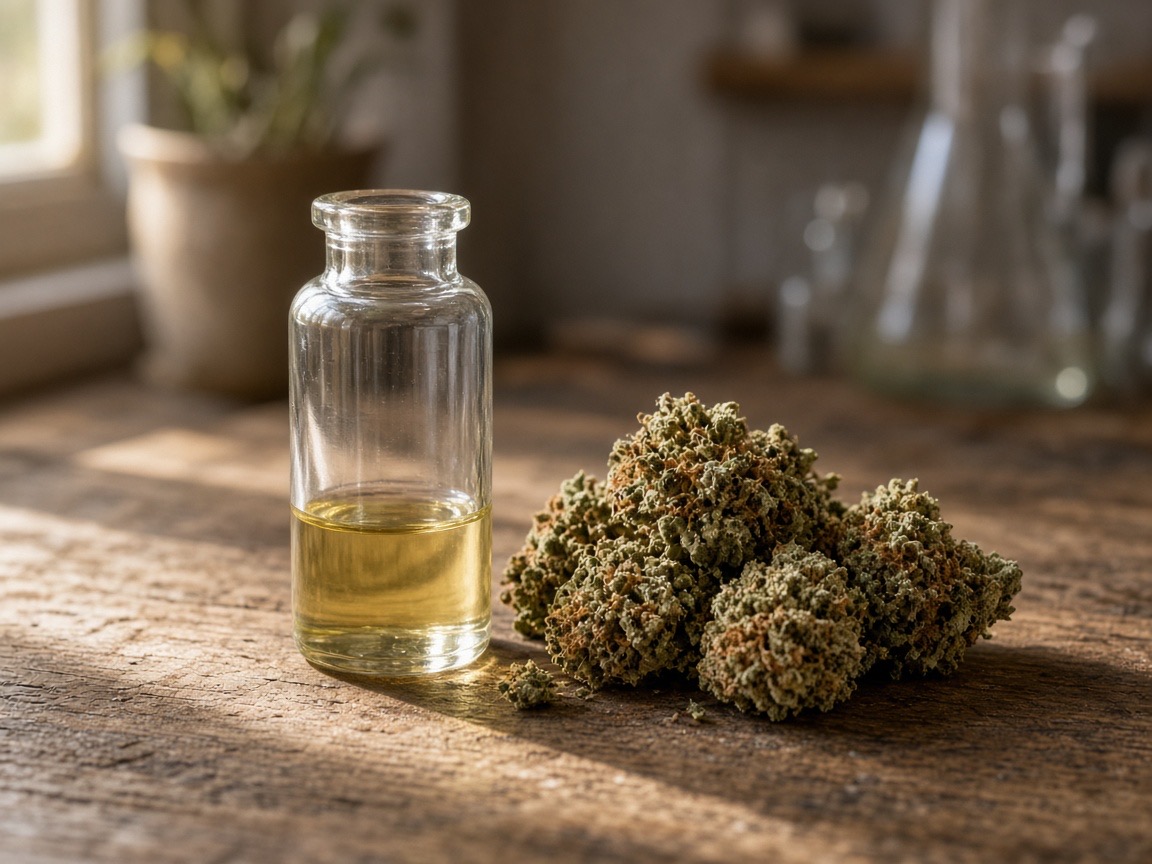
They tested purified CBC in dishes and in mice. They did not test a smoked Michigan eighth with a trace CBC line. A result in a lab animal does not move into your body just because the same word is on a COA.
That gap is the point of this post. Isolated CBC means the researchers used CBC by itself, or almost by itself. Flower means the whole dried bud, with THC, terpenes, and a little CBC sharing one gram. Those are different products. Our guide to full spectrum, broad spectrum, and isolate is the shopping version of that split.
| Study | What they used | What they actually found | Smoked flower? |
|---|---|---|---|
| 2011 British Journal of Pharmacology, PMC3165957 | Pure cannabinoids in cells | CBC was a strong switch for TRPA1, and it slowed anandamide uptake in that cell test | No |
| 2020 British Journal of Pharmacology, PubMed 31368508 | CBC on cells that carry CB1 or CB2 | CBC turned on CB2. It did not turn on CB1 | No |
| 2012 British Journal of Pharmacology, PubMed 22300105 | CBC given to mice with an irritated gut | Gut movement changed after chemical irritation | No |
| Neurochemistry International, PubMed 23941747 | Mouse neural stem cells in a dish | CBC helped those cells stay viable while they were changing | No |
| 2024 Biomedicines, PubMed 38255191 | CBC injected into mice at 10 or 20 mg per kg | Less pain-type behavior on several lab tests | No |
| 2023 Annals of Plastic Surgery, PubMed 37332213 | CBC, CBD, or both, in mice with arthritis | The pair cut swelling more than either one alone in that model | No |
| 2025 Scientific Reports, PubMed 40750820 | CBC on a human liver-cell chip for 7 days | More stress markers than CBD, CBN, or CBG at the doses they tried | No |
| 2024 JPET review, PubMed 38777605 | A review, not a new trial | Early leads exist. Human proof is still the hole | No |
TRPA1 and anandamide, in a dish #
The clearest CBC lab trick is a sensor called TRPA1, not a high. TRPA1 is a switch on nerve cells. Irritants such as mustard and wasabi hit it. An agonist is a chemical that flips that switch on. In the 2011 cell paper, CBC was a potent rat TRPA1 agonist. Potent, here, means it worked at low amounts in that dish. It does not mean a 0.1% flower line will numb your back.
The same paper tested anandamide cellular uptake. Anandamide is a cannabinoid your own body makes. Uptake means cells pull it back in. In that test, CBC and CBG slowed the pull-in more than CBD did. More anandamide hanging around a cell is a lab finding. It is not a mood dose you can point to on a Detroit menu. For the body-made side of this system, see your body makes its own weed.
Pain and swelling in mice #
The pain papers injected or dosed purified CBC into mice. They did not hand a mouse a Michigan pre-roll. The 2024 study used 10 or 20 milligrams of CBC per kilogram of body weight, injected into the belly. Both male and female mice showed less mechanical allodynia, which means pain from a light touch, plus changes on heat and formalin tests (PubMed 38255191).
Put that next to flower math. At the 0.120% average from the 2020 data set, one gram of flower holds about 1.2 milligrams of CBC total, before a lighter wastes some. The mouse number is milligrams per kilogram, injected, pure. The jar number is a speck inside a gram that may also be 20% THC. Do not let a counter speech treat those as the same night.
The 2012 gut paper used mice too. Researchers irritated the small intestine with croton oil, a chemical that inflames tissue. Then they gave CBC. Gut movement changed in that inflamed state (PubMed 22300105). Interesting for scientists. Not a dosing chart for a Saturday edible.
The 2023 arthritis paper used 48 mice, split into control, CBD, CBC, and CBD plus CBC. Inflammation was collagen-induced arthritis, a lab model, not a Detroit worker's chart. The combo group had a significant drop in swelling versus control between weeks 3 and 5. The authors said the pair beat either cannabinoid alone in that model (PubMed 37332213). Still mice. Still not your eighth.
Brain cells in a dish, and a liver chip #
A dish of mouse neural stem cells is not a scan of your brain. Neural stem cells are young cells that can become brain cells. In that study, CBC raised their viability, meaning more of them stayed alive while they were changing. It also slowed a turn into astroglia, a support cell. Part of the effect ran through adenosine, another body signal (PubMed 23941747). Nobody should sell you flower for "new brain cells" off that paper.
A 2025 liver-chip study is the caution, not a scare headline. Researchers put CBD, CBN, CBC, and CBG on a human liver-cell chip for seven days, at 0.24, 3, or 4.7 micromolar. CBC raised injury markers (LDH and cytokines) and lowered albumin more than the other three in that model (PubMed 40750820). A micromolar is a lab concentration. It is not a percent on flower. A 0.12% CBC line is not that chip. Purified CBC is also not a vitamin. Do not megadose an isolate because a menu called it minor.
The 2024 pharmacology review lists early interest in pain, bacteria, and seizures, and it says new human research is still needed (PubMed 38777605). The 2026 review calls CBC non-psychoactive compared with THC (PubMed 42464425). Non-psychoactive means it does not carry THC's intoxicating head effect. It does not mean "take as much as you want."
A swallowed CBC oil is not the flower line #
The 2026 review also flags low oral bioavailability. That means when you swallow CBC, only a small share of the dose tends to reach your blood, because the gut and the liver get at it first (PubMed 42464425). The review ties that liver step to cytochrome P450 enzymes. Those are the liver's chemical-processing crew. They also process a lot of prescription drugs. This post is not a drug-interaction chart. If you are stacking a CBC oil on medicine, ask a pharmacist. Do not guess from a flower percent.
Smoking or vaping flower is a different door. The CBC still has to survive heat, and you still only had about 1.2 mg in a gram at that 2020 average. A capsule that lists CBC in milligrams by itself is closer to the purified material in the papers. It is still not a Michigan eighth. And a capsule from outside the licensed system is a different safety story than a CRA-regulated bag. Keep those piles separate when someone at a party says "CBC is CBC."
Does a Trace of CBC Change What You Feel? #
No. A trace of CBC does not add a separate high you can peel off from THC. Cell work showed CBC turning on CB2 and leaving CB1 alone (PubMed 31368508). CB1 is the receptor THC uses to get you high. CB2 sits more with immune cells. A weak or absent CB1 hit is why researchers do not class CBC as the intoxicating piece. The plain version of those two receptors is CB1 and CB2 explained.
If the jar is 20% THC, you feel the THC. A 0.1% CBC line is along for the ride. Whole-plant talk calls that the entourage idea: many chemicals in one flower may shape a night together. That idea is a hypothesis, not a receipt that one crumb of CBC changed your Tuesday. Read why whole plant is not the same as an isolate, then still trust the THC number for the high.
Michigan's label rule makes the bag say this out loud: "It is illegal to drive a motor vehicle while under the influence of marihuana" (R 420.504). That warning is about impairment. A CBC speck does not cancel it. If you work a hospital rotation or a shift at a plant outside Detroit, the drive home is still a THC question. Leave the keys when THC is in the mix.
| What you might hope | What the evidence supports | What it does not support |
|---|---|---|
| "I'll feel the CBC" at ~0.1% | You will feel the THC if the THC is real | A separate CBC high |
| "CBC is why this jar is calm" | Terpenes, dose, sleep, and THC explain most nights | One minor line as the cause |
| "The mouse pain study is my dose" | Purified CBC, injected, milligrams per kilogram | A trace row on smoked flower |
| "Minor means I can drive" | The Michigan sticker still warns against driving high | A free pass from a CBC number |
Dose, how you slept, and the rest of the panel still run the night. CBC does not get a veto.
How Do You Spot CBC on a Michigan COA? #
Ask for the batch COA and look for the rows CBC and CBCA. Michigan's package rule makes the sticker show THC and CBD. It does not make the sticker show CBC.
The rule text is specific. Mich. Admin. Code R 420.504(1)(f) requires:
"Concentration of Tetrahydrocannabinol (THC) and cannabidiol (CBD) as reported by the laboratory after potency testing along with a statement that the actual value may vary from the reported value by 10%."
Read that twice. The required cannabinoid lines are THC and CBD. The 10% line is a variance statement about those reported values. It is not a promise that a CBC number, if you find one, is allowed to swing by 10% under that same sentence. And the sentence never names cannabichromene. It never names a terpene panel either. A producer may print extra numbers. The rule cited here does not force them.
Another line on that same rule helps you match paperwork. Subsection (h) requires the name of the laboratory that performed passing compliance testing on the product in final form, and any test analysis date. If the lab name or the date on the sticker does not match the PDF in your hand, you are holding someone else's sheet. The CBC number on a mismatched sheet is not your flower.
| Step | What you do | Why it matters in Michigan |
|---|---|---|
| 1 | Ask for the COA at the licensed counter | The sticker is not required to list CBC |
| 2 | Match lab name and test analysis date to the bag | R 420.504(h) puts those on the label |
| 3 | Find the cannabinoid table | CBC hides there, not on the front |
| 4 | Read CBC and CBCA as separate rows | Acid is not the same as neutral |
| 5 | Check the unit | Flower is usually percent by weight. Oils may be milligrams |
| 6 | Use a "total CBC" only if the lab prints the formula | Do not assume 0.877 unless they say so |
| 7 | Read the safety block too | A CBC number is not the pass/fail |
Safety testing is a different block from the minor-cannabinoid rows. Pesticides, metals, and microbes are why a batch is allowed on a shelf. A pretty CBC number does not mean those screens passed. A missing CBC number does not mean they failed. The walkthrough of what "lab tested" covers in this state is what lab tested means in Michigan.
What to say at a Detroit counter #
Ask for the sheet that matches this bag. Then ask where CBC is. You do not need a speech. You need the PDF.
A short version that works after a shift:
- "Can I see the COA for this package?"
- "Which lab name and test date are on the sticker?"
- "Where are CBC and CBCA, if they ran them?"
- "Is a blank row 'not tested' or 'not detected'?"
- Ask whether this batch passed the safety screens.
If the budtender can only describe a mood, that is information too. Michigan rules still put THC, CBD, the 10% variance sentence, the lab name, and the test date on the package (R 420.504). A good counter can find those. CBC is the extra ask. It is allowed to take a minute. It is not allowed to turn into a medical promise. Budtenders can read a number. They cannot tell you the line will fix your knees.
| They say | You do |
|---|---|
| "It's got CBC, you'll feel it" | Ask for the percent. Near 0.1% is ordinary |
| "The sticker would show it" | It does not have to. THC and CBD are the required lines |
| "Trust the strain name" | Match lab name and test date. The nickname is not the batch |
| "This one is the calm CBC" | Smell is terpenes. The high is still the THC number |
| "We don't have the COA" | Pick another jar, or another licensed shop |
Write the percent in your notes app if you journal strains. A Detroit week of night shifts is a bad time to trust memory. The number on tonight's PDF is the only CBC fact that belongs to tonight's flower.
Three numbers people mash into one story #
The sticker THC, the CBC row, and the CBCA row are three different facts. Adding them together does not make a stronger flower. It makes a confused note in your phone.
Here is a clean way to keep them apart on a licensed Michigan bag.
The sticker THC is the legal potency line. R 420.504 says the lab reports it, and the bag has to say the actual value may vary by 10%. That 10% sentence is about the reported THC and CBD. It is the number that tells you how strong the high can be. Read it before you read anything minor.
The CBC row, when the lab printed one, is the neutral form. At the 2020 measured average, that is 0.120%, about 1.2 mg in a gram (PMC7462266). It does not get added to THC to make "total strength." Strength for the high is still the THC.
The CBCA row is the acid that heat can turn into CBC. Leave it in its own box until the PDF shows a total and the formula. The 0.877 ratio comes from molecule size, 314.5 divided by 358.5, because CBC and CBCA match the size pattern of THC and THCA on PubChem. A lab may use that math. A shopper should not freelance it in the parking lot and then treat the result as something they will feel.
| Number | Job | Do not |
|---|---|---|
| Sticker THC | Tells you the high and the legal label | Ignore it because a minor line sounds interesting |
| CBC | Neutral minor line, often near 0.1% when measured | Call a crumb a new strain |
| CBCA | Acid form, pre-heat | Add it raw to CBC or to THC |
| Lab total, if printed | Their math, their equation | Invent the total when the row is missing |
| Safety pass | Why the bag is allowed on the shelf | Swap it for a cannabinoid story |
A Southeast Michigan evening makes this practical. You are in line. The person behind you wants to leave. You still have time to check three things: THC on the sticker, whether CBC was even tested, and whether the lab name matches. That is the whole shopping skill. The mouse papers can wait until you are home.
If two jars share a THC number and one lists CBC at the ordinary crumb, do not expect a different night from CBC alone. The nose can still differ, because terpenes differ (PMC10601067). Open both if the shop allows it. Trust the smell for smell. Trust the COA for CBC. Then decide with the THC in mind, because that is what will change the drive home. The required warning on the bag is still the law: do not drive under the influence (R 420.504). A second jar with a slightly different CBC speck does not rewrite that.
A blank CBC row #
A blank is often "not tested," not "zero." In the Vergara set, 63.14% of the 17,612 profiles had no CBC measurement (PMC7462266). Detection limits also differ by lab. "None detected" means under that lab's cutoff. It does not mean the plant made a mathematical zero.
Licensed flower versus a CBC bottle at the wrong counter #
A CBC oil at a gas station is not this COA line. Licensed Michigan flower goes through the CRA's retail rules, including the THC and CBD sticker. Hemp-shop bottles live under a different mess of claims. We wrote that split up in Michigan's hemp crackdown, licensed flower versus gas-station THC. If you want CBC chemistry, start with a batch sheet from a licensed shop. Do not start with a mystery dropper.
How Does CBC Compare with CBD and CBG? #
CBC, CBD, and CBG are three different chemicals, with three different rows and three different study files. None of them replaces the THC number.
CBD has the bigger human-trial pile. CBG is the starter story, the mother cannabinoid, because CBGA feeds the other paths. CBC is the small branch that becomes CBCA and then CBC. People mash the names because they all start with CB. Your COA does not.
| Question | CBC | CBD | CBG |
|---|---|---|---|
| Gets you high by itself? | Not in the CB1 cell tests | No | No, in current human PK work on CBG |
| Typical flower amount | Often around 0.1% when measured | Often low on THC flower, high on CBD flower | Often a leftover after the plant converts CBGA |
| Required on a Michigan sticker? | No | Yes, with THC | No |
| Smell | Not a scent you can pick out | Not the jar's nose | Not the jar's nose |
| Best shopping move | Read CBC and CBCA on the COA | Read the sticker, then the COA | Read CBG and CBGA on the COA |
The CBG column's "no high" points at a different post, with its own human data: what CBG does on a Michigan COA. Do not import those CBG papers onto CBC. They are neighbors, not twins.
Claims worth walking past #
Walk past any pitch that treats a 0.1% CBC line like a purified mouse dose. Also walk past "you can smell the CBC." The chemistry says the nose is elsewhere.
| Claim at the counter | The honest version |
|---|---|
| "This jar is CBC flower" | Show the percent. Near 0.1% is ordinary, not a breed name |
| "Studies prove it treats arthritis" | One mouse model, purified cannabinoids, not Michigan flower (PubMed 37332213) |
| "It grows new brain cells" | Mouse stem cells in a dish (PubMed 23941747) |
| "Minor means harmless in any amount" | A liver-cell chip saw more stress markers with CBC than with CBD, CBN, or CBG (PubMed 40750820) |
| "The sticker would list it if it mattered" | The sticker lists what R 420.504 requires. That is THC and CBD |
Divine Toke will not invent a CBC cultivar to fill that gap. Sun-grown flower in Detroit still gets read one batch at a time.
Frequently Asked Questions #
Does CBC get you high? #
No. CBC does not turn on CB1 the way THC does, so it is not the intoxicating piece. A 2020 cell study found CBC activated CB2 and not CB1 (PubMed 31368508). A 2026 review classes CBC as non-psychoactive next to THC (PubMed 42464425). If the same product contains real THC, that THC can still get you high. The CBC line does not cancel it.
Why is CBC missing from Michigan jar stickers? #
The retail label rule names THC and CBD, not CBC. R 420.504(1)(f) requires the lab-reported THC and CBD concentrations, plus a statement that the actual value may vary by 10%. Detroit shoppers who want CBC have to ask for the Certificate of Analysis. The absence on the bag is the rule, not a hint that the line is zero.
What CBC percent is normal on flower? #
In a 2020 set of 17,612 profiles, CBC averaged 0.120% when it was measured, with a max of 1.79%. That is about 1.2 milligrams in a gram at the average (PMC7462266). A 2026 review can still call CBC the fourth most common cannabinoid in many varieties. Fourth can be a crumb. Your Michigan batch sheet beats both papers for the bag in your hand.
Can you smell CBC? #
Not as its own note. Cannabinoids are a large part of the weight and a small part of the scent, because they do not evaporate easily. Terpenes do (PMC10601067). Skunk tracks sulfur compounds such as 3-methyl-2-butene-1-thiol (PMC9236214). Crack the jar for terpenes. Read the COA for CBC.
Did CBC research test real flower? #
The core papers tested purified CBC in cells or mice, not a smoked retail eighth. Pain work injected 10 or 20 mg/kg into mice (PubMed 38255191). Gut work used irritated mice (PubMed 22300105). A trace percent on Michigan flower is a different experiment. Do not shop as if they were the same dose.
Will a tiny CBC line help pain? #
Do not expect the mouse results from a trace flower line. Those animals got purified CBC, often by injection, at milligrams per kilogram of body weight. A gram of flower near the 0.120% average holds about 1.2 mg of CBC before you even light it (PMC7462266, PubMed 38255191). Talk to a clinician about pain. Bring the COA if you want. Do not drop a prescribed plan because a minor row exists.
What is the difference between CBC and CBCA? #
CBCA is the acid form in raw flower. CBC is what heat leaves behind. A 2026 review traces CBGA to CBCA through CBC synthase, then to CBC when heat knocks off carbon dioxide (PubMed 42464425). The weight ratio is about 0.877, the same size math as THCA to THC, because the formulas match on PubChem. Use that factor only when your lab prints it. Otherwise keep the rows apart.
Is CBC the same thing as CBD? #
No. They are different molecules with different rows on a COA. CBD is the one Michigan already forces onto the sticker. CBC is the one you go find on the PDF. CBD also has a much larger human-trial file. Swapping the names because both start with CB is how people buy the wrong night. The CBG neighbor has its own sheet: CBG on a Michigan COA.
Does Michigan require a CBC or terpene panel on the package? #
No. R 420.504's cannabinoid sentence names THC and CBD only. It does not require cannabichromene, other minor cannabinoids, or a terpene panel on the retail label (Cornell text of R 420.504). A shop can still hand you a COA that includes them. Asking is the move. Assuming the bag already printed them is how you miss the line.
If CBC is blank on the COA, is it zero? #
Not always. Blank often means the lab did not report that analyte. In the 2020 commercial set, 63.14% of profiles had no CBC number, because clients skipped the test (PMC7462266). "Not detected" is a different phrase. It means under that lab's cutoff. Ask which one you are looking at before you tell a friend the flower has no CBC.
Does a lighter turn all the CBCA into CBC? #
No. Heat can convert CBCA into CBC, but a COA does not measure what your lighter actually delivers. The 2026 review describes thermal decarboxylation as the step that turns CBCA into CBC after CBC synthase has made the acid from CBGA (PubMed 42464425). How much converts depends on temperature and time. A lab total, when the lab prints one, is a calculation from weights. It is not a promise that every milligram of acid in the gram reaches your blood. Keep CBCA and CBC as separate rows unless the PDF shows the equation.
Is a gas-station CBC bottle the same as a flower COA line? #
No. Licensed Michigan flower and a hemp-aisle bottle are different products under different rules. The flower sticker has to show lab THC and CBD under R 420.504. A dropper that shouts CBC can be an isolate with no batch match to anything you smoke. See licensed flower versus gas-station THC products. Read a real COA either way.
If you want sun-grown flower, start with the sheet for that batch. Divine Toke grows in Detroit for everyday Michigan adults. We would rather you see a small CBC number than hear a big story about it. The wider map is the cannabinoids guide. The terpene side of the same paperwork is reading a Michigan COA terpene panel.
Before you leave the counter, this is the short list:
- You are in a licensed Michigan shop. Adult-use sales are 21 and up. This is not a gas-station aisle.
- The sticker shows THC and CBD, plus the 10% variance line required by R 420.504.
- The lab name and test date on the bag match the COA.
- You found CBC and CBCA, or you confirmed the lab did not run them.
- You did not add CBCA to THC to invent a bigger high.
- You did not expect a new smell from a crumb of CBC.
- You treated mouse doses and liver-chip doses as lab work, not as your jar.
- You are not driving if THC is in the flower. The bag already says that.
That is enough to shop. The studies above are why the list stays short.
If you only keep four numbers, keep these:
| Keep this | Figure | Where it comes from |
|---|---|---|
| Ordinary CBC, when a lab measured it | 0.120% average, about 1.2 mg in a gram | Vergara 2020, PMC7462266 |
| High end of that same set | 1.79% | Same table, not a typical jar |
| Mouse pain doses | 10 or 20 mg per kg, injected | PubMed 38255191 |
| What Michigan makes the bag print | THC and CBD, not CBC | R 420.504 |
The first row and the third row are not the same event. Say that out loud if a friend tries to merge them.
This article is for educational purposes only and is not medical advice. Always consult your healthcare provider before starting any new wellness routine.
Grown in Detroit. Shipped to your door.
Small-batch, sun-grown cannabis cultivated in living soil. Mail-order shipping to all 50 states.