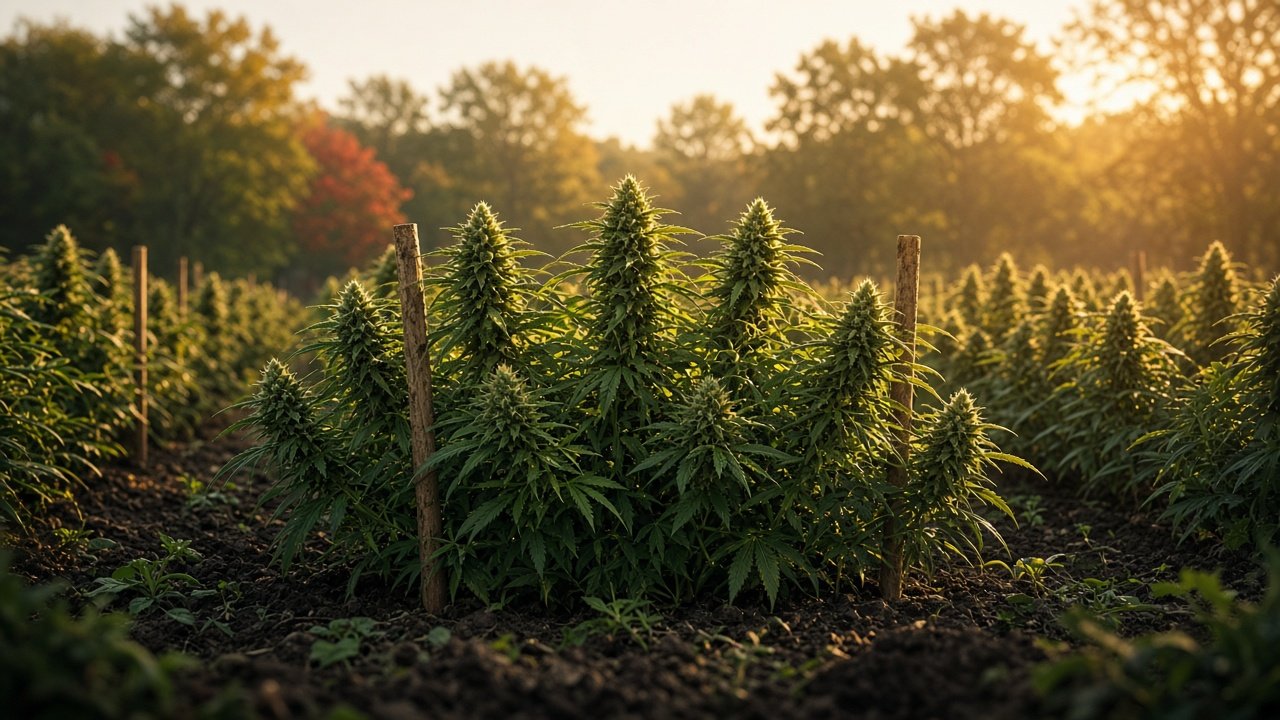
September Harvest on a Detroit Menu: Why Cut Week Is Not Jar Week
Harvest week is not jar week. How Detroit shoppers read September menus, COA dates, and why indoor still fills the counter while outdoor flower hangs.
Questions this article answers
- does September harvest mean new outdoor flower is on Detroit shelves
- why is harvest week not the same as jar week
- how to read harvest date and COA date on Michigan cannabis
- why is indoor still on Detroit menus in September
- when does Croptober hit Ferndale and Detroit counters
- what does fresh crop mean on a cannabis menu

Head Cultivator
On this page
The first week of September in metro Detroit smells like harvest even when the jar in your hand is still last month's indoor. Group chats say Croptober. Farm photos show fat colas. A Ferndale menu still reads like a warehouse that never took a week off.
This post answers one shopper question: what does “September harvest” actually mean on a Detroit menu, and why is cut week not the same as jar-on-the-shelf week?
I am Jamie, Divine Toke's head cultivator. I write from the farm side of that gap — not from a trichome loupe lesson (that lives in when sun-grown cannabis is ready) and not from the late-summer pressure calendar (late-summer harvest for Detroit consumers). This is the counter translation: how to read dates, marketing, and why indoor still dominates many September boards while outdoor is hanging, curing, or still standing in the field.
Does September harvest mean new outdoor flower is already on Detroit shelves? #
No. In the first week of September, some fast outdoor cultivars may be coming down, but most Michigan photoperiod sun-grown flower is still finishing, hanging, or curing — so a typical Detroit or Ferndale menu is still indoor-heavy. Harvest energy is real. A sealed eighth on Woodward or 9 Mile is a later chapter.
Think of it like Eastern Market peaches versus a September cider drop. The orchard is loud. The bottle is not on every shelf the same Tuesday the fruit comes off the tree.
Grower guides aimed at Michigan and the wider Midwest commonly put the main outdoor photoperiod window in mid-to-late September through early-to-mid October, not Labor Day week. A regional table from Royal King Seeds USA lists the Midwest harvest band as September 15 to October 10. A Michigan outdoor guide from Weed Seeds Express puts Lower Peninsula finishes through mid-October, with faster cultivars landing in mid-to-late September.
| What you hear this week | What is usually true on a licensed Michigan farm | What a Detroit shopper should expect |
|---|---|---|
| “It’s harvest season” | Some early genetics are cut; most photoperiods still need more nights | Indoor and older cured lots still fill most menus |
| “New sun-grown just dropped” | Could be greenhouse, last year’s outdoor, or a truly early 2026 cut | Ask harvest date and grow style before you believe the font |
| “Croptober starts September 1” | Croptober is slang for the October-centered outdoor cut, not a CRA calendar | Treat early September as watch week, not peak jar week |
| “Frost is coming any night” | Southeast Michigan’s first freeze is typically October, not September 3 | Humidity and rain are the near-term outdoor risks, not ice |
If you already read our late-summer harvest piece, slide the calendar one month: August was pressure season. Early September is early-cut season for a minority of genetics, and hang-and-cure season for anyone who just took scissors to a ripe plant. Peak outdoor jars for metro Detroit still cluster after that work — often late September into November — not the Tuesday after Labor Day. For how growers call ripeness under a loupe, use the harvest-timing guide. This post stays on the menu.
Lunch-break rule: assume indoor is the default, treat a brand-new outdoor SKU as an early sample, and do not punish a farm for missing a Ferndale counter on September 3. The plant is not a vending machine.
Why is harvest week not the same as jar week? #
Harvest week is when scissors hit the stem. Jar week is after drying, safety testing, labeling, and usually a real cure — a gap measured in weeks, not hours. A farm can be in full harvest and still have nothing honest to sell yet. That is not delay for sport. It is water, microbes, and the law.
Fresh cannabis flower is mostly water. A 2022 University of Saskatchewan postharvest review (PMC9404914) puts raw inflorescence around 78 to 80% moisture. That water has to leave before the flower is safe to store. The same review treats curing as the start of storage — holding leftover moisture steady after the hang, not a synonym for the hang itself. For the dry-room physics, see drying cannabis flower from harvest to cure. For why the jar weeks protect aroma, see how curing protects terpenes.
| Step after the cut | What it is doing | Typical time (industry ranges, not a CRA clock) | What a rushed jar can smell like |
|---|---|---|---|
| Hang / dry | Drive bulk water out in moving air | About 5–14 days in careful rooms; some hang methods run longer | Hay, chlorophyll bite, wet-grass |
| Safety testing | Licensed lab runs required checks; results enter the statewide system | Days after a sample is submitted — not “same afternoon as the cut” | N/A — this is a pass/fail gate, not a flavor step |
| Cure | Seal and hold leftover moisture; harsh green notes fade | Often about two weeks or more at a stable humidity; many farms go longer | Sharp, thin, “green” if skipped |
| Package + transfer | Seal, label, move to a retailer | After passing tests | Tired terpenes if storage is hot or the lot sat too long |
Mich. Admin. Code R. 420.305 is the testing rule. A harvest batch has to pass required safety tests before that flower is released for processing, packaging, and sale. Subrule (12) says passed results must be in the statewide monitoring system before a batch is released for immediate processing, packaging, and labeling for transfer or sale. Subrule (3) lists the required checks, including potency, foreign matter, microbial screening, chemical residue, heavy metals, water activity, and other tests the agency specifies by product type. That is why “we cut yesterday” is a farm sentence, not a shop sentence.
The feel difference is why waiting matters. Under-dried flower smells like wet grass. A real dry plus cure smells like pine, citrus, gas, or spice, and smokes smoother. A hot, fast hang leaves a thin bag — light aroma compounds leave with heat and moving air, and you cannot jar them back in. PMC9404914 notes residual sugars and chlorophyll-related harshness as part of why an uncured smoke can bite, and cites work holding dried flower around 18 °C and 60% relative humidity for about two weeks as one documented cure setting. That is a research example, not a warehouse recipe.
Shift workers in Warren, nurses in Royal Oak, and trades crews off a Downriver job still buy weekly. Buy indoor tonight if you need a jar. Watch outdoor harvest dates if you want this year's sun-grown story. A golden-hour cola photo is not a smoke date.
What should I look for on a Michigan label or COA in early September? #
On a Michigan adult-use flower jar, the useful clocks are harvest date (when it applies) and test analysis date — not a vibe word like “fresh crop.” A Certificate of Analysis (COA) is the lab report for that lot. Match the package tag, then read the dates. Do not invent a “package date” requirement the rule does not write.
Mich. Admin. Code R. 420.504 lists what must be on the sealed container before sale or transfer at a marihuana sales location. For flower, the date fields in that rule are:
- Date of harvest, if applicable
- Name of the laboratory that performed passing compliance testing on the product in final form, and any test analysis date
The same rule also requires the cultivator or producer name and license, the package tag assigned by the statewide monitoring system, the name and license of the licensee that packaged the product if that person is different from the producer, strain name if applicable, net weight, THC and CBD as reported by the lab (with a 10% variance statement), activation time, the universal symbol, and the required warnings.
What the rule does not require, as of this writing: a separate “package date,” “packed on,” “best by,” or “sell by” freshness stamp for flower. Edible and infused products have extra production-date rules elsewhere. For flower, harvest date and test analysis date are the official date clocks. If a brand still prints a pack date, treat it as extra context — when that unit was sealed — not as a CRA-mandated freshness field, and not as a substitute for harvest date.
| Clock | Where you see it | What it answers | How to misuse it in September |
|---|---|---|---|
| Harvest date | Package label (R. 420.504(1)(c)) | When the plant was cut | Assuming “harvested Sept 1” means it is ready to smoke Sept 2 |
| Test analysis date | Package label (R. 420.504(1)(h)) and COA header | When the lab finished the passing test on that final-form lot | Treating a fresh test date as a new harvest if the harvest date is last winter |
| Packager name / license | Package label (R. 420.504(1)(b)) | Who sealed it, if not the grower | Confusing “packaged by” with “grown yesterday” |
| Optional pack date | Some brands print it; not listed as a required date in R. 420.504 | When that unit may have been sealed | Using it as the only freshness clue |
| COA sample / report dates | Lab PDF | When that sample moved through the lab | Reading a terpene page from the wrong Metrc tag |
Early September shopping move: if harvest date is June and test date is last week, you are looking at older flower that got re-tested or a package that sat. If harvest date is this week and the jar is already on the shelf, ask whether it was dried and cured or rushed. A very recent harvest date can be a yellow light, not a trophy.
The COA is a different document from the sticker. Michigan CRA licensed labs issue those reports. Required safety tests are not an optional terpene panel. Match the package tag, read harvest date and test analysis date together, and treat terpenes as smell chemistry — not proof the lot is “new outdoor.” Full matching steps live in reading a Michigan COA terpene panel.
Water activity is a required flower test in R. 420.305(3)(g). It is a moisture-safety number, not a “picked this morning” stamp, and it does not tell you the cultivar finished under a maple in Highland Park.
If staff cannot show harvest date, grow style, or a COA that matches the tag, walk. September marketing is loud. The label is quieter.
How is sun-grown September flower different from indoor that never stopped? #
Indoor flower is the year-round tap on most Detroit menus; sun-grown outdoor is a seasonal crop whose chemistry can be more layered once it is finished, dried, and cured — which, in early September, most of it is not. Indoor did not “beat” outdoor this week. Indoor simply never left the building.
Sun-grown means the plant finished under real sunlight — open field or sun-fed greenhouse — instead of only lamps. Indoor rooms flip a timer and keep cycling. That is why a Livonia or Ferndale board can still be 80% indoor in the first week of September without anyone lying. For the broader style comparison, see sun-grown vs indoor cannabis. For why Michigan's frost-and-daylength squeeze makes outdoor a short season in the first place, see farming on Michigan time.
A Columbia University chemistry comparison of commercial cannabis grown in natural (outdoor/ecological) versus artificial (indoor) conditions found outdoor samples had greater terpene diversity and higher levels of several aroma compounds, including limonene, β-myrcene, β-caryophyllene, and α-humulene (PMC9861703). Outdoor samples in that set also showed a greater share of sesquiterpenes — heavier spicy/woody notes — and less oxidized cannabinoid content than the indoor set tested. That is a chemistry paper, not a promise that every 2026 Michigan outdoor jar will smell louder than every indoor jar on 8 Mile.
Translate it for a September 3 counter:
| If you want… | Lean indoor this week | Lean sun-grown when the dates line up |
|---|---|---|
| A jar tonight that exists on most menus | Yes — rooms never stopped | Only if an early cultivar or greenhouse lot is honestly dated |
| Same SKU next month | Easier | Harder — weather year and harvest week change the bag |
| Layered outdoor aroma | Not the seasonal bet | After a clean finish and a real dry/cure |
| “New crop” story | Marketing may still say it; harvest date decides | 2026 outdoor harvest dates, not August indoor |
Indoor still dominates many Detroit menus in September because supply is continuous, retailers cannot close the case until outdoor clears dry rooms and labs, and shoppers buy weekly. Outdoor volume is lumpy. That is logistics, not a verdict. A well-cured indoor jar this week can smoke cleaner than wet outdoor that skipped the hang. A well-finished outdoor jar in late October can smell like soil, sun, and Michigan air in a way a sealed room does not.
Ask four things: field, greenhouse, or indoor; harvest date; 2026 outdoor versus older stock; cured or only dried. Divine Toke is a Detroit-rooted, sun-grown organic brand. We still tell you to buy indoor when that is the honest jar. Season is not a loyalty test.
What does Michigan weather in the first week of September do to outdoor cannabis? #
The first week of September in Southeast Michigan is still a warm, humid finish window — not first-frost week — and the real outdoor threat is wet, still air inside dense colas, not ice on September 3. Frost is an October story here. Dew, rain, and Botrytis are a September story.
National Weather Service Detroit/Pontiac is blunt: October is the month the growing season ends across Southeast Michigan. They publish average first dates for a freeze (32°F) and a hard/killing freeze (28°F). That is the regional frame. It is not “frost any night after Labor Day.”
MSU Extension frost climatology (1981–2018 observations) puts Detroit’s median first 32°F freeze on October 18. The earliest first 32°F in that Detroit record is October 2. The 10th percentile is October 10. Ann Arbor’s median is October 14. Flint’s is October 9. Cadillac’s is September 21 — a reminder that northern and inland Michigan really does get squeezed earlier. Lakes Erie, St. Clair, and Huron help keep the southeast corner late. MSU also notes you cannot reliably forecast first freeze more than a few days out. Averages are planning tools. The actual night is a forecast.
For early September temperature and rain, use the NWS Detroit September normals (1991–2020):
- September 3 normal: high 78°F, low 60°F, average 69.2°F
- Month normals: high 74.4°F, low 55.5°F, mean 64.9°F, precipitation 3.22 inches
- September 3 record low in that table: 43°F (1976) — chilly, still not a freeze
So if someone says “we have to cut everything on September 3 because Detroit frost,” they are not reading the climatology. What they might be reading, correctly, is mold pressure.
Bud rot is usually gray mold from Botrytis cinerea. It loves dense, nearly finished flowers, high humidity, and cool-to-moderate wet nights. A greenhouse pathology review in PMC10974757 treats bud rot as a core flowering-stage disease and notes that lowering canopy humidity and adding airflow help, with B. cinerea tracking outside moisture conditions. A Cannabis Business Times harvest-rain briefing is practical: prolonged rain near finish forces farms to scout daily, cut trouble spots early, and sometimes pull the crop before a “perfect” calendar date.
| Early September weather | What it does in the field | What it can mean on a later menu |
|---|---|---|
| Warm days, 60°F-class nights (NWS Sept 3 normal) | Plants still packing weight; dew still forms | Main photoperiod crop is not done |
| ~3.22 inches of September rain, climatologically | Wet canopies on heavy colas | Early cuts, lighter tops, or lost colas |
| Sticky, still nights | Botrytis risk inside dense flowers (PMC10974757) | Farm cuts a week early to save the lot |
| A dry, breezy stretch | Cleaner finish window | Louder, cleaner outdoor — after dry and cure |
| An actual freeze | Not the median Detroit story until October (MSU; NWS) | Season end; remaining field flower is a scramble |
A farm that harvests a fast cultivar this week may be on time for that genetics, not “early for frost.” A farm that waits on a long sativa into October is using Southeast Michigan’s later freeze window — and still gambling on rain. A musty jar is a pass even if the THC number is huge. Regulated flower is safety-tested (R. 420.305); your nose still has a job. For the frost-and-daylength squeeze, stay with farming on Michigan time.
What does “fresh crop” marketing actually mean on a September menu? #
“Fresh crop” is a sales phrase, not a CRA freshness field — in early September it can mean a new indoor batch, a greenhouse cut, a fast outdoor cultivar, or last year’s outdoor with new packaging. The label dates decide. The slogan does not.
Michigan flower labeling in R. 420.504 does not require the words fresh, new crop, or Croptober. It requires harvest date when it applies, a test analysis date, and identity fields. Anything else is branding.
| Menu language | Innocent meaning | Skeptical meaning | What to check |
|---|---|---|---|
| Fresh crop | A recently finished indoor or greenhouse lot | “Please do not read the harvest date” | Harvest date + smell |
| Just dropped | New to this shop’s inventory | New to the planet this week | Test date vs harvest date |
| Sun-grown | Outdoor or sun-fed greenhouse | Indoor with a sunset photo | Grow style from staff or brand |
| Limited outdoor | Small early run | Main crop that is not ready yet | Cultivar speed + harvest date |
| Croptober preview | Fast genetics or a greenhouse tease | October jars sold in September clothing | Whether the harvest date is even in September |
Split “fresh” into three jobs. Crop year is the harvest date. Cure is whether water left slowly enough that terpenes survived — how curing protects terpenes. Shelf is whether the sealed jar cooked in a hot case or a car. Indoor can be the freshest thing in the store on September 3 because it runs on a factory calendar. Outdoor can be the most interesting thing in late October because it carries a Michigan season. “Fresh crop” tries to steal both stories at once. Fresh is a date plus a cure, not a font size.
When does “Croptober” actually hit a Ferndale or Detroit counter? #
Croptober hits a Ferndale or Detroit counter after the outdoor cut plus dry, test, and cure — often late September through October for early lots, and into November for the main photoperiod wave — not on October 1 by slogan. The slang is useful. It is not a delivery appointment.
Croptober is industry shorthand for the October-centered outdoor harvest, borrowed from farm regions where photoperiod cannabis finishes as nights get long. Michigan’s Lower Peninsula sits in that band: grower guides commonly point to late September into October (Royal King Seeds Midwest table; Weed Seeds Express Michigan outdoor guide). Southeast Michigan’s later freeze (MSU Detroit median October 18; NWS Detroit/Pontiac) gives farms around Detroit, Monroe, and Mount Clemens more runway than Cadillac. Humidity can still steal that runway.
Add the jar gap from earlier and the counter calendar looks like this:
| Calendar window | Farm | Licensed counter in Detroit / Ferndale / Royal Oak |
|---|---|---|
| First week of September | Fast cultivars may be cut; most photoperiods still in flower; some lots already hanging | Indoor dominates; hunt harvest dates; sample early outdoor only if smell and cure check out |
| Mid-to-late September | Main cut begins for many Lower Peninsula photoperiods if weather allows | First honest 2026 outdoor SKUs may appear after a quick dry + test; many still curing |
| October (“Croptober”) | Peak cut for a lot of Michigan outdoor; frost risk climbs late in the month | Best hunting weeks if dry rooms and labs keep up; quality still varies by rain year |
| November | Field season is over in a normal year | Often the best-cured outdoor, not the first frantic cut |
That is why treating October 1 as “outdoor Christmas” can still land a rushed jar. The holiday is on the farm. The gift needs wrapping.
After a night shift: read grow style and harvest date, smell for loud and clean, ask if it was cured, buy small, keep indoor as backup. Match a terpene PDF only if you want chemistry — how to read the panel. Hamtramck and Ferndale chats will light up at the word sun-grown. Enjoy that. Then tell a harvest photo from a harvest date.
When you are ready to browse with that filter on, start at the Divine Toke shop. Smell still wins. Dates still matter.
Frequently Asked Questions #
Does September harvest mean new outdoor flower is already on Detroit shelves? #
Usually no — not for the main photoperiod crop. Some fast outdoor cultivars can come down in the first week of September. Indoor never stopped, so many Detroit and Ferndale menus stay indoor-heavy. Peak new outdoor jars typically follow the late-September-to-October cut plus dry, test, and cure.
Why is harvest week not the same as jar week? #
Because water, lab tests, and a real cure sit between the scissors and a sealed eighth. Fresh flower is about 78–80% water (PMC9404914). Drying takes days. R. 420.305 requires passing safety results in the statewide system before packaging for sale. Curing often adds weeks.
What should I look for on a Michigan label or COA in early September? #
Harvest date (if applicable) and test analysis date, plus a package tag that matches the COA. R. 420.504 requires those date fields. It does not require a separate flower “package date” or “best by.” If a brand prints a pack date anyway, use it as extra context. For terpene tables, see reading a Michigan COA.
Is there a CRA “freshness date” or harvest-to-shelf deadline? #
Not as a shopper-facing “best by” on flower in R. 420.504. The agency requires harvest date when it applies, a test analysis date, identity fields, and passing required tests before sale. That is a safety-and-identity system, not a grocery expiration stamp.
Why does indoor still dominate many Detroit menus in September? #
Because indoor production is year-round and outdoor is a crop. Licensed rooms keep cycling while photoperiod plants finish under Michigan nights. Outdoor volume arrives in waves after dry rooms and labs. Indoor filling the case in early September is logistics, not a verdict on sun-grown quality. Compare styles in sun-grown vs indoor.
What does “fresh crop” mean if the harvest date is last spring? #
It means marketing. Fresh crop is not a required label term. A spring harvest date is last season’s flower, even if the test analysis date is last week. Believe the dates.
Does the first week of September bring Detroit’s first frost? #
Not in the climatology. NWS Detroit/Pontiac treats October as the end of the Southeast Michigan growing season. MSU Extension puts Detroit’s median first 32°F freeze on October 18, with the earliest first 32°F in that 1981–2018 Detroit series on October 2. September 3 normals at Detroit are still a 78°F / 60°F day (NWS September records). Humidity and rain are the near-term outdoor risks.
How does early September humidity change outdoor flower quality? #
Wet, still nights raise bud-rot (Botrytis) risk inside dense colas, which can force an early cut or flatten aroma even when the farm did the right thing. PMC10974757 ties bud rot to humidity and outside moisture. NWS September precipitation normals are about 3.22 inches. Shoppers feel that later as earlier harvest dates or thinner smell — not as moldy legal flower, which is supposed to fail safety testing.
When does Croptober actually hit a Ferndale counter? #
After the outdoor harvest plus dry, test, and cure — often starting late September for early lots and running through October into November for the main wave. Croptober is slang, not a CRA ship date. Midwest outdoor finish windows in grower guides cluster mid-September to mid-October (Royal King Seeds).
How is well-cured September outdoor different from indoor in the hand? #
When the outdoor lot is actually finished and cured, studies such as PMC9861703 support more terpene diversity in outdoor samples — a layered smell, not automatically a higher THC number. Indoor this week is usually more consistent and more available. Rushed outdoor can smell like hay. Hang details: drying flower. Jar weeks: curing and terpenes.
Can I grow my own outdoor instead of waiting on a shop? #
Adults 21+ in Michigan may cultivate not more than 12 plants for personal use, with no more than 12 plants on the premises at once (MCL 333.27955). Plants must also follow the act’s enclosed, locked, not-visible-from-a-public-place rules in MCL 333.27954. Selling that harvest without a license is not legal. This post does not teach unlicensed commercial growing.
Should I skip sun-grown until November? #
No — watch harvest dates from late September, buy small, and keep indoor as the everyday jar. Skipping the whole season because September 3 is not peak shelf week is the opposite mistake of FOMO. Hunt when dates and smell line up, not when a farm posts a sunset.
What's the Bottom Line for Detroit Shoppers This Week? #
September harvest on a Detroit menu is a translation problem: some outdoor is coming down, most is still hanging or curing, indoor never stopped, and harvest week is not jar week. Read harvest date and test analysis date. Treat “fresh crop” as advertising. Expect indoor to fill Ferndale and Detroit cases until the outdoor wave clears dry rooms and labs. Use your nose. Buy small the first time a 2026 sun-grown lot lands.
If you want the grower-side ripeness call, read when sun-grown is ready. If you want the August pressure-season frame, read late-summer harvest for Detroit consumers. If you want the hang and the jar, read drying and curing. If you want the frost calendar that makes this a short season, read farming on Michigan time. Then go look at actual jars — start at the shop.
This article is for educational purposes only and is not medical advice. Always consult your healthcare provider before starting any new wellness routine. Farming facts here describe licensed Michigan production and adult-use home-grow limits in statute. They are not instructions for unlicensed commercial cultivation.
Grown in Detroit. Shipped to your door.
Small-batch, sun-grown cannabis cultivated in living soil. Mail-order shipping to all 50 states.
You Might Also Enjoy
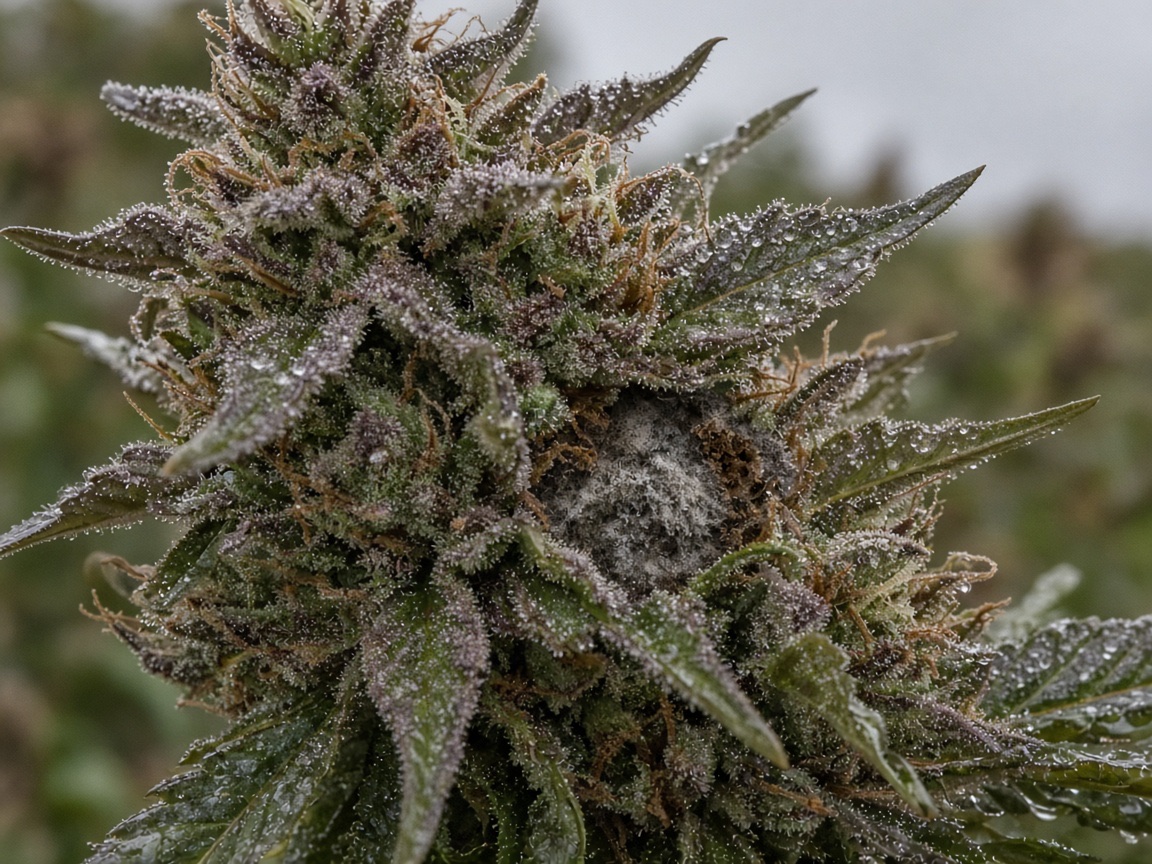
Late-September Rain and Bud Rot: What to Refuse Before It Hits a Detroit Jar
September 23, 2026 · 23 min read
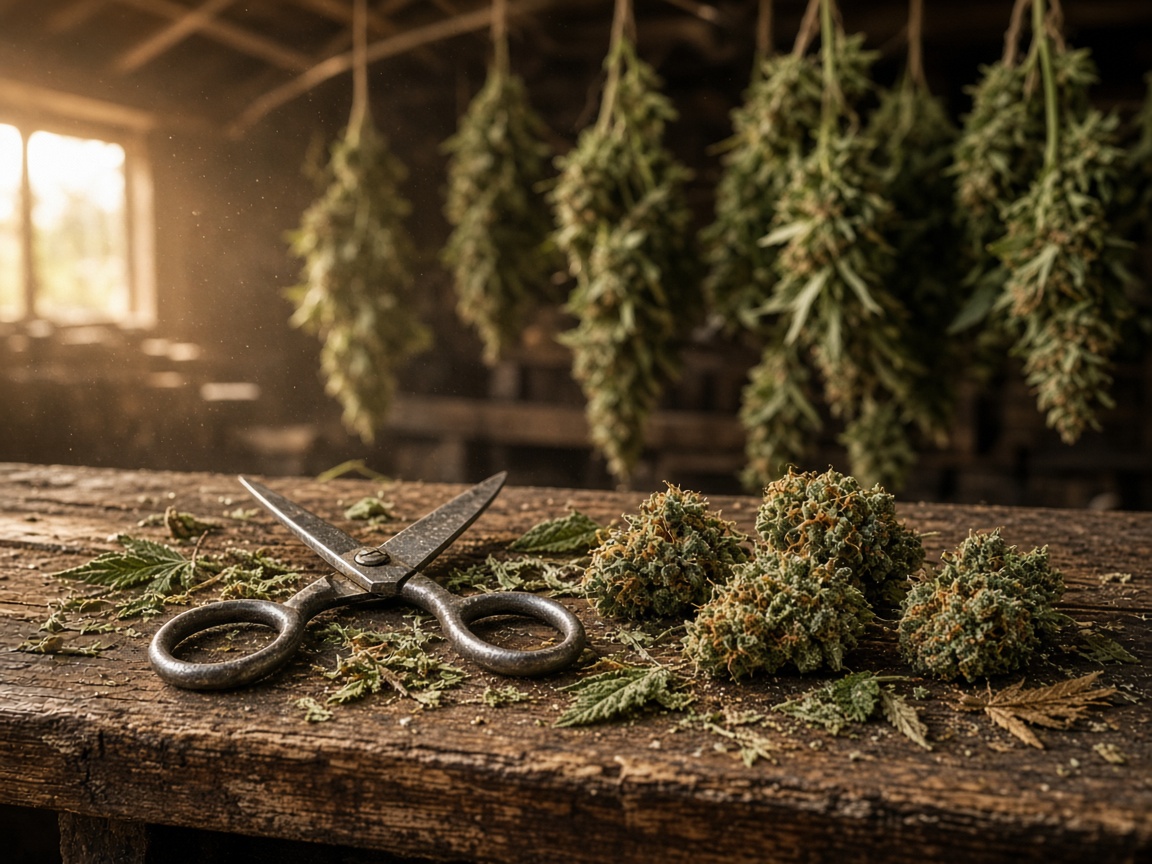
Wet Trim vs Dry Trim at Michigan Harvest: Why Scissors Timing Changes the Jar
September 20, 2026 · 32 min read
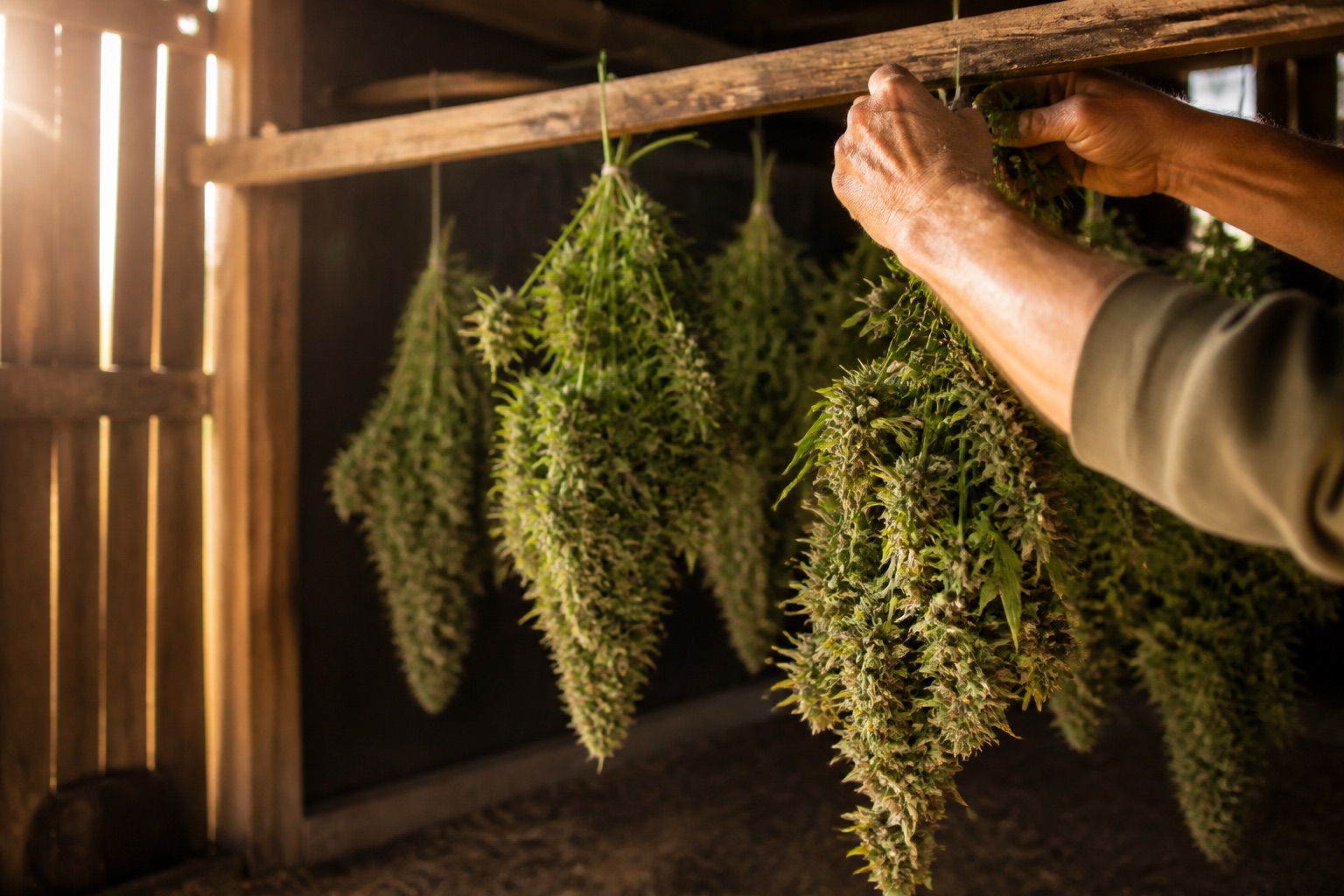
Drying Cannabis Flower: The Step Between Harvest and Cure That Saves Terpenes
August 27, 2026 · 30 min read