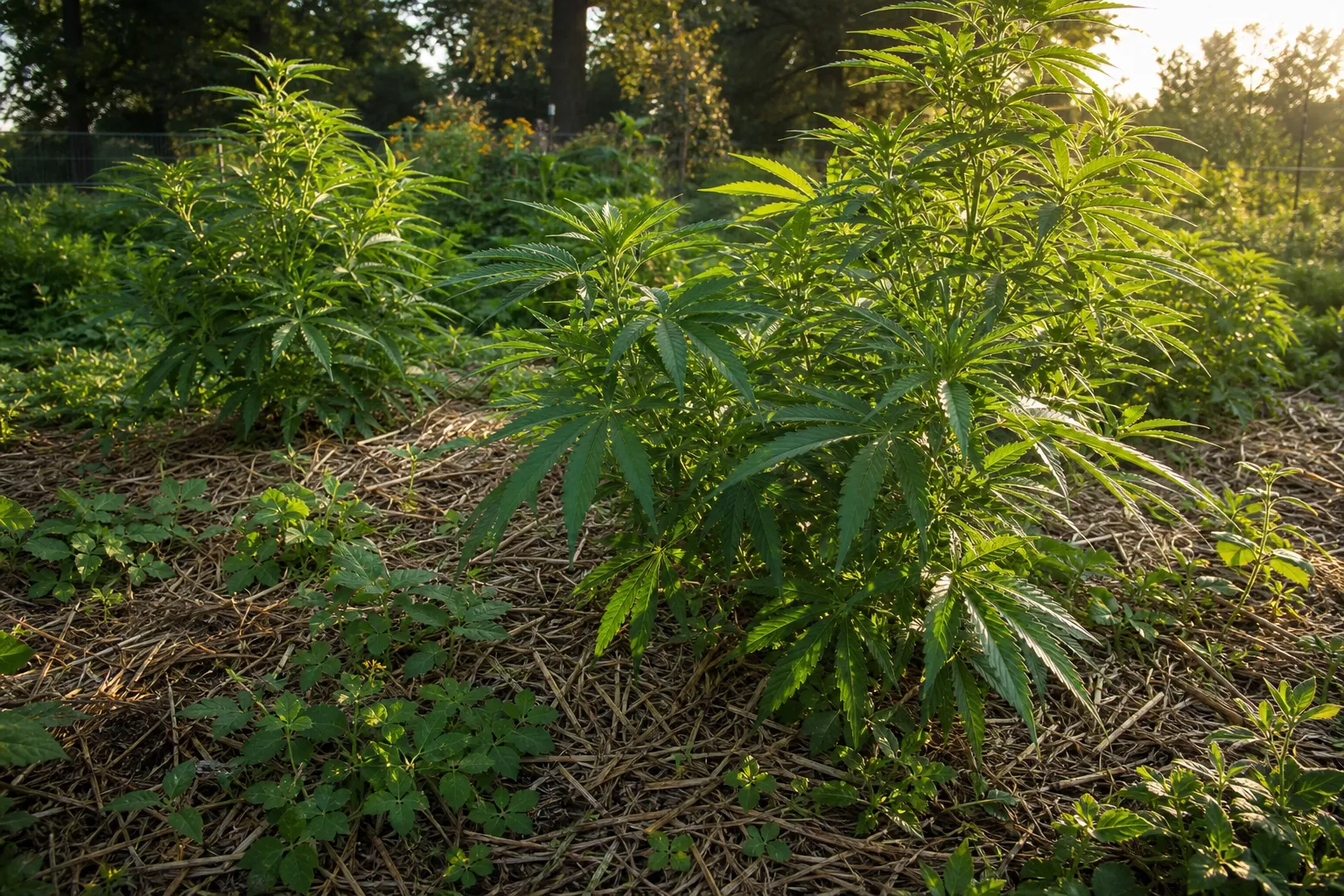
Outdoor Plants Are Down. What Do You Do With a Wet Michigan Bed?
The outdoor plants are down and the Michigan bed is still soaked. Stay off the clay, leave the roots, and cover it. Digging waits until a handful crumbles.
Questions this article answers
- what do you do with a wet garden bed after outdoor cannabis harvest
- can I till wet clay in Michigan in November
- is it too late to plant cereal rye in Michigan in November
- should I leave cannabis roots in the ground after harvest

Head Cultivator
On this page
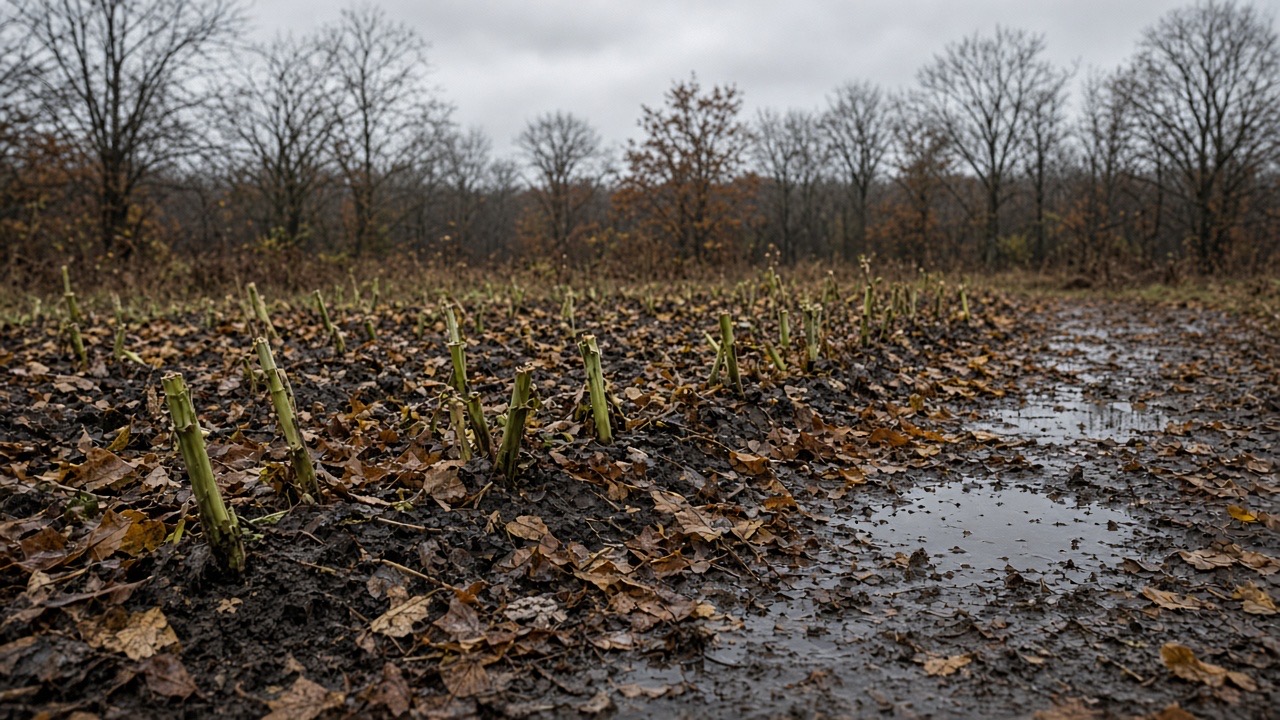
The outdoor plants are down, and the bed is still shining.
You can see your boot in it. That's a wet Michigan bed in the first week of November, and the move is to leave it alone.
Stay on the path. Cut clean stalks at the soil line, leave the roots in the clay, and cover what you can reach without stepping in. Digging this week shears the crumbs that let water through.
By Jamie, grower at Divine Toke. Divine Toke is Sun+Earth Certified.
Michigan law lets a person 21 or older cultivate up to 12 plants at home. Not more than 12 can be on the premises at once. That's MCL 333.27955. The soil test, the hoop house, and the cover-crop species list are other jobs. This page is the soaked bed the week those plants come down.
What do you do with a soaked Michigan bed the week the plants come down? #
Stay off the bed, cut clean stalks at the soil line, leave the roots, and cover the clay. Digging waits for a day a handful crumbles.
Detroit Metro's October total was 2.05 inches. The 1991-2020 normal for that month at the same station is 2.53 inches, so the airport wasn't in a flood. November 1 through 3 then came through dry. November 4 put down 0.15 inch, and the low was 60°F. The normal low for November 4 there is 37.6°F. Those readings are the daily summaries and the 1991-2020 normals for station USW00094847.
Grand Rapids matches that week. Gerald R. Ford International Airport is station USW00094860 in the daily file and the November 4 normal low.
| Detroit Metro | Grand Rapids | |
|---|---|---|
| Rain, Nov. 1 through 3 | None | None |
| Rain, Nov. 4 | 0.15 inch | 0.07 inch |
| Low, Nov. 4 | 60°F | 54°F |
| Normal low, Nov. 4 | 37.6°F | 36.3°F |
A flat clay bed can still be soup on that record. Pewamo is a very poorly drained soil on southern Michigan lake plains, old shorelines, and moraines. The type location sits about 4 miles northeast of Ypsilanti, in Washtenaw County. Slopes run from 0 to 2 percent. The control section commonly holds 40 to 50 percent clay. Permeability is moderately slow, and runoff is negligible to low. In a normal year the water table can stand a foot above the surface, or sit a foot below it. That window runs from December through May. Early November is the doorstep of that season. The shine didn't need a downpour. It needed a place that doesn't let water leave.
From October 1 through November 4, neither airport printed a low of 32°F. MSU's 1981-2018 table puts Detroit's median first 32°F night on October 18, and the 90th percentile on November 6. Those stats are taken about 5 feet up in a shelter. The ground can run several degrees colder. A low bed can crust while Detroit Metro stays in the 40s and 50s. A crust over mud isn't a day to dig.
NWS Detroit calls October the month the growing season ends across Southeast Michigan. The plants are down. The warm stretch that kept them out sits in why Michigan outdoor cannabis ran so late. What's left is the bed.
Do these, and stop:
- Walk the path you already have. Don't open a new one through the clay.
- Cut clean stalks at the soil line, from the path or from a board you pick back up.
- Leave the roots in the ground.
- Cover bare clay with a loose layer of leaves, chopped clean stems, or both.
- Scatter cereal rye only if you can do it without raking mud.
- Mark where the water sits. The ditch is a spring job.
Why does a shovel wreck wet clay? #
Sticky clay smears under a shovel. The blade polishes a sealed face, and the crumbs that let water in get sheared and packed into their own gaps.
The NRCS note on cool, wet soils says tillage destroys soil aggregates. Aggregates are those crumbs, glued by roots and soil life, with gaps between them where water and air move. The same note says tillage shears the crumbs and clogs the gaps that remain with the small pieces. It also wrecks worm channels and root channels. A pore that doesn't connect to the surface doesn't carry water down. Tillage in cool, wet soil can set off more harm than it fixes.
MSU Extension gives the hand test that replaces the calendar. Squeeze a handful. If it makes a ball that doesn't fall apart when you poke it, the soil is too wet to till. Wait until a handful crumbles. That test is the whole decision.
The same MSU note says mixing sand into clay, to loosen it, can set up like concrete. Don't park that idea for spring. Sand plus clay is a brick mix, wet or dry.
A Sun+Earth farm has to keep tillage light and keep the soil covered. This week that means leaves or rye. The shovel feels like work. The bed pays for it the next time water shows up and can't get in.
Why should you stay on the path? #
Your boots pack wet clay the way a tiller does, in the shape of your tread.
MSU lists repeated walking with the other ways soil gets compacted, next to wet tillage and parked weight. The path is where that weight belongs. A board across the bed is only for reaching a stalk you still have to cut. Then the board comes up. It doesn't become a second path.
Step in once and you can read your boot in the shine. That print is a tiny pond with your tread in the bottom.
If you have to cross, cross on the path you already made. The Pewamo sheet's flat slope is why that pond doesn't walk away on its own. Water on 0 to 2 percent ground sits where you pressed it.
What do you do with the stalks and the root balls? #
Cut clean stalks at the soil line and leave the root ball in the ground. Chop the clean stems onto the cover. Rotten tissue comes off the bed.
The NRCS note says tillage destroys root channels. Yanking a root ball out of mud does that by hand. The hole collapses, the walls get polished, and you traded a channel for a smear. Leave the roots. As they break down, the channel they held is still a path for water. The plant already opened it.
Clean stems are woody, so chop them short and lay them on the bed. They pin the leaves, and they don't mat into a lid.
Handle them like this:
- Cut at the soil line. Don't saw a hole around the stump.
- If the stem is clean, chop it into lengths about as long as your hand and lay them on the bed.
- If the flower rotted or the stem is fuzzy, that tissue leaves the garden. Bag it, or get it off the bed.
- Don't bury stalks in a hole. The hole is the dig you're skipping.
- Don't stack a muddy root ball on the path to rot in the air. Leave it in the ground.
How that rot shows in the flower is in late September bud rot before the jar. The bed doesn't need the same tissue back as mulch.
What can go on the bed this week, and what waits? #
A loose leaf cover, chopped clean stems, and a thin compost layer on the surface can go down now. Forking them in, trenching, and any real dirt work wait until a handful crumbles.
| Job | This week | When a handful crumbles |
|---|---|---|
| Walk the bed | No. Use the path or a board. | Only for the work, then back on the path. |
| Cut stalks | Yes, from the edge. | Already done. |
| Pull roots | No. | Still leave them. |
| Leaves and clean stems | Yes, loose, not a lid. | Add more if the cover thinned. |
| Compost | On the surface, once standing water is gone. | On the surface again. Skip the till. |
| Cereal rye | Scatter. Don't rake mud. | Stop it before spring growth gets away. |
| Ditch or raised bed | Mark the puddle. | Build it then. |
| Soil test | Only if a probe slides in clean. | Fall sheet, or a spring sheet labeled spring. |
MSU says you can lay mulch or compost over the top of a bed. The same page also describes tilling in about 2 inches of compost. That till is the part a soaked week can't have. If water is standing, compost floats off to the path. Wait until the shine is a film, not a pond. Then lay a thin coat and pin it with leaves.
Whole leaves can seal. The MSU freeze note says a dense layer of residue traps air. That can leave the surface more ready to freeze, because heat from below moves up slower. Shred the leaves if you can. Or mix them with the chopped stems so the cover stays full of holes. You want a blanket, not a lid.
The lab sheet, and how to pull a clean core, is in what a fall soil test measures after cut week. Soup doesn't give you that core. If the probe won't enter as soil, it enters as mud, and the sample is a smear in a bag.
Spring is also when rye that caught has to be stopped. It takes off fast. Species, and the spring cut, live on cover crops and companion plants. Mow it once the bed holds your weight. Turning it under is the tillage this week already ruled out.
Plastic, the hose, and the tools are a different afternoon. That's winterizing the hoop house before a freeze.
Is cereal rye still worth sowing in the first week of November? #
Cereal rye can still germinate in cold soil. The first week of November is still a seeding week if you don't rake the mud.
MSU Extension on November 3, 2026 says winter grains are the November covers in Michigan. Cereal rye is one of the best of them. Its minimum soil temperature for germination is 34°F. Winter wheat and triticale sit at 38°F, so they have a little less room. Rye is the more winter-hardy of the three, and it grows faster once spring starts. You can still scatter it now. Stopping it is a spring job.
On a 1991-2020 average, 4-inch soil across Michigan's Lower Peninsula stays above 40°F until late November. Southern counties stay above 40°F until mid-December. MSU draws that from the Midwest Regional Climate Center. The same MSU note checked Enviroweather as of November 2, 2026, and the state was still above those germination floors. Detroit Metro's low on November 4 was 60°F. A soil thermometer is a different tool, and that airport low still sat far above 34°F.
Late rye often won't make much top growth before winter. MSU says the spring growth is where the cover shows up. A thin November stand can still cover soil in spring.
Seed wants contact with moist soil. MSU says broadcasting into dry ground delays germination, and a drill helps when the soil is dry and rain isn't coming. This bed is the other problem. It's wet. A drill or a rake in a ball of clay is the smear from the shovel section. Scatter the seed on the surface. Pin it with the loose leaf layer. If water is still pooled, wait until the pool has drained to the path, then scatter. Seed in standing water ends up in the path.
| Cover | What MSU says for November | On a bed that holds a ball |
|---|---|---|
| Cereal rye | One of the best November grains. Germinates at 34°F soil. | Scatter it. Don't rake. |
| Winter wheat or triticale | Also a November grain. Germinates at 38°F soil. | Same rule. Rye has more cold room. |
| Rake, drill, or till the seed in | A drill fits dry soil when rain isn't coming. | Skip it while the ball test fails. |
Leaves alone still cover a bed you can't seed without tearing it. Rye is the living root if the scatter sticks. Either way the clay isn't bare.
What drainage work belongs to next season? #
Mark where the water sits. The outlet, the raised bed, and any soil you move wait until the clay crumbles in your hand.
The NRCS note says most wet spots are wet because water arrives and has no way out. Pewamo's sheet matches that picture on flat ground. Runoff is negligible to low. Permeability is moderately slow. The water isn't failing to show up. It's failing to leave. A trench dug this week has smeared walls. Those walls are a buried seal, and next spring the trench holds water in a new shape.
When a handful crumbles, a raised bed lifts the roots above the seasonal water Pewamo describes for December through May. Keep the path lower than the bed, and keep walking there. Don't haul sand in to open the clay. MSU already flagged that mix.
You can sketch the puddle now, from the path, while you can still see it. A photo after this 0.15 inch at Detroit Metro is enough of a map. The shovel stays in the shed.
How do you keep living soil going through a Michigan winter? #
Cover, leftover roots, and any rye that catches are what the bed lives on while Michigan freezes and thaws.
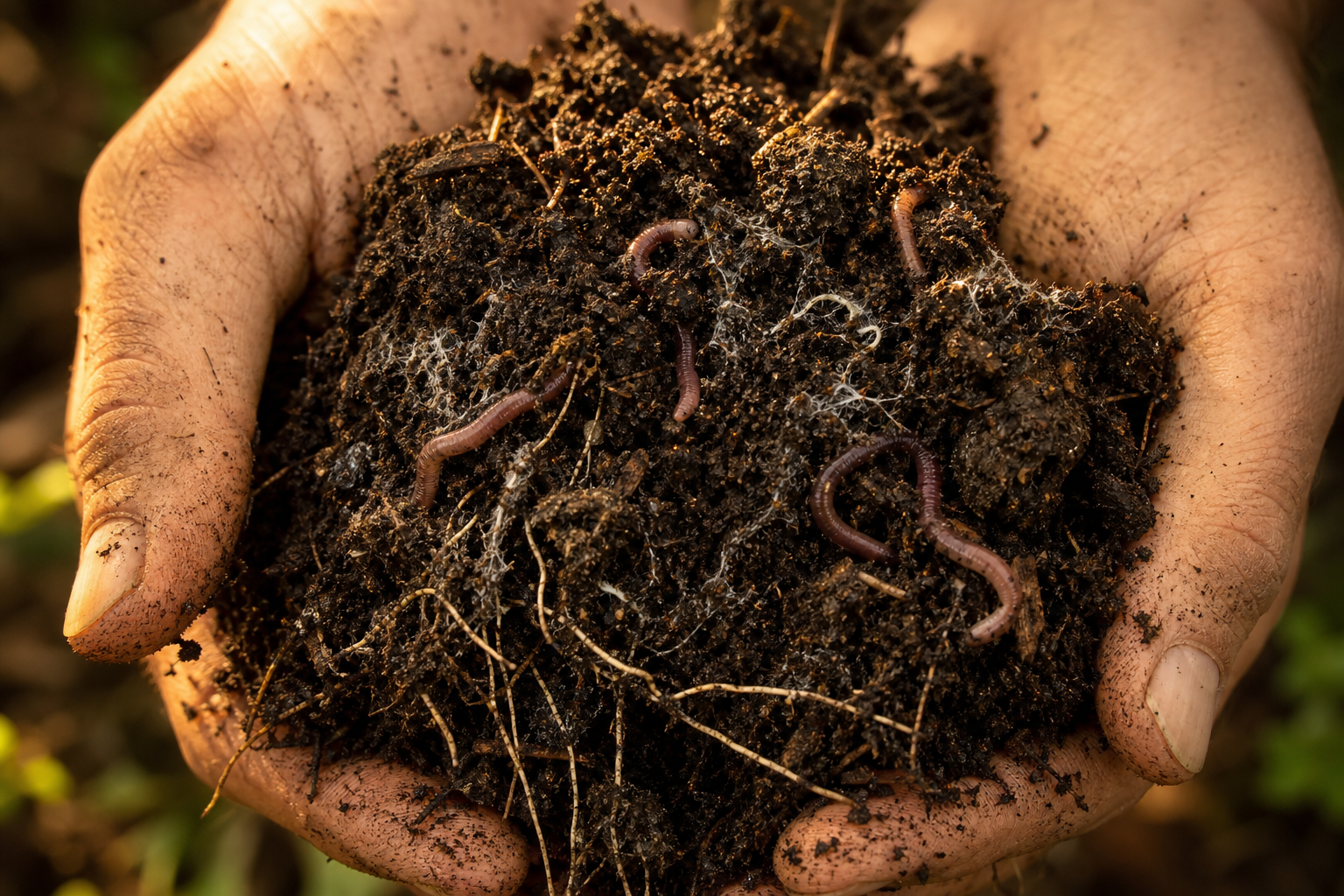
What that life is, under the crumbs, is the living soil guide and the ecosystem page. This page is only the winter handoff. The NRCS note says tillage disturbs the soil life that helps water get in. Some sprays hit fungi, bacteria, and worms. You don't need a product this week. You need the cover.
Bare clay takes the next rain on a face you may have already polished. A loose cover takes the drop first. Roots left in the ground keep a channel and something for that life to work on. Rye that germinates keeps a living root, which mulch alone can't do. If the rye misses, the leaves still did the cover job.
Three things actually carry the bed:
- A loose cover, so rain doesn't beat the crumbs shut.
- Roots left in place, so the channels stay.
- A living root if rye catches, so the bed isn't only last season's dead stems.
Detroit's median first freeze has already passed on the MSU table. Metro still hasn't printed 32°F through November 4. The bed isn't locked. That's why the cover goes on before the cold that's still coming, not after you've walked the mud into tiles.
FAQ #
Can I scatter cereal rye on mud without raking it in? #
Yes. Scatter it, and pin it with a loose leaf layer. Don't rake a bed that holds a ball.
MSU's November 3, 2026 note still calls cereal rye one of the best November covers, with germination at 34°F soil. The same note wants seed in contact with moist soil, and it likes a drill when the ground is dry. A wet Michigan bed fails the ball test, so the drill is the smear. If water is still pooled, wait until it drains, then scatter.
Do I pull the root ball if the stalk comes out easy? #
Leave it in if you can. A yank out of mud collapses the channel the root was holding.
The NRCS wet-soils note says tillage destroys root channels, and a pull does that by hand. Cut at the soil line instead. If a rotten stem is already loose, take that tissue off the bed. Don't dig for the rest of the ball.
Will whole leaves seal a clay bed? #
They can, if they mat into a lid. Shred them, or mix them with chopped stems, so the cover stays loose.
Andresen's MSU note says trapped air in a thick residue layer slows heat rising out of the soil, so the top can ice sooner than open clay. A loose mix of shredded leaves and short stems still takes the rain. A sealed mat holds water on top.
Can I spread compost while water is standing? #
Wait until the standing water has drained. Compost on a pond floats off to the path.
Once the shine is a film, a thin layer on the surface is fair. MSU talks about mulch or compost over the top, and also about tilling in about 2 inches. Skip the till while the ball test fails. Pin the compost with leaves so the next rain doesn't move it.
Does a freeze this week make the bed safe to dig? #
A frozen crust over mud is still mud under your boot. Dig when a thawed handful crumbles.
Detroit Metro hasn't printed a low of 32°F from October 1 through November 4, 2026, in the daily summaries. The MSU table still puts the median first 32°F night at Detroit on October 18, measured about 5 feet up. The ground can be colder than that shelter. A crust that holds you in the morning can be soup by noon.
What if the stalks had bud rot? #
Keep that tissue off the mulch. Clean stems can stay. Rotten flower and fuzzy stems leave.
Chop the clean parts onto the cover. Bag the rest, or get it out of the garden. How that rot looks in the flower is in the bud rot post. The bed doesn't get a second round of it as mulch.
Is winter wheat as good as rye this late in Michigan? #
Wheat and triticale can still go in. Rye has the colder germination floor.
MSU puts wheat and triticale at 38°F soil, and cereal rye at 34°F. All three are the November grains. Rye is the more winter-hardy one, and it grows faster in spring, which also means it's harder to stop later. The spring cut is on the cover crop page.
Should I dig sand into the clay to loosen it? #
No. Sand worked into clay can set up hard, and a wet week is the worst time to try.
MSU Extension says that mix can behave like concrete. The repair they point at is organic matter on the soil, added over time, not a sand load this weekend. Leaves, compost on the surface, and roots left in place are the tools you already have.
Can I trench the path this weekend so the bed drains? #
Mark the puddle. Leave the trench for a day the clay crumbles.
The NRCS note says wet spots often have water coming in and no outlet. A trench cut in sticky clay gets smeared walls, and those walls hold water in a new ditch. Pewamo puts runoff at negligible to low on 0 to 2 percent slopes, with permeability moderately slow. You want the outlet when the soil will break, not when it polishes.
How many plants can a Michigan adult grow at home? #
Up to 12 at the residence, and not more than 12 on the premises at once.
That's MCL 333.27955, for a person 21 or older. A few plants in one bed sit inside that cap. The wet-bed rules here don't change with the count. Twelve plants on soup still don't get a tiller.
Do I still cover the bed if I skip the rye? #
Yes. Bare clay is the miss. Leaves and chopped clean stems cover it even when you don't seed.
Rye adds a living root if it catches. The leaf cover still takes the rain on a loose layer instead of on a polished face. The NRCS note ties the gaps between aggregates to water getting in. The cover is how you stop the next rain from beating those crumbs shut.
Once the cover is down, stop #
Stalks cut, roots left in, clay under a loose cover. That's the week.
Divine Toke sells Michigan sun-grown flower by mail while a Detroit-area bed sits this out. The shop is at /shop.
November 4 at Detroit Metro was a 60°F low and 0.15 inch of rain. The clay still doesn't want your shovel.
Grown in Detroit. Shipped to your door.
Small-batch, sun-grown cannabis cultivated in living soil. Mail-order shipping to all 50 states.